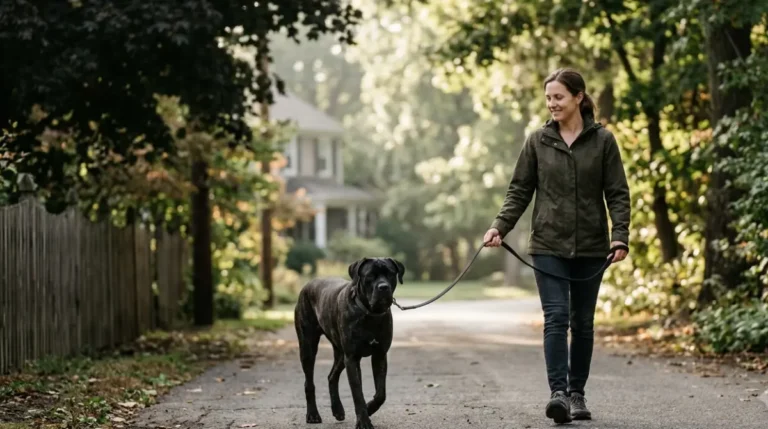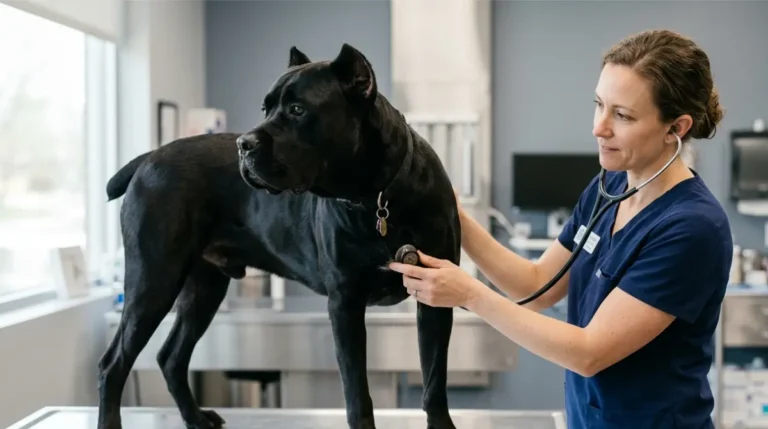
Is a Cane Corso Right for a First Time Owner Like You?

Cane Corso first time owner? Males stand 25 to 27½ inches. Six questions on training, hips, kids and budget show if you’re ready.
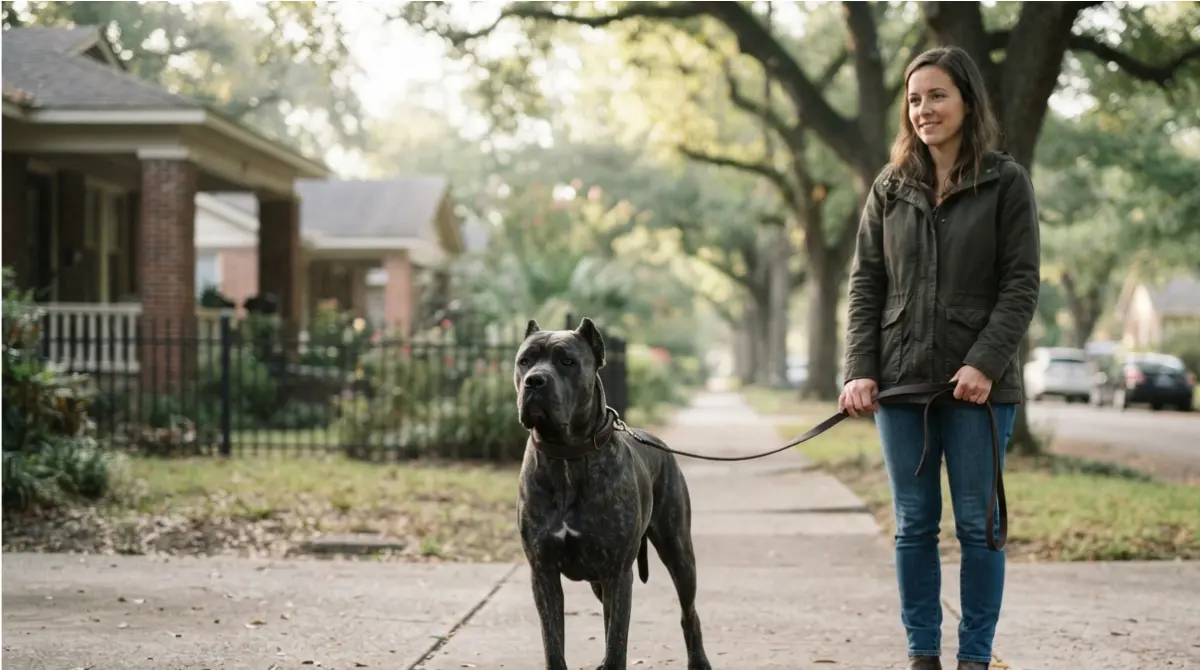
Table of Contents
Is a Cane Corso a realistic first dog?
The short answer
A Cane Corso can work for a first-time owner, but it isn’t the easy path. This large guardian breed rewards steady, early, humane training. Whether you’re choosing a puppy, adopting an adult, or still deciding, use the six questions below.
If your dog is retching with nothing coming up and has a swelling belly right now, go straight to an emergency vet. Wondering about kids and visitors instead? Our guide on whether a Cane Corso fits a family home covers the household side.
Your readiness at a glance
| Question | Green | Yellow | Red |
|---|---|---|---|
| Training | Class booked | Plan only | No time |
| Size | Can steady a pull | Unsure | Physical limits |
| Household | Guests managed, kids supervised | Gaps | Kids unsupervised |
| Source | Hip results seen | Asking | Price only |
| Budget | Quotes plus cushion | Estimates | No cushion |
| Emergencies | Vet saved | Know one | None |
Our checklist, not a veterinary standard.
🩺 Vet Note: This is general information on breed health, child safety, and behavior. Confirm specifics with your veterinarian, especially for puppies and sudden changes.
Can you commit to years of training and socialization?

Experience here mostly means steady, reward-based training that starts early.
The early window
AVSAB says a puppy’s first three months are the primary socialization window. Classes can begin around 7–8 weeks, after a first vaccine set and deworming.
Reward-based, not force-based
The same statement links punishment-based methods to more behavior problems. We don’t recommend prong or shock collars.
Plan for classes
✅ Do This: Book a puppy class and ask your vet for a certified trainer. If your puppy seems fearful, call your vet this week, then a certified behavior consultant.
Can you handle a dog that may top 100 pounds?
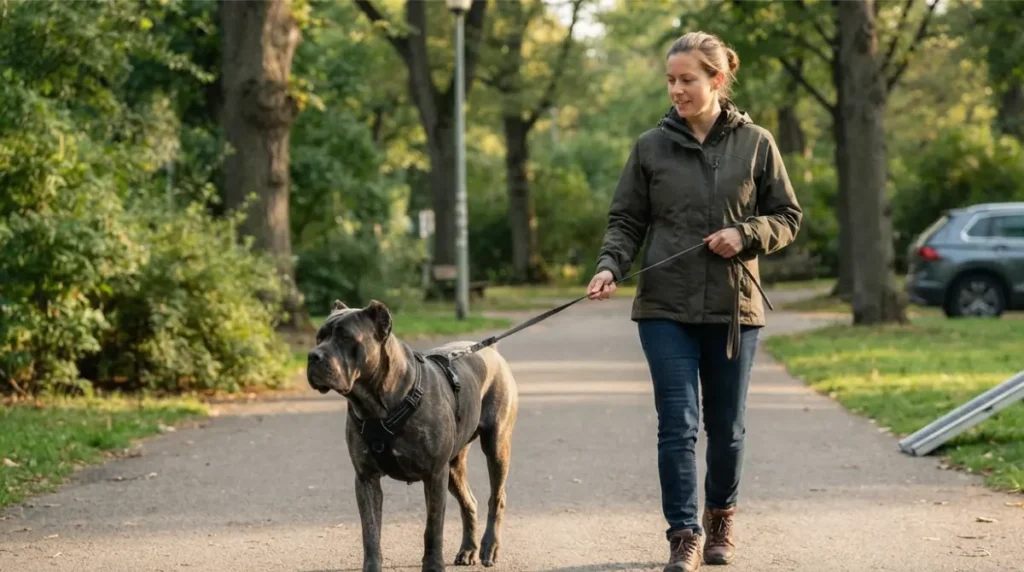
Size is what everyone notices and new owners plan for last.
What the breed standard says
The AKC breed standard lists males at 25 to 27½ inches and females at 23½ to 26, with weight proportionate to height. Other references put adults near 90 to 110 pounds, so plan for a large breed.
Walks, vet visits and the car
Practice steadying a strong leash pull and lifting a large dog into a car. Measure your dog before buying a crate.
Daily exercise and mental work
Plan daily exercise plus training games. Sources disagree on minutes, so ask your vet what suits your dog’s age and joints.
Does your household fit a protective breed?
The AVMA says an individual dog’s history and behavior, not breed, determine bites. The AKC standard calls the Corso a property watchdog, so expect guardian tendencies, with individual variation.
Kids and toddlers
Always supervise young children around any dog, and never leave a baby or small child alone with one. The AVMA suggests considering waiting until children are older than 4 before adding a dog.
Visitors and the front door
Keep your dog in a separate room, crate, or fenced area when guests or deliveries arrive.
Other pets
Introduce them carefully, and ask your vet first.
🏡 Family & Home: Test toddler floor time, the doorbell, and vet handling, with an adult within reach and a gated retreat, like our dog crate and toddler rule.
✅ Do This: If fear or aggression seems unprovoked, call your vet this week, since pain can drive biting. Then ask for a veterinary behaviorist or certified behavior consultant.
Can you find a health-tested, well-raised puppy?
“Health tested” means little until you ask which tests.
Hip screening questions
Purdue’s veterinary college lists the Cane Corso among breeds most affected by hip dysplasia, an inherited joint problem (hip dysplasia) with no genetic test. OFA can evaluate from 12 months (final at 24), PennHIP from 4 months. Ask for both parents’ results.
Reading a breeder
A good breeder welcomes questions and shows records, not just color or price.
Considering a rescue honestly
Ask for behavior notes and a vet exam first.
✅ Do This: Before a deposit, ask your vet to review the parents’ hip results, and book an exam within days of pickup.
Can you afford the real monthly and emergency costs?
Your honest number comes from local quotes, not the internet; online lifetime figures vary too widely to quote.
The recurring costs
Large-dog food, wellness exams and preventives, training classes, and worn-out gear.
The one-time shocks
The adoption or purchase fee, a properly sized crate, and emergencies. See what a crate costs in year one.
A plan if money gets tight
Pet insurance is a financial product with fine print, so compare carefully. Saying “not yet” is a responsible answer.
✅ Do This: Get written first-year estimates from your vet and a trainer before any deposit.
Who would you call when something goes wrong?
Decide now, because emergencies don’t wait.
Bloat: go now
🚨 If This Is Happening Now: Retching with nothing coming up, drooling, a swelling belly, an anxious look or stretching, panting, weakness, or collapse. Go to the nearest emergency vet immediately; don’t wait or treat at home.
The American College of Veterinary Surgeons calls gastric dilatation-volvulus rapidly progressive and life-threatening. It is linked to a deep chest, one large daily meal, older age, and affected relatives. Ask your vet whether your dog’s build raises the risk, and tell the emergency vet when signs began and what your dog last ate.
Fear, growling or sudden changes
Call your vet this week to rule out pain, then a veterinary behaviorist or certified behavior consultant.
Cane Corso first-time owner FAQ
1. Is a Cane Corso a good first dog?
It can work for a committed first-time owner, but it demands early reward-based training, physical strength, and a realistic budget.
2. Are Cane Corsos aggressive?
Breed alone doesn’t decide; the AVMA says individual history and behavior matter. Call your vet if fear or aggression seems unprovoked.
3. Are Cane Corsos good with kids?
Individual dogs vary and no breed is automatically safe; always supervise, and never leave a baby or small child alone with any dog.
4. When should Cane Corso socialization start?
AVSAB calls the first three months the primary window; puppy classes can begin around seven to eight weeks. Ask your vet about vaccine timing.
5. Do Cane Corsos need professional training?
A group puppy class started early helps a first-time owner; add a certified trainer if you get stuck.
6. Is a prong or shock collar OK for a Cane Corso?
No. AVSAB favors reward-based training and links punishment-based methods to more behavior problems. Ask your vet for a certified trainer.
7. How much exercise does a Cane Corso need?
Daily and structured, with mental work; sources disagree on minutes, so ask your vet to tailor it to age and joints.
8. How big do Cane Corsos get?
Under the AKC standard, males stand 25 to 27½ inches and females 23½ to 26; other references put adults near 90 to 110 pounds.
9. Do Cane Corsos get bloat?
Bloat (GDV) is life-threatening in large, deep-chested dogs; retching with nothing coming up or a swelling belly means an emergency vet now.
How much does a Cane Corso cost?
It varies with your vet’s rates, food, training, insurance, and area; get local quotes before paying any deposit.
Your honest next step
You now know where you stand on all six questions. Mostly green means a Corso may be a fair first dog; several reds mean waiting is a respectable answer.
Next, read our guide on whether a Cane Corso fits a family home. This week, ask your vet about hip screening and bloat risk. We cite our sources, and nothing here was tested on a Cane Corso.