Smart Crate Training Before Baby Arrives, Week by Week

Crate training before baby has a limit to plan around: adult dogs shouldn’t be crated more than four hours at a time. Here’s the 12-week plan.
Table of Contents
Start crate prep 12 weeks before your due date
The best time to start crate training before baby is about 12 weeks before your due date, and earlier if your dog has never used a crate. That gives the crate time to become a settled habit rather than a new rule that arrived with the baby.
Which dog are you starting with?
- Crate-happy dog: skim Weeks 12–9 and put your effort into Weeks 8–1.
- Crated as a puppy, but it lapsed: follow all 12 weeks as written.
- Never crated: start today, even if you’re more than 12 weeks out, and move slowly.
What “ready” looks like at Week 0
This is our target, not a veterinary standard. Your dog walks into the crate on cue and settles with a chew for 30–60 minutes while the house is busy.
🩺 Vet Note: Pain or illness can make a dog less tolerant of noise, handling, and change. Book a routine vet check before your due date. If your dog growls, snaps, or stiffens around people or baby gear, see your vet first, then ask about a certified behavior consultant or veterinary behaviorist.
Why the crate has to be your dog’s idea first

A crate only helps after the baby arrives if your dog already sees it as a place to rest, not a place they’re sent.
Retreat, not banishment
Build the crate’s value with reward-based training: meals, treats, and long chews inside, and never scolding. The AVSAB’s position on humane, reward-based dog training recommends these methods for all dog training. The rules from how the crate becomes a safe den in the first place still apply here, with an adult dog and a new reason.
Don’t let the crate “mean baby”
If the crate door only closes when the baby is in the room, your dog can learn that the baby means losing freedom. Spread crate time across the whole day now, so it already has a normal rhythm before your due date.
🔍 Why It Works: Dogs learn by association. When good things happen in the crate at random times, the crate comes to predict comfort. It doesn’t become a signal that the baby is here.
Weeks 12–9: pick the crate’s post-baby spot now
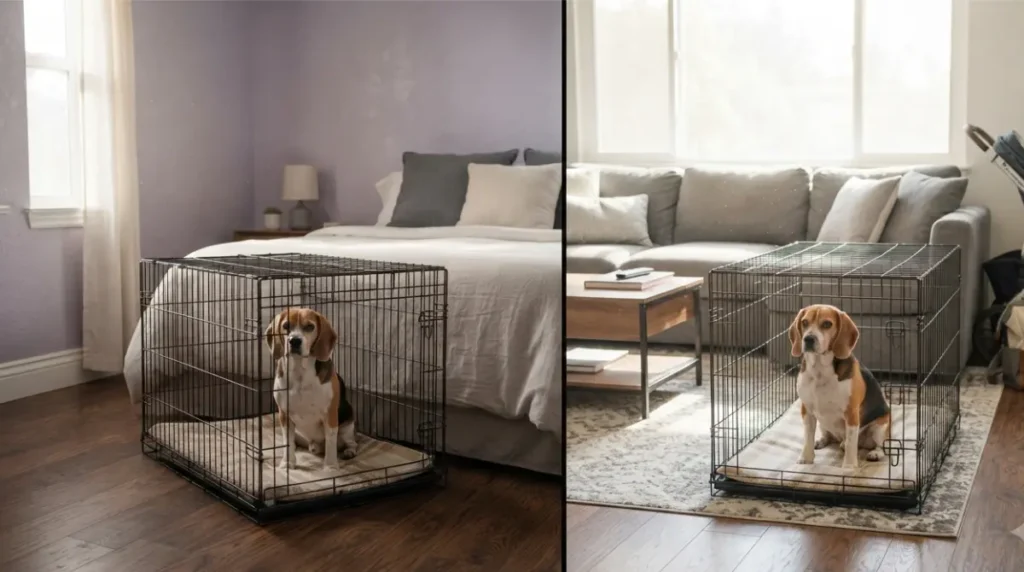
Here’s the full plan at a glance. Each phase builds on the one before it.
| Weeks before due date | Crate goal | Household task | Move on when… |
|---|---|---|---|
| 12–9 | Final spot chosen; meals in crate | Shift crate gradually out of nursery or bedroom | Dog enters on cue |
| 8–5 | Calm closed-door stays with a chew | Quiet baby sounds, doll rehearsals, varied schedule | Dog stays settled through rehearsals |
| 4–1 | Full-routine rehearsal | Sitter card, car plan, scent blanket | Dog settles 30–60 min in a busy house |
Moving the crate out of the bedroom or nursery
Pick a spot where your household still spends time, like a living room corner, not a garage. Our guide on where to put a dog crate covers quiet-but-connected spots. Move the crate a few feet every few days, so the final move isn’t tied to the baby.
Restarting the crate with an adult dog
According to the ASPCA, adult dogs with no crate history can still learn to be comfortable in one. Follow the ASPCA’s step-by-step crate introduction: tossed treats, then a cue, then short closed-door stays with a chew.
Small home or apartment placement
The ASPCA also notes that an exercise pen may be less stressful for some dogs, especially those who’ve had a bad crate experience.
Weeks 8–5: practice crate time during baby chores
This phase builds crate duration while your home starts to sound and move the way it will after the birth.
Baby sounds at low volume, paired with treats
Play baby-cry recordings quietly while your dog eats or chews in the crate. Raise the volume only when your dog stays relaxed. The ASPCA’s guidance on preparing dogs for babies covers sound and routine prep in more detail.
Crate stays while you rehearse feeds and diaper changes
Give your dog a stuffed food toy in the crate while you practice with a doll: rocking it, changing it, and sitting down to “feed” it. End each session before your dog gets restless.
Vary the schedule
The ASPCA suggests preparing dogs for a less predictable routine, such as varying feeding times. Shift walks and crate times now, so the changes aren’t linked to the baby.
⚠️ Watch Out: Don’t play crying at full volume to “get it over with.” If your dog pants, paces, or stops eating, lower the volume and go back a step.
Weeks 4–1: the hospital-day and homecoming plan
The last month is about the days you can’t control: labor, the hospital stay, and the first trip home.
Brief the sitter on the crate routine
Write a one-page sitter card with your crate cue word, meal and walk times, and your dog’s usual crate stay. The ASPCA advises crating adult dogs for no more than four hours at a time, with exercise before and after. Have your sitter run the routine with you once before your due date.
The car ride home
If your dog travels with the family, plan the crate’s position around the infant seat now. Our guide to crash-tested crates for the car compares the options.
The scent blanket
A common prep step is having someone bring home a blanket with the baby’s scent before homecoming. Offer it near the crate alongside a treat.
Crate rules for everyone once the baby is home
Once the baby arrives, the crate is your dog’s space, and everyone in the house needs to know it.
The crate is off-limits to kids
As your baby grows, teach that the crate belongs to the dog. The AVMA advises that children never disturb a dog that is sleeping or eating. Our dog crate and toddler rule covers the crawling stage.
A crate doesn’t replace supervision
The AVMA’s dog bite prevention advice for families is clear: never leave a baby or small child alone with a dog. A closed crate helps with management, but the actual safety plan is an adult actively watching.
Visitors and grandparents
Share the crate rules before guests arrive, not once they’re holding the baby.
🏡 Family & Home: Post a three-line card near the crate: “Dog resting = leave alone. The crate is the dog’s space. An adult watches whenever the dog and baby share a room.”
Signs your dog needs more help before the due date
Some dogs need more than a 12-week plan, and noticing it early gives you time to get the right help.
Stress in the crate
Repeated whining, scratching, heavy panting, drooling, or escape attempts are signs of crate distress. The ASPCA advises backing up to shorter stays. If it continues, read about whether it’s confinement anxiety or separation anxiety.
Warning signals around baby gear
The AVMA lists growling, a stiff posture, and trying to move away as signs a dog is uncomfortable.
✅ Do This: If you see these signals, call your vet this week. The AVMA notes that pain or illness can make a bite more likely. Then ask for a referral to a certified behavior consultant or veterinary behaviorist, and tell them what your dog did, what triggered it, and how often it happens.
Frequently asked questions
1. When should I start crate training before baby?
Start about 12 weeks before your due date, and earlier if your dog has never used a crate, so crating becomes a settled habit.
2. Should my dog’s crate stay in the nursery?
It’s easier to move the crate out of the nursery now, gradually, so your dog doesn’t link the change with the baby’s arrival.
3. Should I move my dog’s crate out of the bedroom before the baby comes?
If it needs to move, start during Weeks 12–9 and shift the crate a few feet every few days.
4. Should I crate my dog whenever the baby is around?
No. Crating only around the baby can link the crate with losing freedom. Spread crate time across the whole day instead.
5. Is it too late to crate train an adult dog before baby?
No. The ASPCA notes that adult dogs without crate experience can learn to be comfortable in a crate. Start now and go slowly.
6. How long can my dog stay in the crate after the baby arrives?
The ASPCA advises crating adult dogs for no more than four hours at a time, with exercise before and after.
7. How do I get my dog used to baby crying in the crate?
Play recordings quietly while your dog eats or chews in the crate, and raise the volume only when your dog stays relaxed.
8. What should my dog sitter know about the crate during the hospital stay?
Give them a sitter card with your crate cue, meal and walk times, and your dog’s usual crate stay length.
9. Can a dog crate replace supervision with a baby?
No. The AVMA advises never leaving a baby or small child alone with a dog. An adult should always actively supervise.
10. What if my dog cries in the crate after I move it?
Go back to shorter, calm stays. If the distress continues, talk to your vet and a certified behavior consultant before your due date.
Your dog’s crate, ready before your baby is
If you’ve started the plan, you’re already ahead. A crate your dog chooses will make the first weeks calmer for everyone. For the fundamentals behind every step, revisit our 14-night crate training guide linked above. If your dog shows any warning signals, book a vet visit before your due date. Every source here was checked, and any real-dog testing will be noted when it’s done.