Gentle Crate Training in an Apartment, With Neighbors in Mind

Crate training an apartment puppy? Barking that becomes a nuisance breaches most leases, so start with a bedroom crate, a slow pace, and a neighbor note.
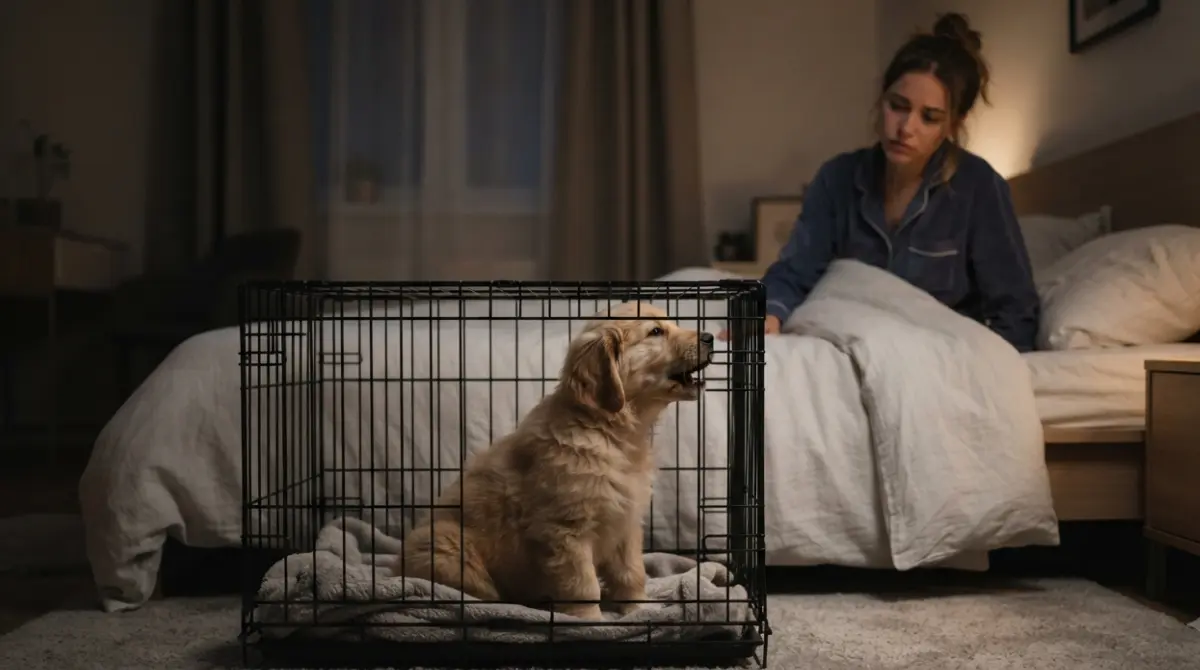
Table of Contents
Crate training in an apartment is the same, except for the walls
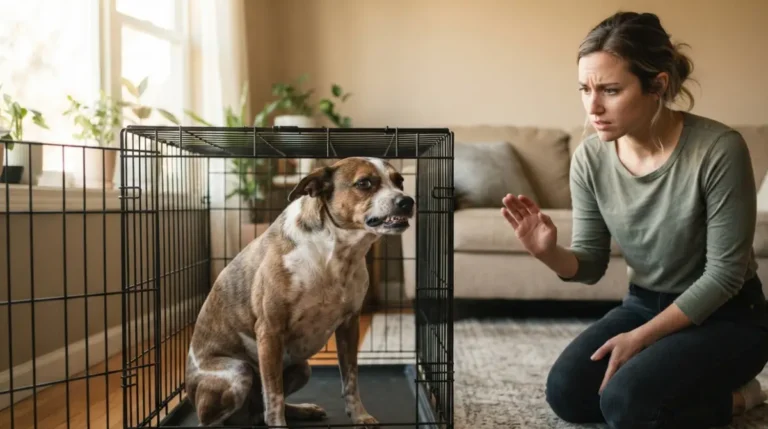
Crate training in an apartment follows the same steps as crate training anywhere. The difference is who else hears the first nights. A house muffles a crying puppy, but a shared wall passes it straight to someone trying to sleep.
Start with the part that fits your situation:
- Puppy arriving this week: read the crate placement section, then write the neighbor note.
- Puppy already crying at night: go to the steps for quieting crate crying.
- Worried about your lease, or already holding a complaint: go to the lease and complaint sections.
The full night-by-night method is in our 14-night crate training log. This guide adds the apartment layer on top of it.
🩺 Vet Note: A young puppy crying at night often has a real need to go out, so treat crying as a possible bathroom call first. If barking is new or sudden, or your dog seems distressed whenever left alone, book a vet visit this week and ask about a referral to a qualified behavior professional. The lease and noise-law information here is general, not legal advice; check your own lease and local code.
How much crate crying is normal in the first weeks
Some crying in a new crate is expected, and it usually means something specific.
Why puppies cry in a new crate
A new puppy is in an unfamiliar place, away from its littermates, inside a box it doesn’t understand yet. Feeling comfortable in a crate is learned, and crate training can take several days or several weeks depending on the dog’s age, temperament, and previous experiences.
The kinds of barking you’ll hear
The San Francisco SPCA groups barking by motive:
- Attention-seeking: a request such as “let me out of here now”.
- Loneliness or boredom: barking that happens when a dog’s needs for companionship, exercise, and social stimulation aren’t met.
- Anxious: barking that can be a symptom of separation-related problems.
Where to put the crate in an apartment
The best spot for a crate in an apartment is in your bedroom, against an interior wall, away from any walls or floors you share with neighbors.
Bedroom first, not the living room
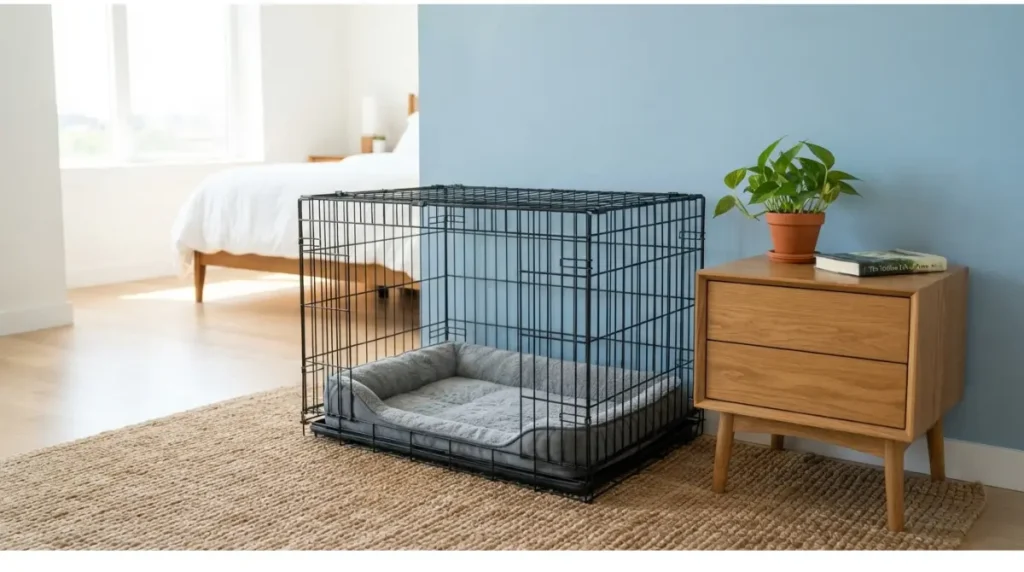
Humane World for Animals advises putting the crate in your bedroom or a nearby hallway at first, since puppies often need to go outside during the night. Once the puppy sleeps comfortably through the night, you can move the crate gradually.
Keep the crate off shared walls and floors
Pick a wall you don’t share, such as one backing onto a closet, your bathroom, or your own kitchen. If a neighbor lives below you, put a rug under the crate to soften scratching and thumps.
Sound-softening that’s safe for the dog
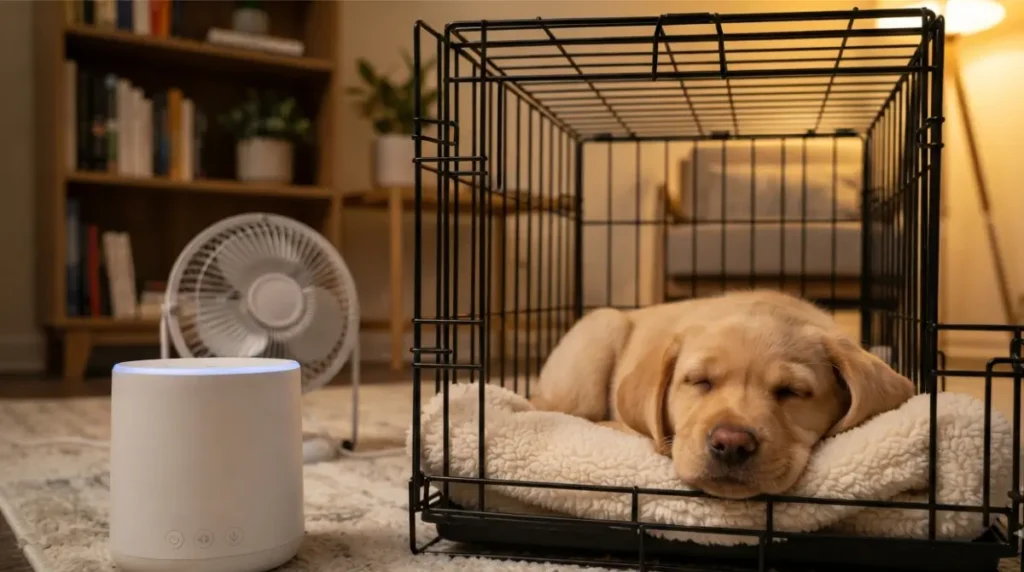
A Long Beach animal services guide suggests leaving on a television, radio or loud fan to mute outside noise and closing curtains to block views that might trigger fear.
⚠️ Watch Out: Don’t wrap the crate in heavy blankets to “soundproof” it. Your dog still needs airflow, so if you use a cover, keep sides open.
🏡 Family & Home: If the wall on the other side is a neighbor’s nursery or bedroom, choose a different wall. Apply the same logic at home: keep the crate away from your toddler’s room. Teach kids that the crate is the dog’s quiet space, never to be opened or reached into, and have an adult supervise whenever children and the dog are together.
How to quiet crate crying without upsetting the building
A quiet crate comes from short, easy practice sessions, not from sitting through an hour of crying.
Short, happy crate sessions while you’re home
Feed meals in the crate and close the door briefly, then lengthen the time gradually. Release your puppy only when it’s quiet, because if vocalizing results in being let out, she’s more likely to do it again, for longer and louder. In an apartment, keep sessions short enough that your puppy never needs to cry.
Night potty breaks: boring and brief
Avoid playing with your puppy when you take them out; keep bathroom breaks purposeful so your puppy doesn’t learn that whining brings attention. Puppies under 6 months shouldn’t stay in a crate for more than three or four hours at a time. For the full routine, see what to do when your puppy cries in the crate at night.
Why bark collars aren’t the shortcut
AVSAB recommends only reward-based training methods for all dog training, including the treatment of behavior problems, as set out in its position statement on humane dog training. Punishing a barking dog can also backfire. Punishment for barking can make the problem worse, and it doesn’t teach your dog what to do instead.
✅ Do This: If crying continues past the first couple of weeks despite short sessions, ask a certified trainer (such as CPDT-KA) to review your crate plan. Bring notes on when the crying starts, how long it lasts, and what ends it.
What your lease actually says about a barking dog
Yes, barking can breach a lease, but it usually starts with a warning, not an eviction. Barking that creates a nuisance violates most lease terms, and management can send the tenant a letter asking them to cure the condition; a nuisance eviction is a formal court matter that can take a long time.
The clauses to find: pet addendum, nuisance, quiet hours
| Clause | What to look for | What to do |
|---|---|---|
| Pet addendum | Your dog listed; any behavior or noise terms | Keep a signed copy |
| Nuisance or noise | Wording about disturbing other residents | Assume it covers barking |
| Quiet hours | Set evening and night times | Do early practice during the day |
| Notice or cure period | Time allowed to fix a problem after written notice | Reply in writing with your steps |
General checklist, not legal advice. Notice periods vary by state and lease.
How complaints usually escalate
Most complaints start with a conversation or an email, then a written notice. Save every message you send and receive.
If your dog will be alone during work hours, plan that part carefully. Crate training while you’re at work covers the daytime schedule.
Noise ordinances, neighbors, and the heads-up note
Your city has its own barking rules alongside your lease.
How local barking rules define “too much”
Where no dog-specific law exists, Nolo notes that a general nuisance or noise ordinance can make the owner responsible, such as rules against loud noise after 10 p.m. or any “unreasonable” noise. Some cities set numbers. Cerritos, California, for example, counts incessant noise for 30 minutes or more, or intermittent noise for 60 minutes or more, in any 24-hour period. Your city’s rules may differ, so search “[your city] barking dog ordinance.”
Talk to neighbors before the puppy arrives
A short heads-up note works better than an apology later:
🏡 Family & Home: If a neighbor has a new baby or works night shifts, ask which hours matter most to them and schedule practice sessions away from those hours.
When the crying won’t stop or a complaint arrives
Find out what’s happening while you’re out before you change the plan.
Record while you’re out
Humane Colorado suggests starting an audio or video recording when you leave for work to learn what’s actually happening. A recording often shows whether barking fades within minutes or keeps going.
Signs it’s separation distress
Dogs with separation anxiety usually begin barking and showing other distress behaviors within a short time after being left alone, often within minutes. The ASPCA’s first step is to rule out any underlying medical problems (see its guide to easing separation anxiety). Compare the patterns in confinement anxiety vs separation anxiety.
Replying to a complaint in writing
Thank the neighbor or manager, list the steps you’re taking, and give a timeline.
✅ Do This: If barking is new or sudden, call your vet today to book a visit. If distress starts within minutes of your leaving, ask for a referral to a veterinary behaviorist or certified behavior consultant, and bring your recordings.
Frequently asked questions
1. Can you crate train a puppy in an apartment?
Yes. Crate training in an apartment uses the same steps as anywhere; placement, pacing, and a heads-up to neighbors make the difference.
2. Should I ignore crate crying if neighbors can hear?
Don’t release your puppy mid-cry during crate training, but keep apartment sessions short enough that crying rarely starts.
3. Where should the crate go in an apartment?
For crate training in an apartment, start in your bedroom, against an interior wall, away from walls and floors you share.
4. Does white noise help a puppy in a crate?
A TV, radio, or fan can mute outside noise that sets a dog barking, which helps when crate training in an apartment.
5. Can my dog’s barking break my lease?
Nuisance barking violates most leases, but crate training complaints usually begin with a written notice and a chance to fix it. Check your own lease terms.
6. How long can a dog bark before it breaks a noise law?
It depends on your city: Cerritos, California uses 30 minutes incessant or 60 intermittent per day. Look up your local barking dog ordinance.
7. Should I tell neighbors I’m crate training a puppy?
Yes. A short note with your arrival date and phone number usually helps apartment crate training go more smoothly with neighbors.
8. Are bark collars okay for crate training in an apartment?
No. AVSAB recommends only reward-based methods, and punishing barking can make the problem worse.
9. How do I know if crate barking is separation anxiety?
Barking that starts within minutes of your leaving can signal separation anxiety rather than normal crate adjustment. See your vet and a qualified behavior professional.
10. What should I do if a neighbor complains about crate crying?
Thank them, reply in writing with your crate training steps and a timeline, and record your puppy while you’re out.
Your next step
You now have a plan for crate placement, practice pace, your lease, and your neighbors. For the night-by-night method, go back to our 14-night crate training log. If barking starts suddenly or begins within minutes of your leaving, call your vet this week. Every claim here is sourced, and anything we haven’t tested with a real dog is labeled.