A Smart Crate Divider Setup for Your Growing Puppy

Crate divider for a puppy? Size it to the stand, turn, lie-down check, move it on signs not dates, and skip cardboard with a chewer.
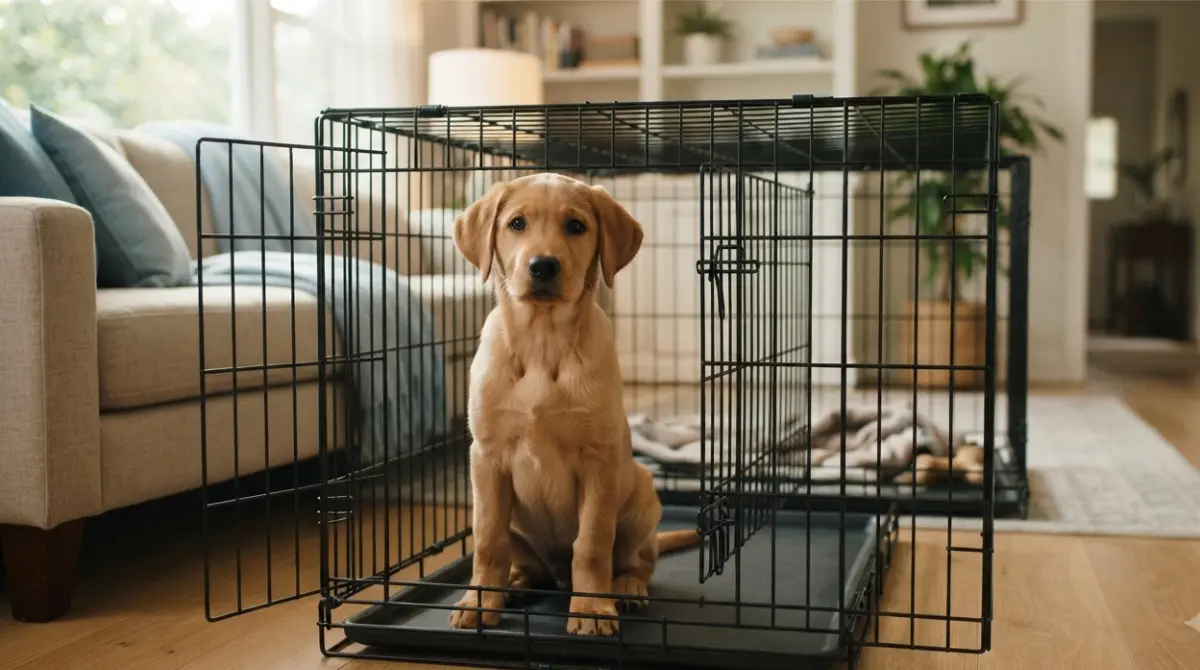
Table of Contents
Your puppy’s crate is too big, and that’s the plan
Buying one adult-size crate instead of three smaller ones is a smart move. The catch is that a puppy with extra room tends to sleep at one end and pee at the other. A crate divider fixes that by shrinking the space now and giving it back as your puppy grows.
Start where you are:
- Crate arrived, puppy not home yet: go to the step-by-step setup below.
- Divider in, unsure when to move it: jump to the timing section.
- Kids or other pets at home: see the family setup section.
- Accidents with the divider in: skip to the troubleshooting section.
Once the divider is set, the routine in our 14-night crate training log takes it from there.
How much room should your puppy have?
Give your puppy just enough room to stand without ducking, turn around, and lie down comfortably, and no more. That’s the standard in MidWest’s crate sizing guide and in humane society crate-training guidance. It’s also the only test that decides where your divider goes.
The stand, turn, lie-down test
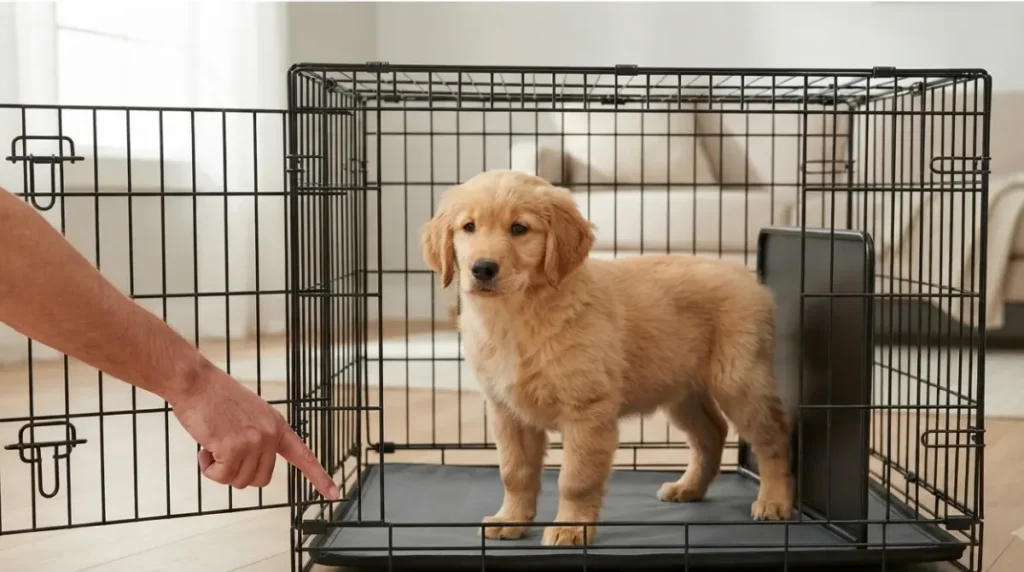
Watch your puppy in the sectioned space for about 30 seconds and check three things:
- Stand: the head clears the top without crouching.
- Turn: a full circle without bumping the panel.
- Lie down: stretched out on one side without pressing against the divider.
Why “snug” isn’t “cramped”
🔍 Why It Works: Puppies generally avoid soiling the spot where they sleep. When the whole space is sleeping space, holding it until you open the door becomes the easier choice. Snug means passing all three checks; cramped means failing any of them.
How to set up a crate divider, step by step
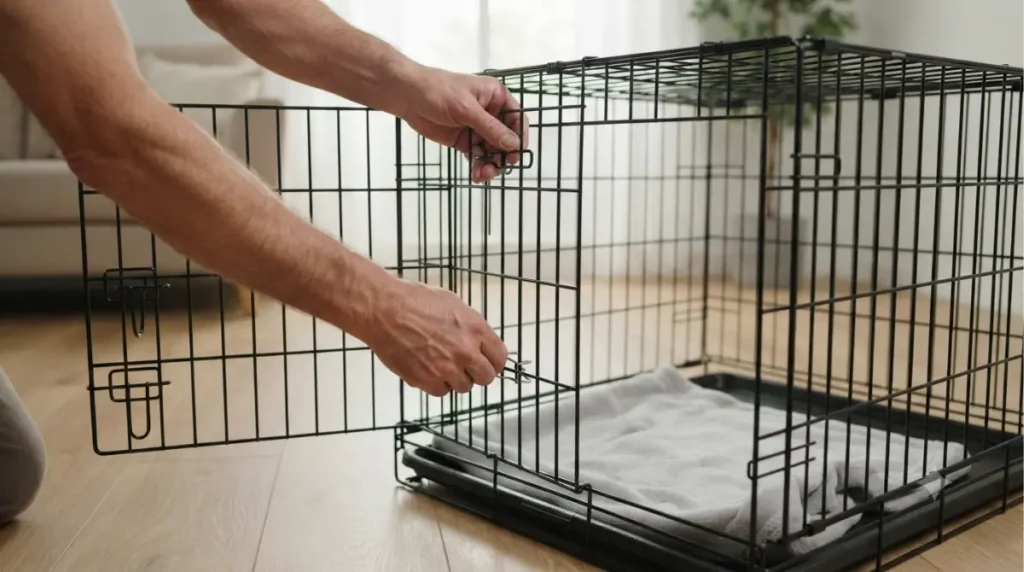
Setup takes a few minutes. Most of it is one decision: how big your puppy will get.
Before your puppy comes home
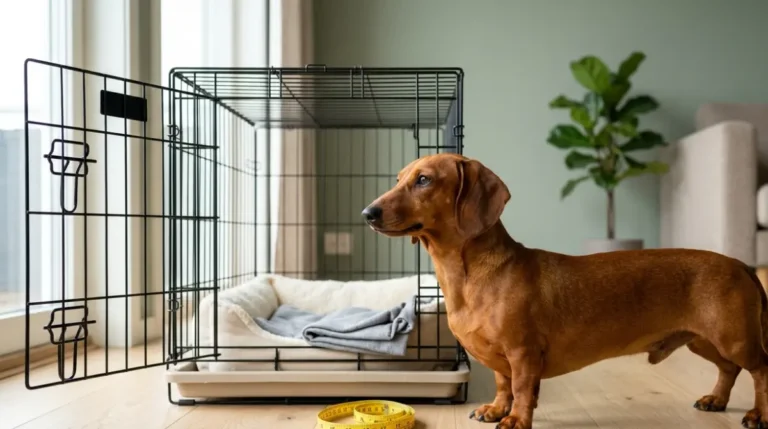
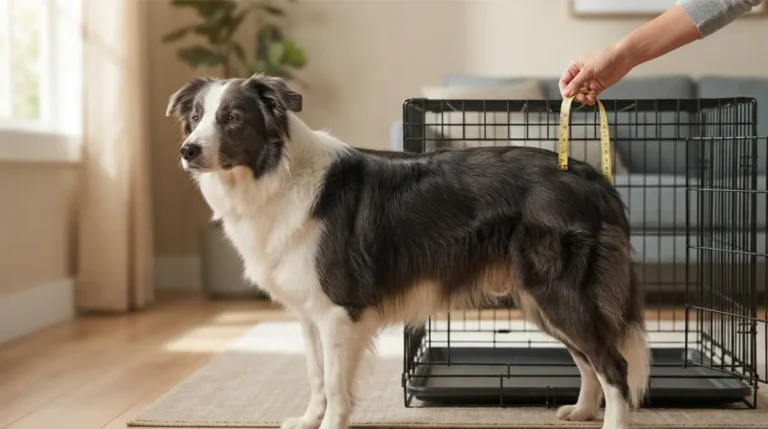
- Estimate adult size. Size the crate for your breed’s expected adult size, and factor in the parents if you know them. For a mixed breed, ask your rescue or veterinarian for their best estimate. Our dog crate size chart by measurement turns that estimate into a crate length.
Installing and checking the fit
- Put the puppy’s space at the door end, so potty trips are quick.
- Add bedding, then run the test. Bedding takes up space, so check stand, turn and lie down with it in place.
- Introduce it with rewards. Toss treats inside and praise your puppy for going in on their own. Never push them in.
⚠️ Watch Out: Check the gaps around the panel edges. If a paw or head could slip through or get stuck, re-seat the divider before leaving your puppy alone.
When to move the divider back, and when to remove it
Move the divider when your puppy starts failing the fit test, not on a set date. MidWest’s crate training guidance describes the same pattern. Move the panel back as your puppy grows, and remove it once size and potty habits are both there.
Divider Position Check
| Check | What a pass looks like | Action |
|---|---|---|
| Stand | Head clears the top | Hold position |
| Turn | Full circle, no bumping | Hold position |
| Lie down | Stretched out, not pressing the panel | Hold position |
| Any check fails | — | Move back a few inches and re-test |
| Crate stays dry, little space left behind panel | — | Remove the divider |
Method based on manufacturer and humane society sizing guidance.
Signs it’s time for more room
Your puppy fails a check, shifts position constantly, or can’t settle. Fast-growing large breeds may need moves more often simply because they outgrow each position sooner.
Signs to hold the current position
All three checks pass and the crate stays dry. Pair each move with the timing in our crate schedule by age.
No divider? Safe options, and ones to skip
Many wire crates ship with a matching metal panel, but you have options if yours didn’t.
Metal, plastic and soft dividers
Buy a panel made for your crate’s model and size, because a loose panel isn’t a barrier. Metal and hard plastic suit teething puppies. Soft panels are easier for a determined chewer to damage.
DIY and filler options
A firm cushion or rolled towels can block off the back of the crate, and some humane societies suggest a sturdy barrier such as Plexiglas. Whatever you use, it must stay put when your puppy leans on it.
What not to use with a chewer
Cardboard and stuffed items can be chewed apart, so use them only while you’re watching. If you think your puppy swallowed pieces, call your vet today.
🏡 Family & Home: Keep DIY boards and loose fillers out of toddlers’ reach, and store a spare panel where kids can’t pull it over.
Setting up the divider in a busy family home
A crate works best when the whole household treats it the same way.
Kids and the crate: adult-only adjustments
Only adults move the divider. Kids don’t reach into the crate or push fingers through the wire, and they leave a resting puppy alone.
Where the crate should live
Place it where the family spends time but away from the busiest walkway, so your puppy can see you without being stepped around. Never use the crate as a punishment spot.
Other pets and the puppy’s side
Keep the puppy’s sectioned space for the puppy only. Other pets shouldn’t share it or crowd the crate.
🏡 Family & Home: Make divider moves an adult task, done while the kids are elsewhere. Any time kids and puppy are together, an adult actively supervises.
Still peeing in the crate with the divider in?
This is common, and it usually has a fixable cause.
Too long between potty breaks
A divider can’t stretch a small bladder. Check the realistic limits in how long a puppy can stay in a crate.
Space still too big
Re-run the three checks. If your puppy can sleep clear of a soiled corner, move the divider forward.
When to ask your vet
If accidents continue despite a steady schedule and a snug fit, mention it at your next checkup. For restless nights, see puppy crying in the crate at night.
Crate divider puppy FAQ
1. Do puppies need a crate divider?
A crate divider puppy setup helps when the crate is sized for adulthood, because it stops one end from becoming a bathroom.
2. How much room should a puppy have in a crate?
Enough to stand without ducking, turn a full circle, and lie down stretched out, with no extra length beyond that.
3. Which end of the crate should the puppy be on?
Put the puppy’s space at the door end so you can get them out for potty breaks quickly.
4. When should I move the crate divider back?
Move the crate divider back when your puppy fails the stand, turn, or lie-down check, not on a calendar date.
5. When can I remove the crate divider?
Remove the divider once your puppy keeps the crate reliably dry and little space remains behind the panel.
6. What can I use instead of a crate divider?
A panel made for your crate, a firm cushion, rolled towels, or a sturdy board that stays put when leaned on.
7. Is a cardboard crate divider safe?
Only under supervision, because puppies can chew it apart. If you think pieces were swallowed, call your vet today.
8. Can kids help move the crate divider?
No. Divider adjustments are an adult job, and kids should stay out of the crate and leave a resting puppy alone.
9. Why is my puppy peeing in the crate with a divider?
Usually the time between potty breaks is too long, or the sectioned space is still big enough to soil one corner.
10. Is a smaller crate space unkind to a puppy?
Not when it passes all three checks. Snug supports house training; cramped means failing a check, so move the panel back.
Your next step
Your puppy now has a space that fits today and a clear signal for when to change it. Next, pair the divider with the night routine in our 14-night crate training log. Every sizing claim here traces to published manufacturer and humane society guidance, and anything we test ourselves will be named.