A Gentle Crate Rest After Surgery Plan for the Whole Household

Crate rest after surgery feels harder once your dog seems fine. Here’s the setup, the potty-trip routine, and the signs that mean call your vet.
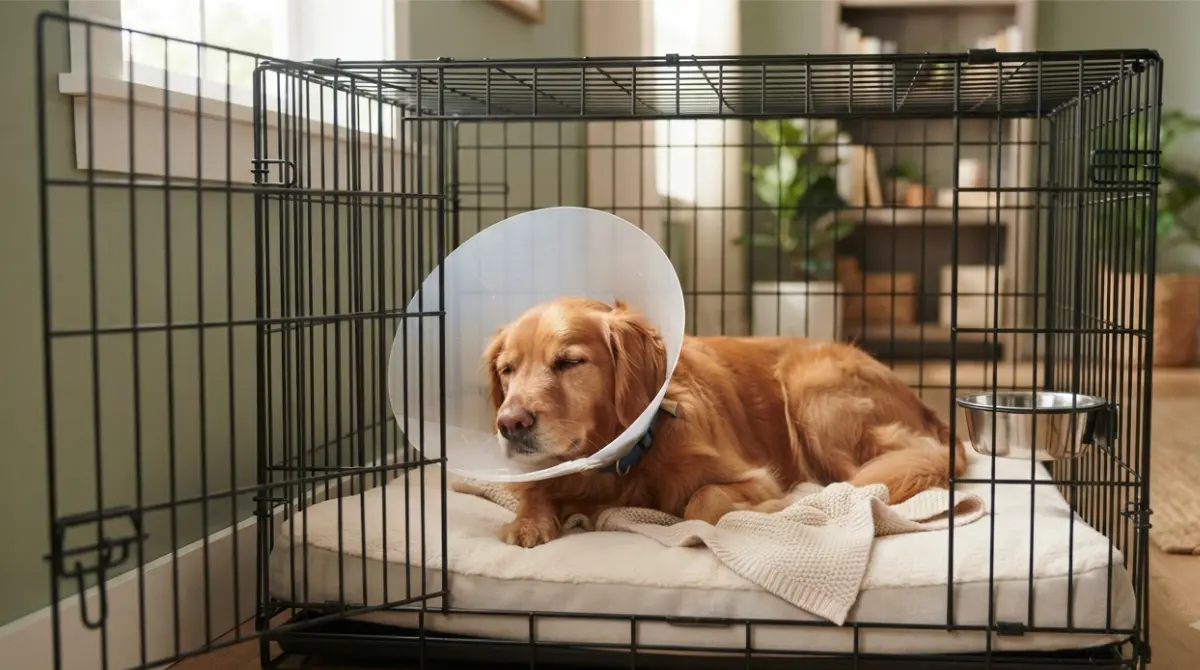
Table of Contents
Crate rest after surgery: what the next 6 weeks look like
Your vet just said “strict crate rest,” and your dog is looking at you like you’ve done something terrible. Crate rest after surgery isn’t a punishment. It’s the part of treatment that happens at home, keeping healing tissue still long enough to mend.
Why six weeks?
Six weeks is a common stretch after orthopedic and spinal surgery, but it isn’t universal. Your surgeon sets the length for your dog’s procedure, size, and healing.
Who this guide is for
- Just home, cone on? Start with the setup and daily routine sections.
- Kids or other pets at home? Read the household section before day one.
- Something looks wrong with the incision or how your dog is walking? Skip straight to the warning signs section.
🩺 Vet Note: Your surgeon’s discharge instructions override everything in this article. How long crate rest lasts and what your dog may do depend on the procedure and how healing progresses. Never give your dog human painkillers or medication prescribed for another animal, since some human medicines can be highly toxic or even fatal to pets. Call your vet whenever something looks wrong.
What your vet means by “strict crate rest”
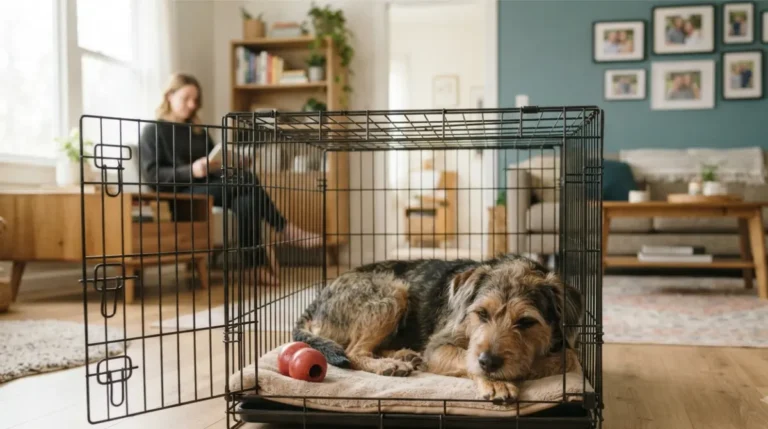
On strict crate rest, your dog stays confined except for short, controlled potty trips, then goes straight back in. The goal is restriction, not immobilization: the pet stays crated and is carried out to toilet, while large dogs may be walked with a sling or short leash.
Allowed: the short list
- Resting, eating, and drinking inside the crate
- Leash-only potty trips, or being carried if your vet says so
- Calm chewing and food puzzles
- Rechecks and any rehab your vet prescribes
Not allowed, even once
Your dog shouldn’t be running, jumping, climbing stairs, playing rough, or walking on slick floors. For safety, most recovering dogs need to avoid running, jumping, stairs, ball play, rough play and slick floors. Jumping on or off furniture counts too, so no sofa and no bed.
🔍 Why It Works: Dogs often feel significantly better within just a few days after surgery, which can lead to more activity before bones, ligaments, and surrounding tissues have healed. The American College of Veterinary Surgeons notes that activity must be restricted for several weeks after cruciate surgery to avoid complications with implants or healing.
How long it lasts by surgery type
| Surgery type | Typical length | What can change it |
|---|---|---|
| Orthopedic (e.g., cruciate repair, fractures) | Several weeks, often around 6 or more | Healing seen at, dog’s size |
| Spinal (e.g., disc surgery) | Set by your neurologist | Neurological progress |
| Soft-tissue and abdominal | Often shorter | Incision healing, the procedure |
Ranges are general. Your surgeon’s plan comes first.
✅ Do This: Before leaving the clinic, ask your veterinarian for a written list covering how many weeks of rest, whether your dog walks or is carried to potty, when the cone can come off, and when the recheck is booked.
Setting up the recovery crate before you bring them home
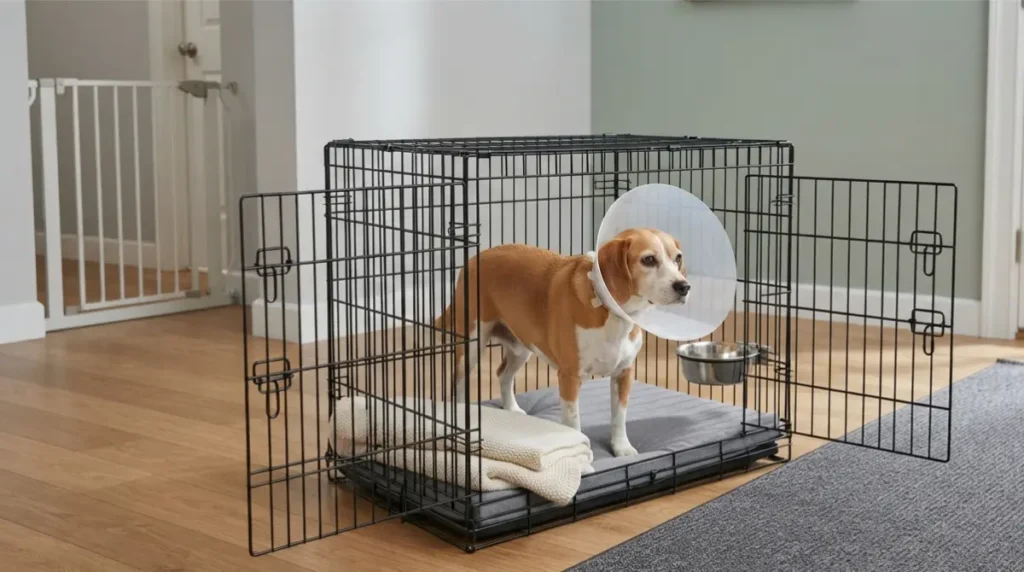
Set up the recovery space before surgery day, so your dog comes home to something familiar.
Right size: stand, turn, stretch, eat
Texas A&M’s veterinary teaching hospital says the crate should be large enough for your pet to stand up, turn around, lie down, and have room for food and water. Its orthopedic aftercare guidance is worth reading in full. Too much space invites pacing. If your crate is oversized, use a divider to shrink it, or measure your dog for the right crate size.
Crate, pen, or top-opening?
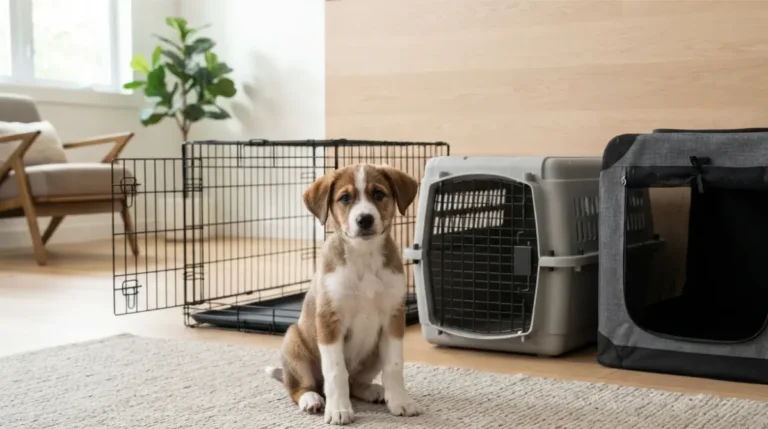
A metal crate with a top lets your pet see out and you see in, and stops your pet from tearing it, knocking it over, or climbing or jumping out. A top-opening crate makes lifting small dogs easier. If your dog panics in crates, ask your vet whether a pen or a small room is safe for their procedure.
Never crated your adult dog? Before elective surgery, it’s best to introduce the crate gradually over a few days. The same slow steps from crate training an older rescue dog apply here, just compressed.
Floors, bedding and the cone
Lay non-slip mats on the path from the crate to the door. Texas A&M advises keeping the e-collar on at all times for 10–14 days after surgery, because licking or chewing the incision can cause infection or dehiscence (the incision coming apart).
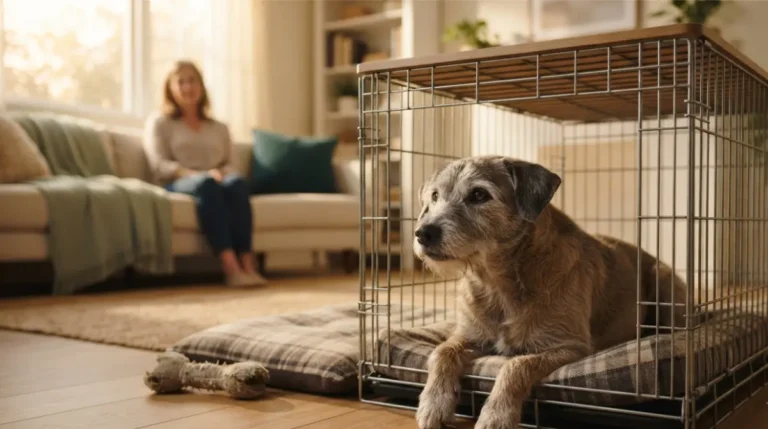
🏡 Family & Home: Place the crate where your dog can see the family, but away from the front door and the kids’ play zone. One orthopedic clinic advises creating a quiet area where your pet can rest without being disturbed by other pets, young children or everyday household activity.
A day on crate rest, from first potty trip to lights out
A predictable daily routine of short potty trips, meals in the crate, quiet company, and sleep helps a confined dog settle.
Potty trips: carried or leashed, short and boring
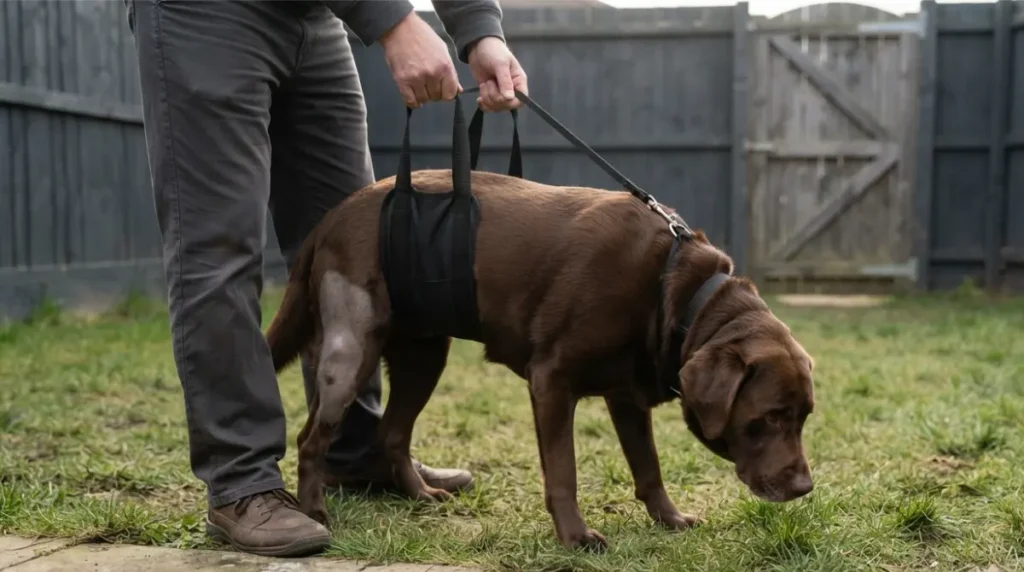
Every trip outside is on a leash, including the backyard. One orthopedic practice’s instructions put it plainly: no doggie door and no loose backyard time — always on a leash when outside. Carry small dogs if your vet says to, and ask about a support sling for large dogs. Your vet sets how often potty trips happen. Plan on company, too: for at least the first few days, owners can expect to be home with their crated pet for most of the day.
Your 6-week planner
| Week | Ask your vet | Track daily |
|---|---|---|
| 1 | Medication schedule, cone rules, potty method | Appetite, incision, how fast your dog settles |
| 2–3 | When do stitches or staples come out? Can the cone come off? | Whining episodes, what calmed them |
| 4–5 | Can any short leash walks be added? | Energy, any change in limping |
| 6 | What changes after this recheck? | Questions to bring to the recheck |
When they whine, bark, or refuse to settle
Whining on crate rest usually means boredom or frustration. It doesn’t mean you’re doing it wrong.
Brain work that burns energy lying down
Serve meals in food puzzles, stuffed toys, or a lick mat so eating takes longer. Food-dispensing toys such as filled Kongs are especially good boredom-busters. If a toy winds your dog up, take it away.
Rewarding calm, not the whine
Quietly reward calm moments with praise or a small treat. Wait for a pause in the whining before opening the door, unless it could be a potty need. Our guide on why dogs cry in the crate during the day covers more reward-based settling.
When to ask your vet about calming help
A veterinary behaviorist at UC Davis advises checking for underlying issues such as separation anxiety before confinement, and emphasizing what the dog can do rather than restrictions. A specialist may prescribe medication if your pet is too anxious during confinement.
✅ Do This: If your dog is frantic, biting at the bars, or can’t rest, call your veterinarian today. Tell them how many hours a day the distress lasts and what you’ve tried. Ask whether prescription calming support is appropriate. Never use human medicines.
Kids, other pets, and the doorbell during recovery
The biggest re-injury risk is often another member of the household.
House rules for kids
- Only adults open the crate or take the dog out.
- Kids can sit nearby and talk or read to the dog, with an adult present.
- No chasing games or ball play near the crate.
Other dogs and cats
An orthopedic practice warns that the recovering dog may need to be kept apart from other pets to prevent playing. Feed and exercise other pets away from the crate.
Visitors, doorbells and delivery drivers
A doorbell can launch a dog off its feet. Post a “please text, don’t knock” note on the door while your dog recovers.
🏡 Family & Home: Write the house rules and your vet’s allowed list on one page and stick it on the fridge. That way babysitters, grandparents, and older kids follow the same plan. Any time children are near the recovering dog, an adult supervises.
Incision and recovery signs that mean call the vet
Check the surgical incision daily, the way your vet showed you.
Call your vet today
- Swelling, bleeding, or discharge at the incision site
- Licking or chewing at the incision, or the cone coming off
Call now or go to the emergency vet
- The incision is opening
- Sudden new lameness, or new weakness or wobbliness after spinal surgery
- A fall or escape followed by pain
When you call, tell the vet the surgery date, the procedure, what changed, and when it started.
Crate rest after surgery: quick answers
1. How long does crate rest after surgery last?
Crate rest after surgery lasts as long as your surgeon prescribes, often several weeks after orthopedic surgery. Confirm your dog’s timeline at discharge.
2. Can my dog come out of the crate on crate rest?
Only for short leash-only or carried potty trips and vet-approved activities, then straight back into the crate.
3. Can my dog sleep in my bed after surgery?
Not unless your vet clears it. Jumping on or off furniture is exactly what crate rest after surgery prevents.
4. How big should a crate be for crate rest?
Big enough for your dog to stand, turn around, lie down, and fit food and water, without room to pace.
5. Is a playpen OK instead of a crate for crate rest?
Sometimes. Ask your vet whether a pen or small room suits your dog’s procedure, especially if they panic in crates.
6. Does my dog need the cone inside the crate?
Usually yes. Texas A&M advises wearing the e-collar at all times for 10–14 days. Confirm with your vet.
7. How often should potty breaks be on crate rest?
Your vet sets the schedule. Keep every trip short, on a leash or carried, with no loose yard time.
8. How do I stop my dog whining on crate rest?
Use food puzzles, reward quiet moments, and call your vet if the distress is constant or frantic.
9. Can I give my dog something to calm down on crate rest?
Only what your veterinarian prescribes. Never give human calming or pain medicines. Ask your vet today.
10. My dog seems fine at week three. Can crate rest end early?
No. Feeling better isn’t the same as healed. Keep the rules until your vet clears changes at a recheck.
Week 6 isn’t the finish line
You’ve made it through the hardest part, and your dog has healed in a way that kept their surgery safe. Recovery ends with a gradual return to activity, not an open door. Crate confinement should be paired with a graduated exercise programme. At the final recheck, ask your vet exactly which activities come back next, and in what order.
Once your dog is healed, the crate can go back to being a place they choose. Our night-by-night crate training log shows how to keep it that way. Every health claim here is sourced to veterinary aftercare guidance, and we only describe real-dog testing that actually happened.