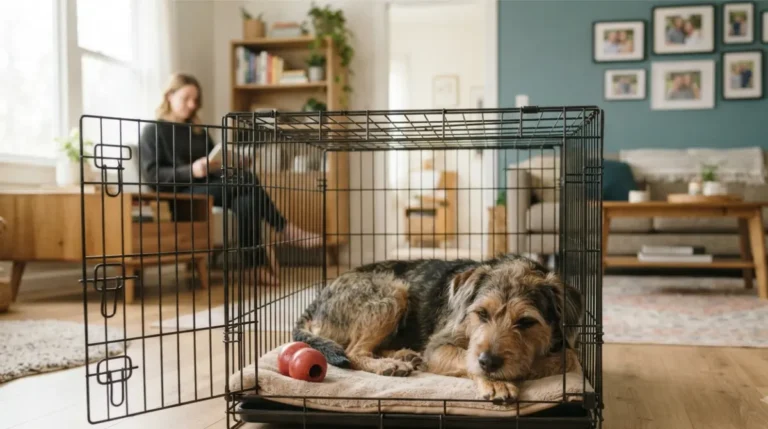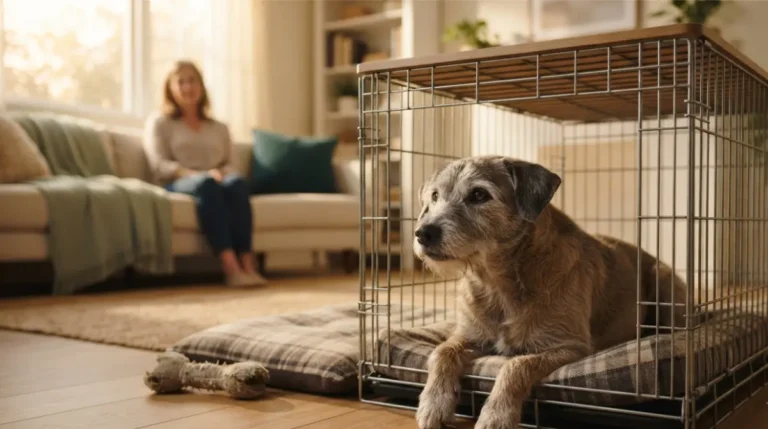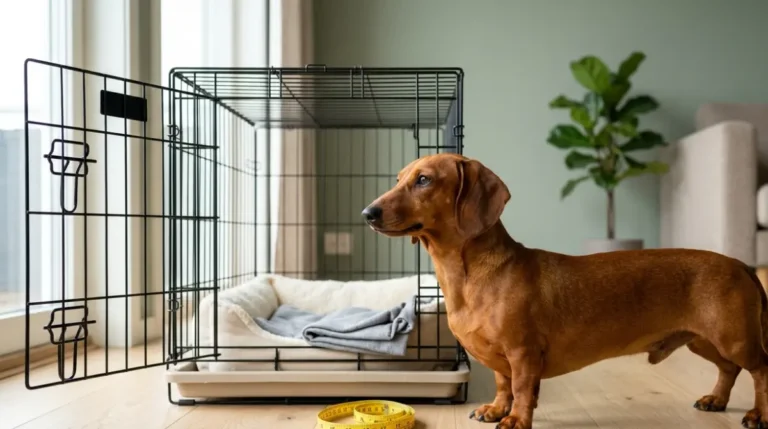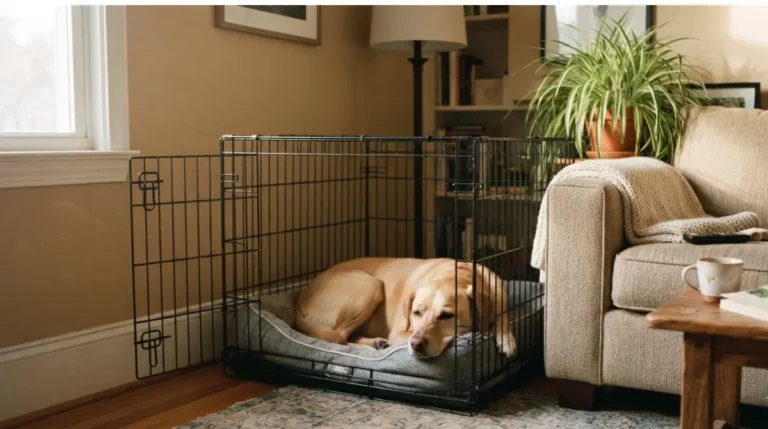
When to Stop Crating Your Dog and How to Do It Gently

Stop crating a dog once it has shown it can be alone: no accidents, no destructive chewing. Here’s the rung-by-rung ladder for checking that at home.
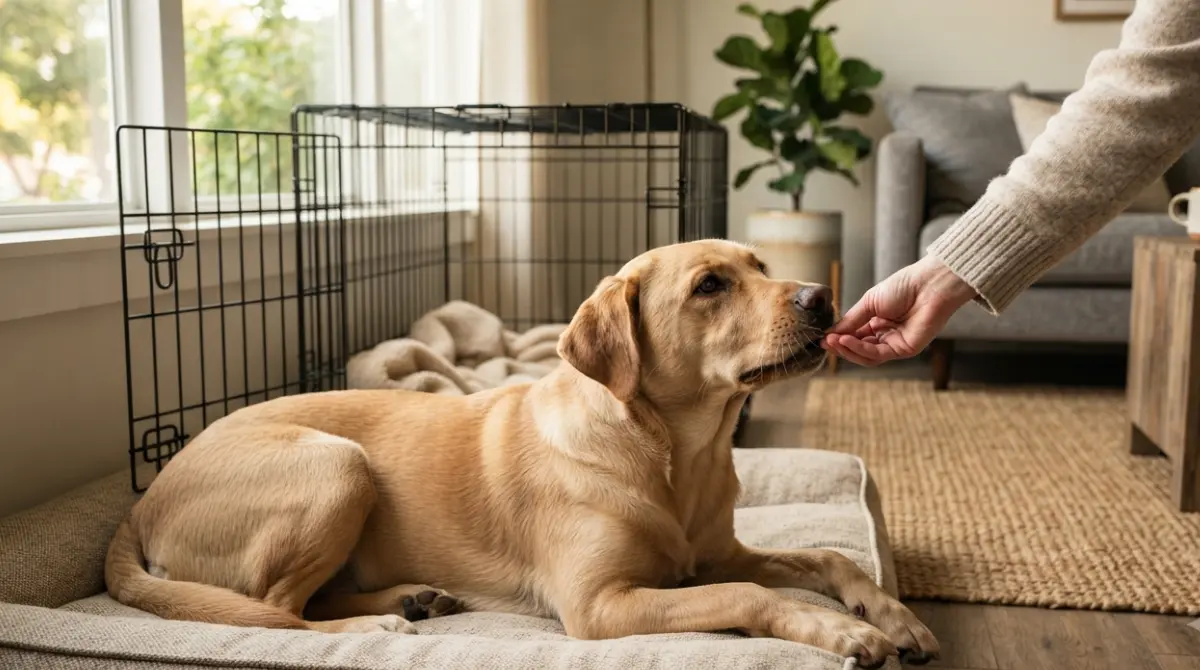
Table of Contents
When to stop crating a dog: no birthday, just proof
The short answer
Stop crating your dog when it has proven, one rung at a time, that it can be alone without accidents or destructive chewing. Humane World for Animals suggests graduating to a smaller enclosed area before whole-house access. Online advice spans six months to two years, so watch the dog, not the calendar.
Who this guide is for
Puppy parents outgrowing a crate, owners of adult dogs feeling guilty about confinement, and families with kids or other pets all start here. Beginning from day one instead? Read our guide to crate training a puppy at night first.
🩺 Vet Note: Needs vary with age, size, and health, so treat this as general guidance. Call your veterinarian about a sudden change in toileting or behavior, and an emergency vet right away if you think your dog swallowed something that isn’t food. A veterinary behaviorist or certified trainer can help with panic or severe anxiety.
Signs your dog is ready to leave the crate

Readiness shows in behavior, not on a birthday.
The two non-negotiables
Humane World for Animals ties crate use to a dog being alone at home without accidents or destructive habits. Two checks are non-negotiable, and two more confirm them:
- No accidents while alone
- No destructive chewing of furniture, shoes, or cords
- Calm when you leave, not pacing or barking nonstop
Why age alone misleads
Size, energy, and chewing habits set the pace, which explains the wide age range.
Signs your dog isn’t ready yet
Any accident, chewed item, or frantic behavior means staying on your current rung.
The five-rung ladder from crate to whole house
Climb one rung at a time, and step back a rung whenever one fails.
Rungs 1–2: door open, then short trial absences
- Door open, you home: leave the crate open and watch where your dog chooses to rest.
- Short solo trials: step out briefly with your dog loose in one dog-proofed room.
Rung 3: a dog-proofed room or pen
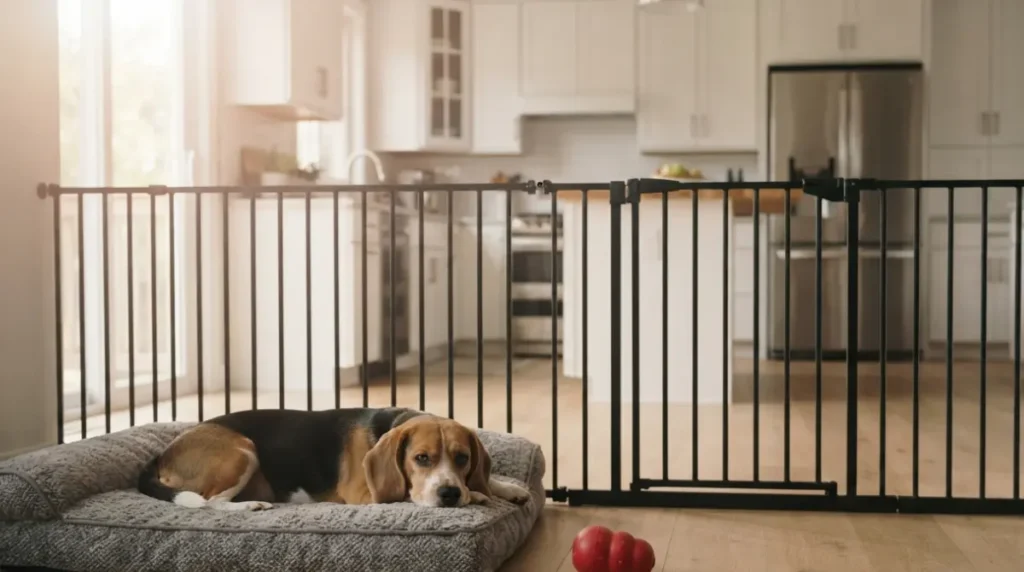
- Gated room or pen for longer absences, the middle step Humane World for Animals describes. Compare options in our crate, playpen, or baby gate guide.
Rungs 4–5: nights, then the whole house when alone
- Nights in your bedroom, crate door open, bed beside it.
- Whole house when you’re out, last, starting with short outings. For long workdays, see crate training while at work.
🏡 Family & Home: Test on calm days, not during school-run chaos, and keep any child time with your dog actively supervised.
You don’t have to retire the crate
Graduating doesn’t mean throwing the crate out.
An open door, still a den
Leave it set up with the open door and bedding inside. Many dogs keep napping there long after training ends.
When the crate comes back (travel, vet, recovery)
A familiar crate is ready for travel, vet visits, or vet-directed rest. Humane World for Animals cautions that prolonged crating can cause anxiety, so keep closed-door time short. Treat the crate as a tool you pick up when needed, not a permanent state.
Kids, babies and other dogs change the timeline
Crate-free never means child-and-dog alone.
Toddlers and a crate-free dog
The AVMA’s dog bite prevention guidance says to always supervise young children around dogs, however well behaved either is, and that any dog can bite. Our toddler and crate rule covers the details.
A new baby or new dog resets the ladder
The AVMA also advises managing introductions of children or a new dog to your household carefully. Step back a rung while everyone adjusts.
Homes with more than one dog
Test each dog on its own rung; one dog’s readiness doesn’t transfer to the other.
🏡 Family & Home: Keep a gate or closed door between children and a crate-free dog whenever no adult is actively watching, and treat the crate as the dog’s retreat.
Dog-proof the house before the crate door opens
Rungs 3 to 5 only work in a safe house.
Walk the house at dog height
Kneel down and check what a chewer can reach: cords, shoes, trash, and low medications. Move or block each one.
Toxic plants and foods
Check houseplants against the ASPCA’s plant list for dogs, which flags sago palms and tulips as toxic. Keep human food and trash out of reach.
Gates, pens and cameras
Choose a gate or pen your dog can’t climb or push through; a pet camera lets you watch trials from outside.
✅ Do This: If your dog may have swallowed a plant or non-food item, call a veterinarian or emergency vet now. Say what, how much, and when. Don’t induce vomiting unless instructed.
If your dog slips: chewing, accidents, panic
Setbacks are information, not failure.
Step back one rung, no punishment
Return to the last rung that worked, and reward calm settling on a bed. The AVSAB recommends only reward-based methods for all dog training, including behavior problems.
When to call a vet or behavior pro
How a dog feels affects how it behaves, so tell your veterinarian soon about sudden accidents or behavior changes, and the same day if your dog is hurting itself. For panic, ask about a board-certified veterinary behaviorist or certified trainer, and read confinement versus separation anxiety.
✅ Do This: Tell your vet when it started, what changed at home, and what your dog does when alone.
Frequently asked questions
1. At what age can you stop crating a dog?
There’s no set age to stop crating a dog; advice runs from six months to two years, so readiness, not age, decides.
2. When can I stop crating my dog at night?
Stop crating at night only after your dog passes the daytime rungs, then try nights in your bedroom with the crate door open.
3. How do I know my dog is ready to stop being crated?
Your dog is ready to stop being crated when it stays alone without accidents or destructive chewing and stays calm on repeated trials.
4. Can I leave my dog alone without a crate?
Yes, you can stop crating when you’re out once your dog passes each rung: a dog-proofed room or pen first, then the whole house.
5. Should I leave the crate door open?
Yes. Once you stop crating, leaving the door open with bedding inside keeps a familiar den available, and many dogs keep napping there.
6. Should I ever stop using the crate completely?
You don’t have to retire it. You can stop crating a dog daily and keep the crate for travel or vet visits.
7. What if my dog has accidents after I stop crating?
After you stop crating, step back to the last rung that worked, without scolding. If a house-trained dog suddenly has accidents, tell your veterinarian.
8. What if my dog chews things out of the crate?
If chewing starts when you stop crating, go back to a dog-proofed room or pen and reward settling on a bed. If it swallowed a non-food item, call an emergency vet now.
9. Can my dog be crate-free around kids?
Crate-free never means unsupervised: always actively supervise young children around dogs, however well behaved either is.
10. Should I restart crating with a new baby or dog?
Rather than stop crating outright, step back a rung when a baby or new dog arrives, and keep the crate available.
Where to go from here
There’s no deadline, only the next rung. Move at your dog’s pace, and the crate becomes a choice rather than a rule. For the puppy stage that comes first, revisit our 14-night guide above.
Call your vet soon if a reliably trained dog suddenly changes toileting or behavior, and right away if it may have swallowed something. Every safety claim here traces to a named source.