Dog Growling in Crate? What to Do and Who Can Help

A dog growling in the crate is giving a warning, and pain is the first thing to rule out. Here’s why your vet comes before a trainer or behaviorist.
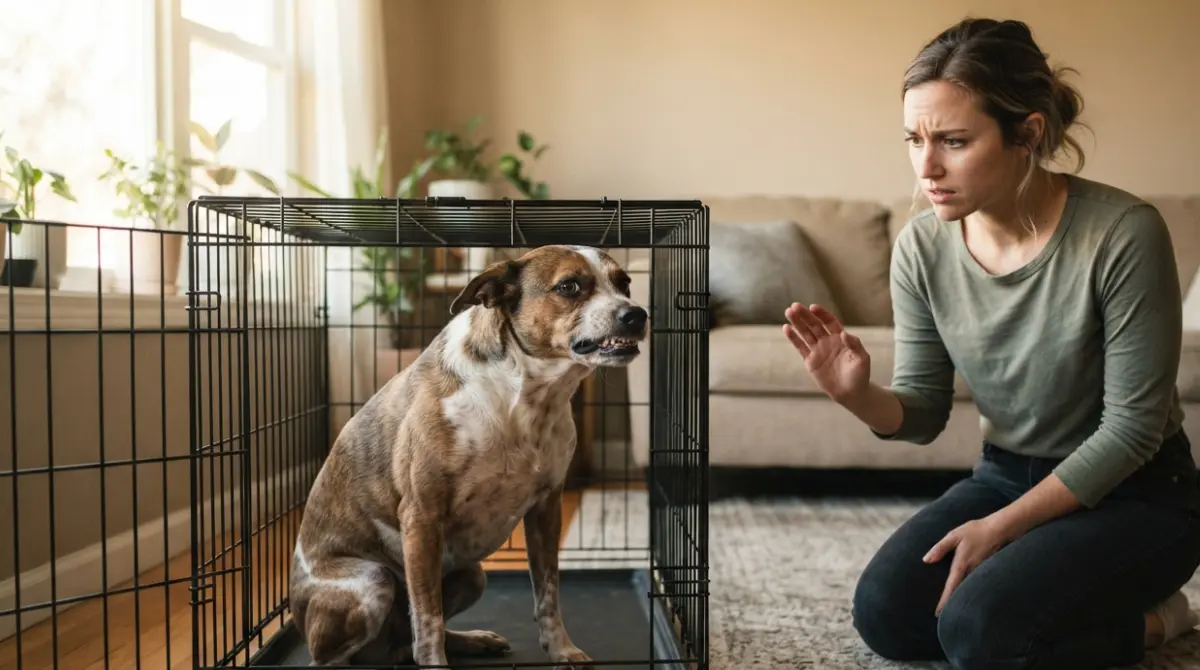
Table of Contents
My dog growls in the crate: warning or emergency?
A growl in the crate is your dog saying something is wrong, and it deserves a calm, quick response. If it began during the first nights of crate training a puppy at night, you’re in the right place.
Which of these sounds like your dog?
- Growls as the door latches or when you pass: Sections 2–4.
- A new, sudden, or post-surgery growl: Section 3.
- Lunging, snapping, a bite, or a child nearby: Sections 5–6.
Do you have to stop using the crate right now?
Pause whatever sets off the growl, and talk to your vet before deciding anything bigger.
🩺 Vet Note: This is general guidance, not a diagnosis. A new growl needs a veterinary exam first, and your vet can refer you to a veterinary behaviorist.
Why is my dog growling in the crate?
A growl is a warning, and the usual drivers are fear, protecting something, pain, or conflict.
Fear and feeling cornered
Fearful dogs may turn aggressive when they can’t escape, whether cornered, leashed, or held, according to the Merck Veterinary Manual’s behavior overview.
🔍 Why It Works: Most aggression is a dog’s attempt to create distance. A closed crate door removes the other option, which is leaving.
Protecting something
Merck also lists control of food, toys, or resting places among common triggers. A crate is a resting place, often with a chew inside.
When it isn’t behavior at all
Pain can make a dog defensive, especially when it expects to be touched or moved. Organ, neurologic, and hormonal conditions can contribute too.
A new growl? Rule out pain first
A growl that is new, or that started after surgery or an injury, needs a vet exam before any behavior plan.
Growling that started suddenly
Pain, metabolic, or hormonal problems can contribute to aggression, and only a veterinarian can diagnose them, as Ohio State’s veterinary hospital explains.
After surgery or injury
Pain may play a part. If your dog is on crate rest after surgery, mention the growling to the surgical team.
✅ Do This: Call your vet promptly rather than waiting to see if it passes. Say when the growling started, what your dog was doing, and what else changed. If your dog also seems hurt or very unwell, ask whether to come in today.
Fear, guarding or both: what to look for
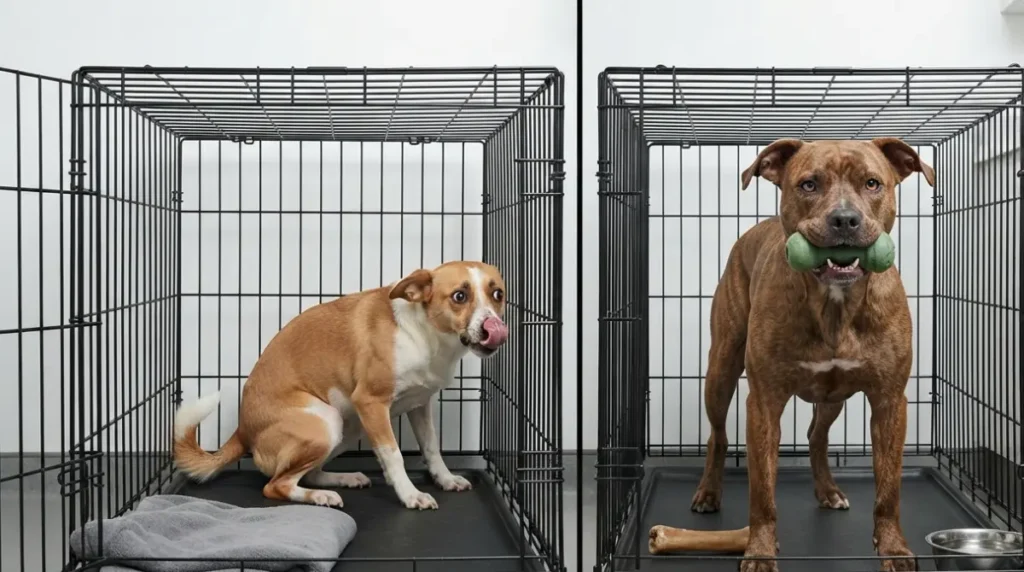
Growling as the door latches can point to fear. Growling when you reach in, or when a chew is inside, can point to guarding. The two can overlap, and only a professional can sort out which.
If your dog also panics when the door closes, see confinement anxiety versus separation anxiety.
✅ Do This: Note exactly when the growl happens, and ask your vet for a behaviorist referral.
Why you shouldn’t punish the growl
Don’t punish a growling dog. The AVSAB humane training position says only reward-based methods should be used, including for behavior problems, and rules out aversive methods that rely on force, pain, or discomfort. That covers scruffing, pinning, and shock or prong collars. Merck adds that physical punishment can make aggression worse.
Growling at kids near the crate
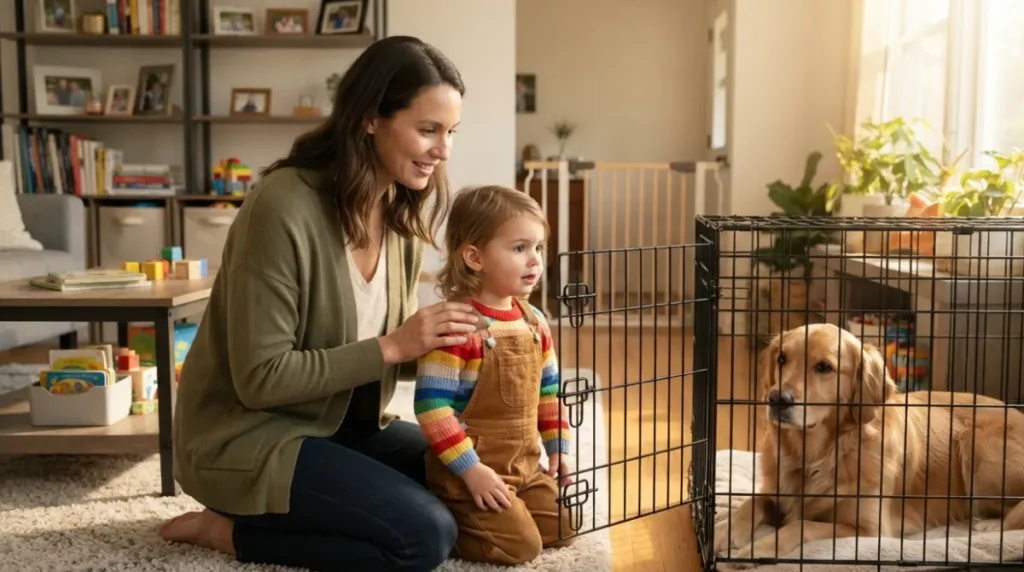
🚨 If This Is Happening Now: A child has been snapped at or bitten near the crate. Separate dog and child now, get the child medical care, and call your veterinarian today.
The crate is a no-touch zone
Any dog can bite, and AVMA’s dog bite guidance advises never disturbing a sleeping or eating dog.
Active adult supervision, every time
AVMA also says never to leave a baby or small child alone with a dog.
🏡 Family & Home: Treat the crate like a closed door: no reaching in, climbing on, or passing things through. An adult stays within reach whenever dog and child share a room, and a gate or door separates them otherwise. Our dog crate and toddler rule covers the setup.
Tell your vet a child was involved.
Lunging, snapping or biting: stop and call
🚨 If This Is Happening Now: Your dog has lunged, snapped, or bitten. Stay calm, don’t scold or hit, and move the dog to safety. Get medical care for anyone bitten, and call your veterinarian today.
What to do in the first minutes
The American College of Veterinary Behaviorists links confrontational approaches to a greater risk of aggression, so keep a worried dog out of trigger situations until you have help.
Stop-and-Call table
| What you saw | Call | How soon |
|---|---|---|
| Bite or snap at a person | Your vet; ask for a veterinary behaviorist | Today; the person also needs medical care |
| Lunging, or growling with a stiff body | Your vet | As soon as you can |
| Growling near a child | Your vet; keep dog and child apart | As soon as you can |
Who to call and what to tell them
Vet, behaviorist or trainer: who does what
Start with your vet: only veterinarians can diagnose health problems or prescribe behavior medication, Ohio State notes. For aggression, ask about a referral to a veterinary behaviorist (DACVB). Dog training is unregulated, so check credentials, such as CPDT-KA or IAABC, and ask for reward-based methods only.
Bring a growl log and a short video
Behavior diagnoses aren’t made from a single event, so patterns help. Note the date and time, what your dog was doing, who was nearby (including children), what you did, and how it ended. If you can do it safely, film it from a distance.
Dog growling in crate: quick answers
1. Why is my dog growling in his crate?
A dog growling in the crate is giving a warning, which can come from fear, guarding, pain, or conflict. Start with a vet exam.
2. Is it normal for a dog to growl in the crate?
A growl is a dog saying it wants to be left alone, so crate growling is always worth investigating. Book a vet exam first.
3. Should I punish my dog for growling in the crate?
No. AVSAB advises against aversive methods for behavior problems, and physical punishment can make aggression worse. Call your vet instead.
4. Why does my dog growl when I reach into the crate?
Reaching in can trigger a dog guarding a resting place or feeling cornered, so stop reaching in and call your vet.
5. Can pain make a dog growl in the crate?
Yes. Pain can make a dog defensive, especially when it expects to be touched or moved, so a vet exam comes first.
6. My dog suddenly started growling in the crate; what should I do?
Pause the trigger, note when it happens, and book a vet exam promptly, since sudden changes can have a medical cause.
7. Is crate guarding the same as resource guarding?
Closely related: Merck lists food, toys, and resting places as common triggers for aggression. Ask your vet about a behaviorist referral.
8. Should kids be near a dog that growls in its crate?
No. Keep children away from the crate, supervise every interaction as an adult, and call your vet about a behaviorist.
9. When should I see a vet or behaviorist about crate growling?
Start with your vet at the first sign of aggression. A bite means calling today and asking about a behaviorist.
10. Should I stop using the crate if my dog growls in it?
Pause the situations that set off the growl, and ask your vet or behaviorist before deciding what happens next.
What to do tonight
You came worried about a growl; now you have a plan: pause the trigger, call your vet, and bring a log and video. If it began in the first nights, revisit our night-by-night crate training log. Ask your vet whether pain could be behind it and whether a behaviorist referral makes sense.