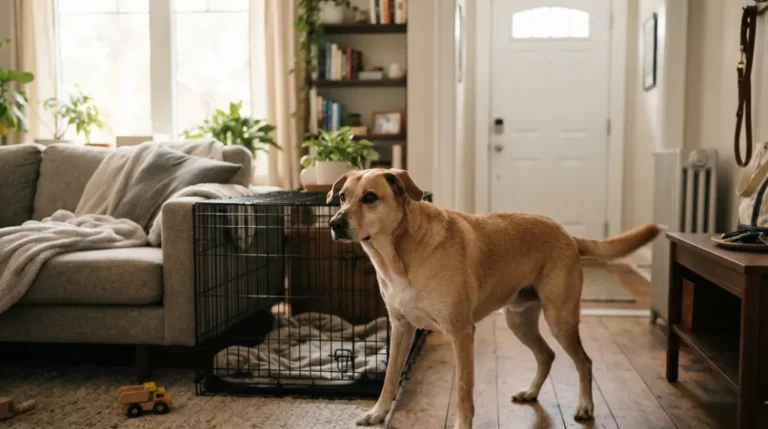
One Steady Rule for Every Home With a Dog Crate and Toddler

Toddler and dog crate safety means the crate is off-limits even when it’s empty. Here’s the gate setup trainers use and why adults handle the door.
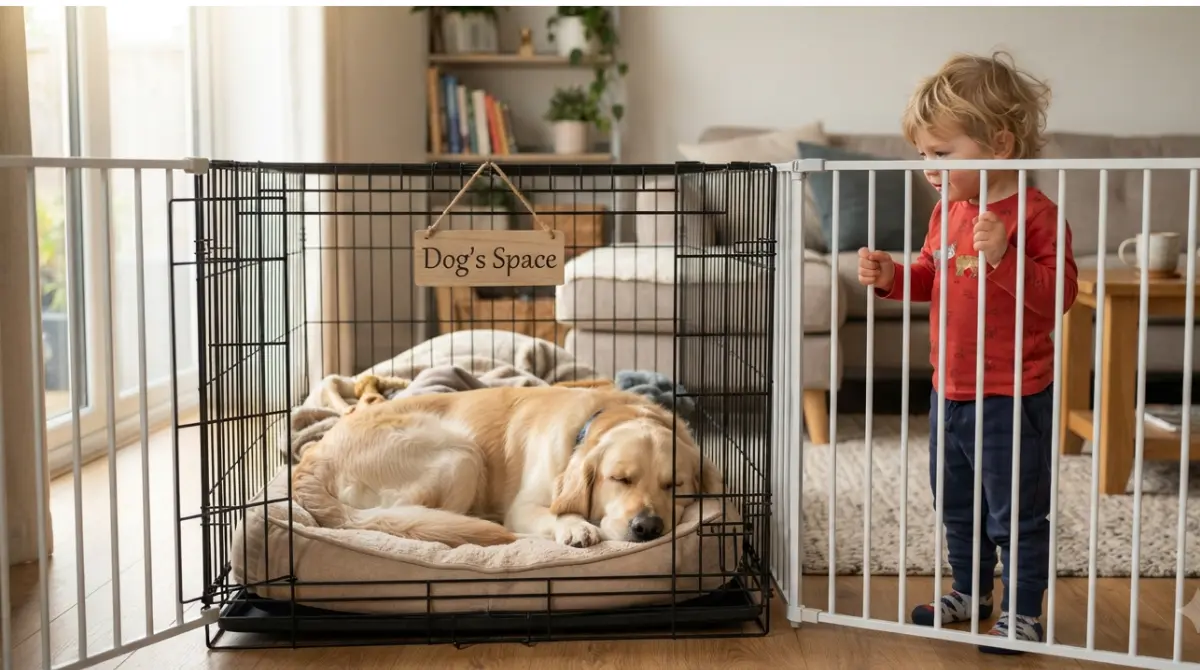
Table of Contents
The one crate rule every toddler home needs
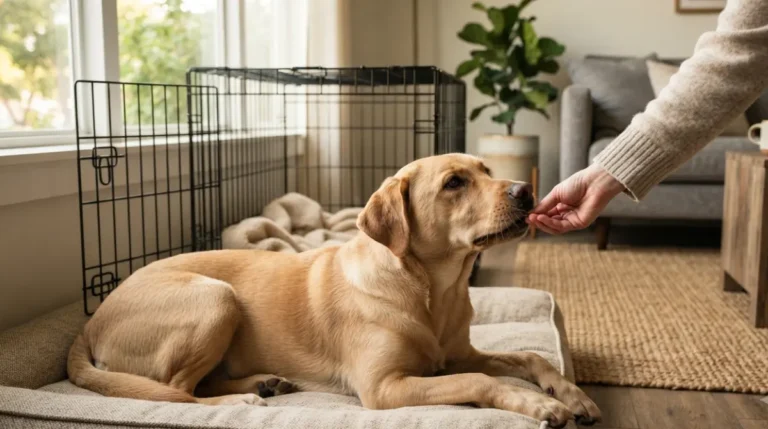
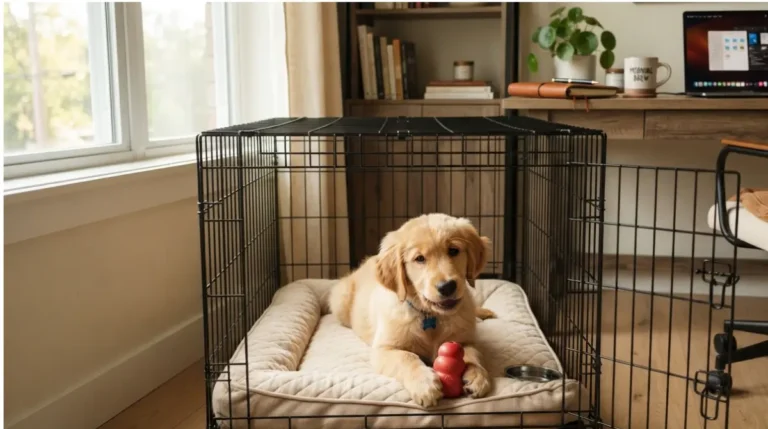
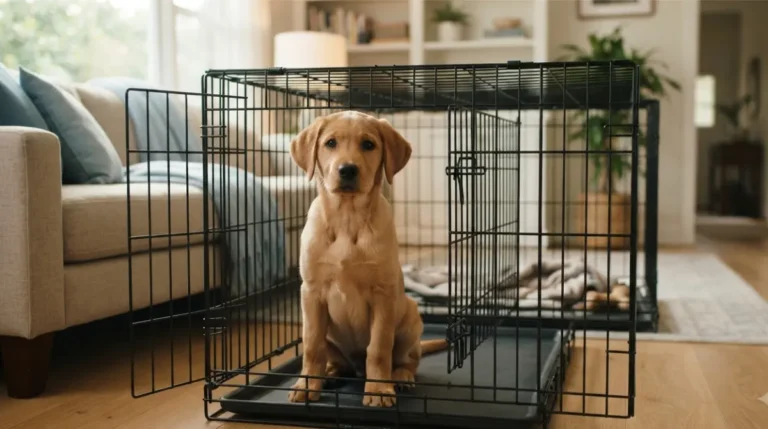
In any home with a dog crate and toddler, the crate belongs to the dog, whether the dog is inside it or not.
The rule, in one sentence
No climbing in, no reaching in, no opening the door, and no playing inside when it’s empty. The AVMA reports that children make up at least half of the 4.5 million-plus dog bites in the US each year, and that young kids are more likely to be bitten on the head and neck. A kid-free crate is one of the simplest ways to lower that risk at home.
Jump to your situation
- Crawler or new walker: start with the crate-zone setup.
- Toddler who keeps climbing in: see teaching the rule by age.
- Dog growled at your child: go to the last section before the FAQ.
🩺 Vet Note: This is general safety guidance, not advice for your specific dog. If your dog growls, stiffens, or guards the crate around your child, call your veterinarian to rule out pain, then work with a qualified behavior professional.
Why the crate has to be a kid-free zone

A crate only works as your dog’s retreat if nobody follows them into it.
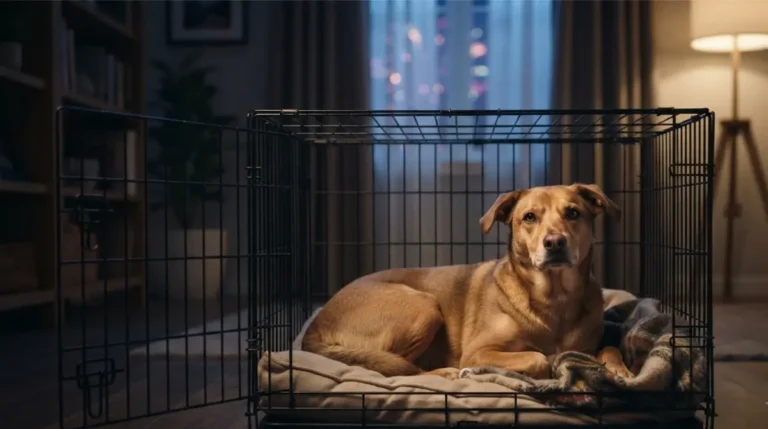
What the crate means to your dog
For a crate-trained dog, the crate is where they sleep and decompress. The AVMA advises that children should never disturb a dog that’s sleeping or eating, and a dog in its crate is usually doing one of the two.
Why toddlers are drawn to it
To a toddler, a crate looks like a fort. Dog-and-family educators note that being off-limits only adds to the appeal. Crate makers also point out that crates are designed and tested for dogs, not for children climbing in or on them.
What kids learn from the rule
Leaving a crated dog alone teaches respect for a dog’s space, a habit your child carries to friends’ and relatives’ homes. The AVMA’s dog bite prevention guidance also says never to leave a baby or small child alone with a dog.
How to set up a crate zone your toddler can’t reach

Toddlers can’t follow a rule on willpower, so the room has to enforce it for them.
Put a gate around the crate, not just the room
Once your child can toddle over but doesn’t yet understand not to push fingers or food through the bars, add an expandable gate or playpen panels around the crate itself. This is a setup certified trainers use in their own homes. Check any gate for recalls before you buy.
Placement: out of the toddler highway
Keep the crate away from the main walkway and play area. Our guide on where to put a dog crate walks through the options room by room.
Latches, covers and finger-safe spacing
The gate keeps small hands off the crate wire. If you use a crate cover, secure it so it can’t be tugged off from outside the gate.
⚠️ Watch Out: No gate is toddler-proof. It slows and blocks; an adult still actively supervises whenever your child and dog share a room.
🏡 Family & Home: If the crate lives in your only living space, see crate training in an apartment for fitting a crate zone into one shared room.
Teaching the crate rule at 1, 2 and 3+
The barrier does most of the work early on; words take over slowly.
Crawlers and new walkers: management only
At this stage, don’t rely on rules. Block access and supervise every moment.
Two-year-olds: short words, lots of redirecting
Use one short cue, like “Dog’s bed, not yours,” then steer your child to their own cozy spot.
Three and up: they can say the rule, not own it
Knowing the rule isn’t the same as following it. Keep the gate up and praise your child when they leave the crate alone.
| Stage | What does the work | Your job |
|---|---|---|
| Crawlers & new walkers | Gate around the crate | Block access; supervise constantly |
| Around 2 | Gate + one short cue | Redirect, every time |
| 3 and up | Gate + praise | Remind, praise, supervise |
Management guide, not a developmental chart. Ages are approximate.
🏡 Family & Home: Older siblings and visiting kids follow the same rule.
Who opens the crate door (not the toddler)
The crate door is the part toddlers love most, so it gets its own rule.
Why adults-only matters for the door
A door opened at the wrong moment can let your dog out when you aren’t ready, or leave them shut in when they shouldn’t be. Through the toddler years, only adults open and close it.
No treats, toys or fingers through the bars
Nothing goes through the crate wire, including snacks, toys, and poking fingers. The gate around the crate backs this up physically.
🏡 Family & Home: Give your child a real job: telling a grown-up when the dog wants out. If they want to help with treats, they hand them to you.
Making the crate a place your dog chooses
The kid-free rule only helps if your dog actually wants to go in there.
Reward the crate, never punish with it
Build the crate with treats and praise, and never use it as punishment. Our 14-night crate training log shows the reward-based process step by step. A crate your dog loves becomes their quiet room when the house gets loud.
Signs your dog needs a break from the kids
The AVMA lists growling, a stiff posture, or a dog trying to move away as signs of discomfort. When you see moving away or stiffening, calmly give your dog crate time. If the crate itself seems to stress your dog, read separation anxiety vs. confinement anxiety.
✅ Do This: If these signs are new, mention them to your veterinarian this week, since pain can change how a dog tolerates children.
If your dog growls at your toddler near the crate
🚨 If This Is Happening Now: If your dog has bitten your child, get your child medical care now. If your dog is growling, snapping, or stiffening toward your child, separate them calmly and call your veterinarian today.
What to do right now
Separate them with a gate or closed door rather than grabbing your dog. Don’t scold the growl: it’s your dog’s warning, and it’s information you need. Keep your child and dog apart until a professional has assessed the dog.
Who to call and what to tell them
Start with your veterinarian, since the AVMA notes that pain or illness can make a bite more likely. Then see a veterinary behaviorist or certified behavior consultant.
✅ Do This: Tell them your child’s age, what your child was doing, your dog’s body language, and how often it has happened.
Dog crate and toddler: quick answers
1. Is it safe for a toddler to go in a dog crate?
No. A dog crate is built for dogs and is your dog’s rest space, so toddlers stay out, occupied or empty.
2. Why is a dog crate off-limits to kids?
Kids stay out because a crated dog is usually resting, and the AVMA says children should never disturb a sleeping or eating dog.
3. How do I keep my toddler out of the dog crate?
Put a gate around the crate, place it away from play areas, and supervise whenever your toddler and dog share a room.
4. Should I put a baby gate around my dog’s crate?
Yes, once your child can reach the crate. A gate around it keeps small fingers and food away from the crate bars.
5. Can my toddler open the dog’s crate door?
No. Adults handle the crate door through the toddler years, so your dog isn’t let out or shut in at the wrong moment.
6. Where should a dog crate go in a house with kids?
Put the dog crate in a quieter spot away from the main walkway and play area, ideally inside its own gated zone.
7. Can my toddler give my dog treats through the crate?
No treats, toys, or fingers go through the crate bars. A toddler who wants to help can hand treats to an adult instead.
8. What if my dog growls when my toddler goes near the crate?
Calmly separate them and don’t scold the growl; it’s a warning sign your dog is uncomfortable. Call your veterinarian today.
9. Is it okay to crate the dog when kids are around?
Yes. A crate your dog enjoys gives them a quiet break from toddler noise, as long as it’s never used as punishment.
10. At what age can a child help with the crate?
Toddlers can help by telling an adult when the dog wants out. Adults still handle the crate door and supervise throughout.
One rule, a calmer house
You now have one rule, a setup that enforces it, and a way to teach it as your child grows. If your dog is still learning to love the crate, start with our logged 14-night crate training plan. If you notice any new growling or stiffening, call your vet this week to rule out pain. Every safety claim here is sourced, and we mark clearly what we haven’t tested yet.