How Long Can a Puppy Stay in a Crate, Day and Night, Done Right

Puppy crate time rules disagree: months plus one, one hour per month, or a 3–4 hour cap. Here’s how they fit together, day and night.
Table of Contents
How long can a puppy stay in a crate? The short answer
A puppy can usually stay in a crate about one hour per month of age, give or take an hour. Before 6 months, keep daytime stretches to 3–4 hours at most, and treat overnight as its own schedule.
Those ranges come from Ohio State University’s Indoor Pet Initiative and Humane World for Animals. Here’s where to go next:
- Puppy under 12 weeks? Start with the age table below.
- Wondering about nights? The night section explains why the numbers change.
- Gone longer than your puppy can wait? The workday section covers families and working households.
- Crying or accidents in the crate? The last two sections cover what’s normal and when to call your vet.
🩺 Vet Note: These timeframes are general guidelines, not a medical limit for your individual puppy. Ask your veterinarian how long your puppy can comfortably wait between potty breaks. Call them if you notice very frequent urination, repeated crate accidents, or frantic distress in the crate.
Why the crate-time rules you’ve read don’t agree
You’ve probably seen at least three different rules, and each traces back to a reasonable source.
“Months plus one” vs. “one hour per month”
Some shelter guides use age in months plus one, which gives a 2-month-old up to 3 hours. Ohio State’s veterinary crate-training guidance uses one hour per month, give or take an hour. Humane World for Animals adds a ceiling: no more than 3–4 hours at a time before 6 months.
Holding it isn’t the same as being okay in there
🔍 Why It Works: The formulas estimate bladder control, meaning roughly how long a puppy can hold it. The 3–4 hour ceiling reflects something else. A puppy crated all day and again all night misses exercise and human contact, and Humane World notes that can leave dogs anxious or depressed.
That’s why this guide uses the more conservative number at every age.
Crate time by puppy age: 8 weeks to 6 months and beyond
This table combines the vet-school range with the shelter ceiling and keeps day and night separate. Start at the lower end of each range.
| Puppy age | Daytime crate stretch | Overnight potty breaks | Key detail |
|---|---|---|---|
| 8–10 weeks (about 2 months) | 1–3 hours; start near 1 | At least every 2 hours | Potty before and after every session |
| 3 months | 2–4 hours | About every 3 hours | A full workday is still too long |
| 4–5 months | Up to 3–4 hours | Stretching longer; some sleep through around 4 months | Stay under the 3–4 hour ceiling |
| 6 months and older | Building toward breaks about every 4 hours | Often comfortable all night by about 6 months | Only once house-training is reliable |
Sources: Ohio State University Indoor Pet Initiative (daytime range, break interval); Humane World for Animals (3–4 hour ceiling under 6 months); VCA Animal Hospitals and SPCA of Wake County (overnight guidance).
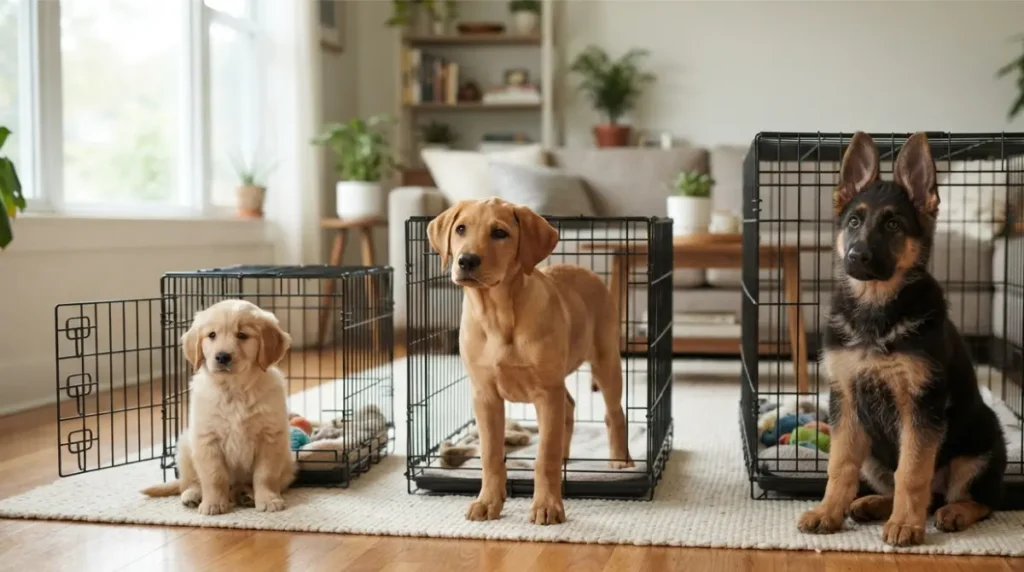
8–10 weeks
Short sessions are the whole job right now. Puppies also need to potty after eating, naps, and play, which resets the clock whatever the table says.
3–4 months
Longer stretches become realistic, but a full workday isn’t. For a sample day built around these limits, see our crate training schedule by puppy age.
5–6 months and beyond
Extend time gradually, and only while your puppy stays dry and settled.
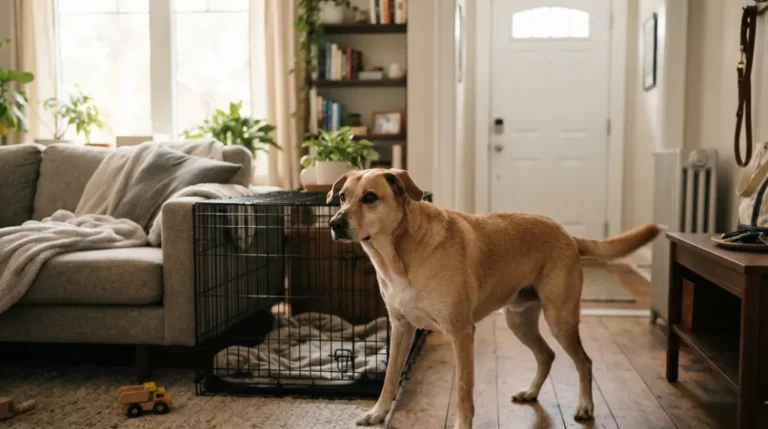
⚠️ Watch Out: Size the crate so your puppy can stand, turn around, and lie down, and no bigger. Extra room lets a puppy turn one end into a bathroom corner, which undoes longer stretches.
Why nights in the crate follow different rules
A sleeping puppy is inactive, so overnight crating can run longer than daytime stretches. The SPCA of Wake County notes that nighttime isn’t an accurate gauge of how long a puppy can wait during the day.
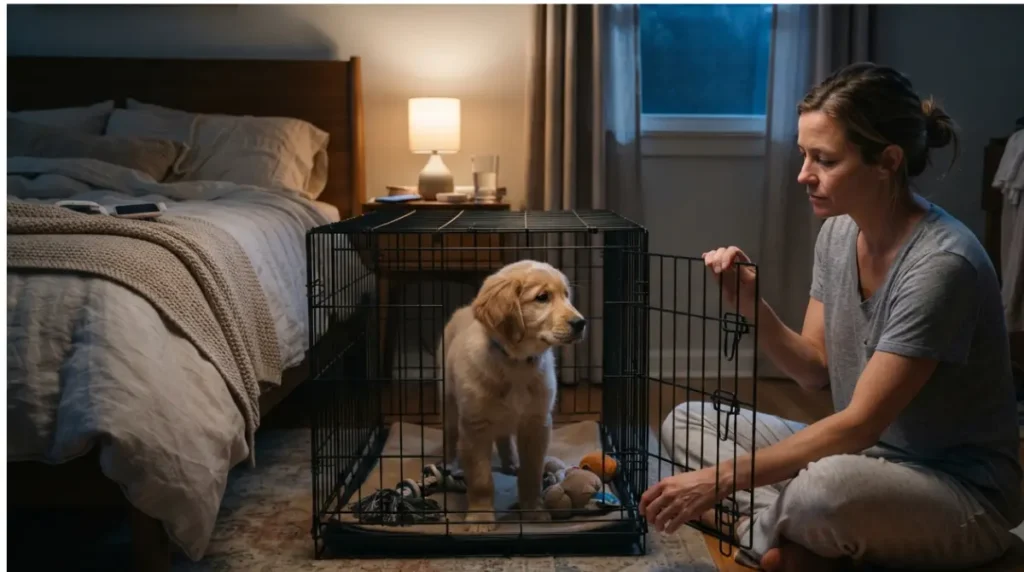
Planned wake-ups in the first weeks
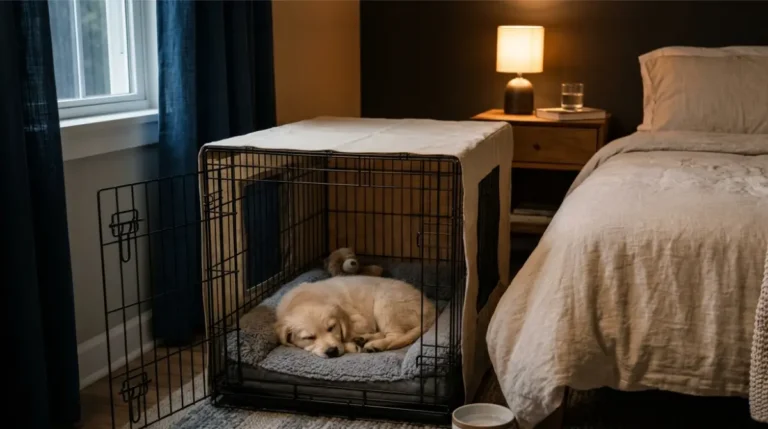
VCA Animal Hospitals advises a potty trip at least every 2 hours overnight for a 2-month-old, and every 3 hours at 3 months. Keep the trips quiet and boring: out, potty, brief praise, back to bed. The Animal Humane Society suggests keeping the crate in or near your bedroom, so you’ll hear your puppy and they won’t feel isolated.
When most puppies sleep through
Sources differ here. Some puppies sleep through around 4 months, while VCA notes others aren’t comfortable all night until about 6 months. If two adults live in the house, alternating night wake-ups keeps the routine going without wearing out one person.
For how those wake-ups can unfold across the first two weeks, see our night-by-night guide to crate training a puppy.
When your workday is longer than your puppy can wait
If you’ll be gone longer than your puppy’s age allows, the answer is a different setup, not a longer crate stretch.
Set up a pen instead of a closed crate
Ohio State suggests an exercise pen or a baby-gated kitchen, bathroom, or laundry room for longer absences. The Animal Humane Society describes that area as holding the crate with its door removed, plus water, toys, and a potty spot, so your puppy can sleep in one place and potty in another.
Build a family break relay
Humane World for Animals suggests adjusting schedules, hiring a pet sitter, or using doggy daycare to cut daily crate time. A midday dog walker or trusted neighbor can cover the gap when nobody can come home.
Kids and the crate: ground rules
The AVMA’s dog bite prevention advice says never to disturb a dog that’s sleeping or eating, and to always supervise young children around dogs.
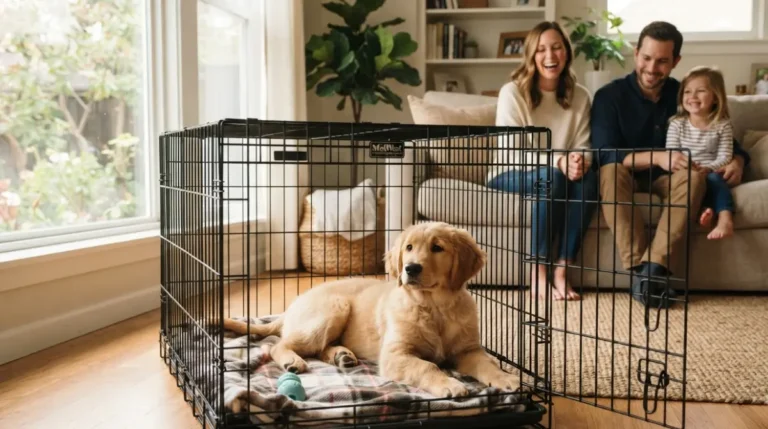
🏡 Family & Home: Give one adult ownership of the break schedule and post it on the fridge. Kids can help with potty trips only with an adult right there. Everyone learns that the crate is the puppy’s quiet spot: no reaching in, no teasing through the bars, and no opening the door to “rescue” a crying puppy.
✅ Do This: At your next checkup, tell your veterinarian how long your puppy is alone each day. Ask whether their potty frequency looks normal for their age.
Crying in the crate: protest, potty need, or panic?
Some crying is normal, especially while crate training is new.
Mild protest that settles
Ohio State advises waiting for a quiet moment before opening the door, so your puppy doesn’t learn that crying opens it. Never punish crying, because that makes the crate a scarier place.
A potty signal at night
For a very young puppy, crying at night may mean they genuinely need to go. If they’re close to their overnight interval, take a calm potty trip and return them straight to bed.
Frantic panic: stop and step back
Ohio State separates protest from panic. If your puppy grows more frantic instead of winding down, stop the session right away and slow your training plan.
✅ Do This: If panic happens more than once, call your veterinarian this week to rule out health causes. Then ask for a referral to a certified behavior consultant or veterinary behaviorist.
When crate trouble means a call to your vet
Accidents after an over-long stretch are a scheduling problem, but accidents that keep happening anyway can point elsewhere.
Soiling after short stretches
Ohio State’s housetraining guidance notes that soiling the crate even after short periods may signal separation or confinement anxiety. It adds that some medical conditions make dogs urinate more often. The Animal Humane Society warns that a puppy forced to soil the crate becomes harder to house-train.
Signs worth a vet visit
- Crate accidents after short stretches, or very frequent urination: call your vet this week.
- Any injury from trying to escape the crate: call your vet today. The Arizona Humane Society notes that dogs with separation anxiety may hurt themselves trying to get out.
✅ Do This: Before the appointment, note how long each crate stretch lasted, whether accidents happen day or night, and how often your puppy pees. Ohio State suggests a short video of your dog in the crate to help assess anxiety.
Frequently asked questions
1. How long can a puppy stay in a crate at 8 weeks?
At 8–10 weeks, a puppy can stay in a crate about 1–3 hours during the day. Start near one hour.
2. How long can a 3-month-old puppy stay in a crate?
A 3-month-old puppy can usually stay in a crate 2–4 hours during the day, with overnight potty breaks about every 3 hours.
3. Can I crate my puppy while I work 8 hours?
No. Under 6 months, crate your puppy no more than 3–4 hours at a time. Use a pen setup and a midday break instead.
4. How often should I take my puppy out of the crate at night?
VCA advises overnight potty trips at least every 2 hours for a 2-month-old puppy and every 3 hours at 3 months.
5. When can a puppy sleep through the night in a crate?
Some puppies sleep through the night in a crate around 4 months. Others aren’t comfortable all night until about 6 months.
6. Is it cruel to crate a puppy?
Crating a puppy in short, age-appropriate stretches isn’t cruel. Crating all day and again all night can leave dogs anxious or depressed.
7. Should I let my puppy out of the crate when it cries?
Wait for a quiet moment unless a potty trip is due. If your puppy’s crying turns frantic, stop the crate session right away. If it happens repeatedly, call your veterinarian.
8. How long can a 6-month-old puppy stay in a crate?
A 6-month-old puppy can build toward crate breaks about every 4 hours, but only once house-training is reliable.
9. What if my puppy pees in the crate after short stretches?
Repeated crate accidents after short stretches can signal anxiety or a medical cause in puppies. Call your veterinarian this week.
10. Is “months plus one” accurate for puppy crate time?
Months plus one estimates a puppy’s bladder control. Puppies under 6 months still shouldn’t be crated more than 3–4 hours at a time.
Your puppy’s crate plan, stage by stage
You now have a conservative crate-time range for your puppy’s age and a plan for the days that run long. For the full night routine, continue with our guide to crate training a puppy at night.
If your puppy has repeated accidents after short stretches or panics in the crate, call your veterinarian this week. Every figure here comes from the named veterinary and shelter sources above, and real-dog results appear only where a real puppy produced them.