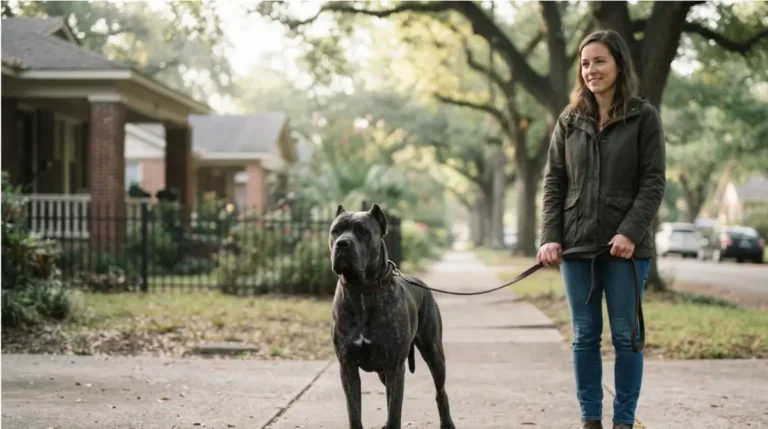
Cane Corso with cats: how to introduce them in stages

A Cane Corso’s odds with a cat depend on age, cat history and who arrived first. Adult males stand up to 27½ inches, so check gates before day one.
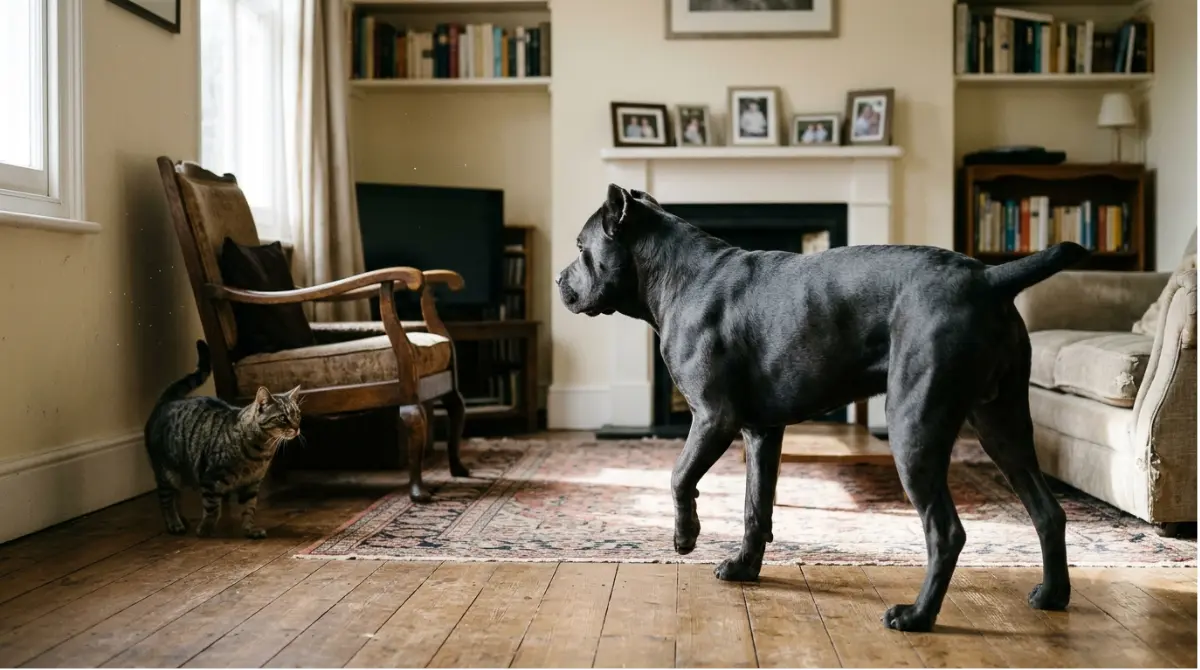
Table of Contents
Which Cane Corso has the best odds with a cat?
A Cane Corso can live alongside a cat, and the odds depend most on the dog’s age and cat history and on which animal arrived first. In a UK study of 1,211 puppies of all breeds, only 7.3% ignored the household cat or stayed relaxed around it after being introduced; puppies under 12 weeks old and those introduced gradually did better (Kinsman et al., 2022).
The AKC breed standard describes the breed as a property watchdog and a hunter of difficult game such as wild boar. That is a tendency in its history, and individual dogs vary widely.
| The dog | What the research found | Ask before day one |
|---|---|---|
| Puppy under 12 weeks, introduced over several days | Best odds of ignoring the cat or staying relaxed | Did the litter meet cats? |
| Dog under 1 year joining a home where the cat lives first | Friendlier relationships, especially when the cat is under 6 months | Is the cat’s dog-free room ready? |
| Adult with a known cat history | No study figure; a good record mostly reflects that cat and that home | Which cats, and any chasing? |
| Adult with no known cat history | The least predictable group | Can a behavior consultant assess the dog first? |
Sources: Kinsman et al., 2022, which also summarizes Feuerstein and Terkel (170 homes) and Thomson and colleagues (748 homes).
Wider exposure to new animals is covered in the week-by-week Cane Corso socialization plan.
Quiet stalking is the warning sign

Barking at the cat’s door is loud and easy to notice. Predatory aggression usually looks different: a quiet, sudden attack that ends in a hard bite and a shake (Merck).
The sequence runs from locking eyes on the cat to stalking low and slow, then chasing and grabbing. Watch for stillness: a stare that doesn’t break when you say the dog’s name, a freeze mid-step, food ignored.
Chasing needs attention even when it looks like play. Nearly half the puppies in the Kinsman study (48.6%) chased the cat, and many owners treated it as a game. From a dog heading for Corso size, a chase that ends in a grab can injure a cat badly.
Before they meet, rework the house
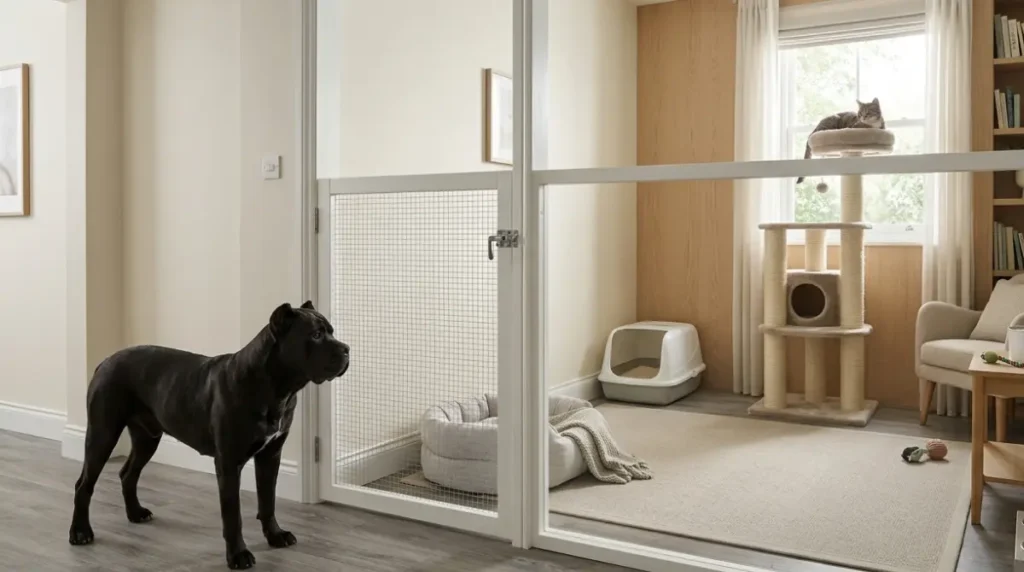
Start with one room the dog never enters. It holds the cat’s food, water, litter box, bed and a high perch. Give shared rooms a cleared shelf or tall cat tree so the cat can climb instead of running. Separate safe spaces, scent swapping and a leash during early meetings are standard recommendations listed in the Kinsman paper.
Gates need checking against this breed in particular. Under the AKC standard, males stand 25 to 27½ inches (about 64 to 70 cm) and females 23½ to 26 inches (about 60 to 66 cm) at the shoulder. That is tall enough that a gate stopping a smaller breed may not stop yours. Try any gate with your own dog on leash, standing up against it; choosing between a crate, playpen or baby gate compares the options.
Away from the cat, teach “leave it” and a look back to you, rewarded with small treats. The cat’s side, including stress signs, is covered in The Purr Post’s guide to normal cat behavior and warning signs.
Introducing a Cane Corso to a cat, step by step
Plan in weeks. Introductions spread over more than one day had better odds in the same study.
- Swap bedding between the two so each meets the other’s scent first.
- Feed both at the same time on either side of the closed cat-room door.
- Put a gate in the doorway and bring the dog into view on leash, a few feet back. Each time the dog looks at the cat and turns back to you, mark it and reward.
- Bring the dog into that room on leash, with the cat up high and free to leave. Keep sessions short.
- Let the leash trail during short, supervised sessions once it can lie down while the cat moves around.
Move up a step when the cat comes out on its own and the dog can look away from it. Go back a step the moment the dog stares or fixates.
Letting the cat “put the puppy in its place” is a pet-led introduction; the Kinsman authors encourage owner-led ones instead. Scolding or jerking the leash after a chase works against the plan, and reward-based methods are the AVSAB position for all training and behavior problems.
Leaving them alone together
Not during the introduction. Whenever no adult is watching, each animal goes in a separate room with the door closed, until many supervised sessions pass without a stare or a chase.
The puppy will outgrow the cat
At 10 weeks a Corso puppy fits under the coffee table. As an adult it stands 23½ to 27½ inches at the shoulder, with weight proportionate to height under the AKC standard. Play a cat could shrug off from a small puppy becomes risky at that size, which the Cane Corso growth chart shows arriving fast.
With children in the home: a child who chases the cat or carries it to the dog can start the chase you are working to prevent. An adult stays in the room and in charge whenever a child, a cat and a dog share a space; the house rules for toddlers and a Corso cover the dog’s side.
Dogs are suggested to go through another fear-sensitive period at about 6 months, later in larger breeds. A dog meeting a cat for the first time at that age may react with fear (same Kinsman paper).
When stalking starts, stop the introduction
If your Corso stares, freezes, stalks, lunges or ignores food with the cat in view, end the session quietly. Lead the dog away, close the door and go back a step next time. Physical punishment, including prong and shock collars, can make an already aggressive dog worse, and a veterinarian should see a dog as soon as signs of aggression appear (Merck).
Some dogs never share space safely with cats. Deciding they live apart for good, or that this home is the wrong one for this dog, is a responsible outcome. Trouble between two dogs is a separate question, covered in a Cane Corso with a second dog of the same sex.
If your Corso has already grabbed the cat
Separate them with a door or a board, never your hands.
Call a vet now if: the dog has caught, mouthed or shaken the cat, even if you see only small marks or nothing at all. The main damage from a dog bite usually sits beneath the skin, and broken ribs or internal injuries can hide under a few puncture marks or a bruise (Merck wound guidance). Take the cat to its vet or an emergency vet today.
Keep the two apart afterward. Book the dog with its own vet to rule out pain or illness. Then book a veterinary behaviorist or certified behavior consultant before any further meeting.
Set up the cat’s room this week
Today’s job is the room: move the cat’s food, water, litter box and bed into a space the dog can’t enter, and clear one high shelf in each shared room. If you are still deciding whether a Corso suits your household at all, start with whether a Cane Corso fits your family.