The Right Escape Proof Dog Crate Starts With a Panic Check

Escape proof dog crates don’t fix every escape artist. Learn to tell a strong dog from a panicking one, plus the 4 features that make a crate hold.
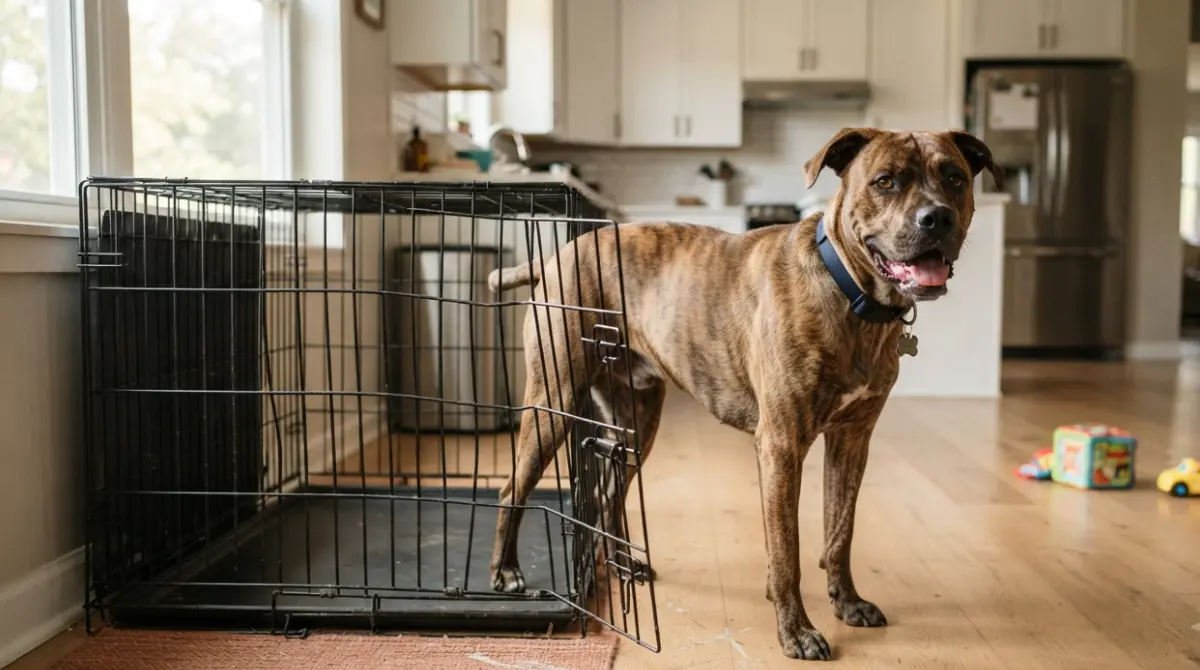
Table of Contents
You came home to bent bars, a dog loose in the kitchen, or a bloody paw. The honest truth is that no escape proof dog crate exists in the absolute sense. Some crates are much harder to break, and some dogs shouldn’t be crated until their panic is treated.
Start where your dog is:
- Frantic only when you leave, or hurt from an escape? Read the panic check below first, and call your vet today about any injury.
- Calm in the crate while you’re home, just strong or stubborn? Skip ahead to what makes a crate hard to escape.
- Never had a slow, positive crate introduction? Begin with our 14-night crate training log.
🩺 Vet Note: Repeated crate escapes can be a sign of separation anxiety or confinement distress, not just a weak crate. Broken or loose teeth, torn nails, and mouth or paw bleeding from an escape need a veterinary exam. If your dog panics when confined, ask your veterinarian about a referral to a board-certified veterinary behaviorist.
Is it the crate, or is your dog panicking?
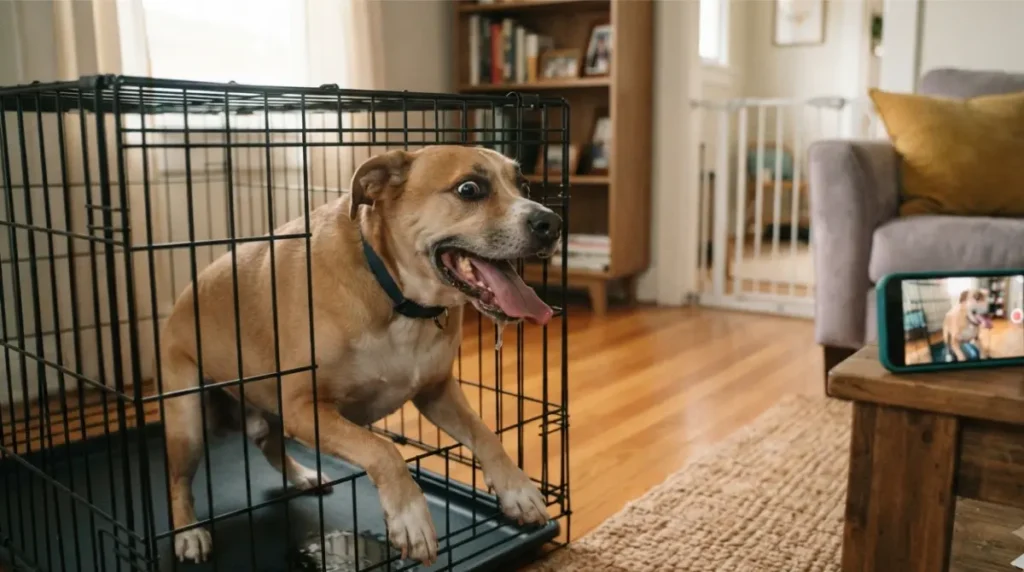
A stronger crate fixes a strong dog, but it doesn’t fix a frightened one. The ASPCA lists distress signs that mean crating isn’t the right option: heavy panting, excessive drooling, frantic escape attempts, and persistent howling or barking.
🔍 Why It Works: A crate limits movement, but it doesn’t remove fear. For dogs with separation anxiety, confinement can drive harder escape attempts, and that is how teeth and paws get hurt.
Try this 10-minute home check
Crate your dog while you’re home, then go to another room and watch on your phone. If your dog settles, you probably have a crate problem. If your dog is frantic even with you home, let them out and don’t wait it out.
If it’s panic, do this instead
The ASPCA suggests a dog-proofed room behind a baby gate instead of a crate. If you aren’t sure whether your dog is protesting or panicking, our guide to a puppy crying in the crate at night explains the difference.
✅ Do This: Before your next long absence, see your veterinarian to rule out medical causes. Ask for a referral to a board-certified veterinary behaviorist (Dip ACVB) or a Certified Applied Animal Behaviorist, and tell them what you saw during the home check.
What actually makes a crate hard to escape
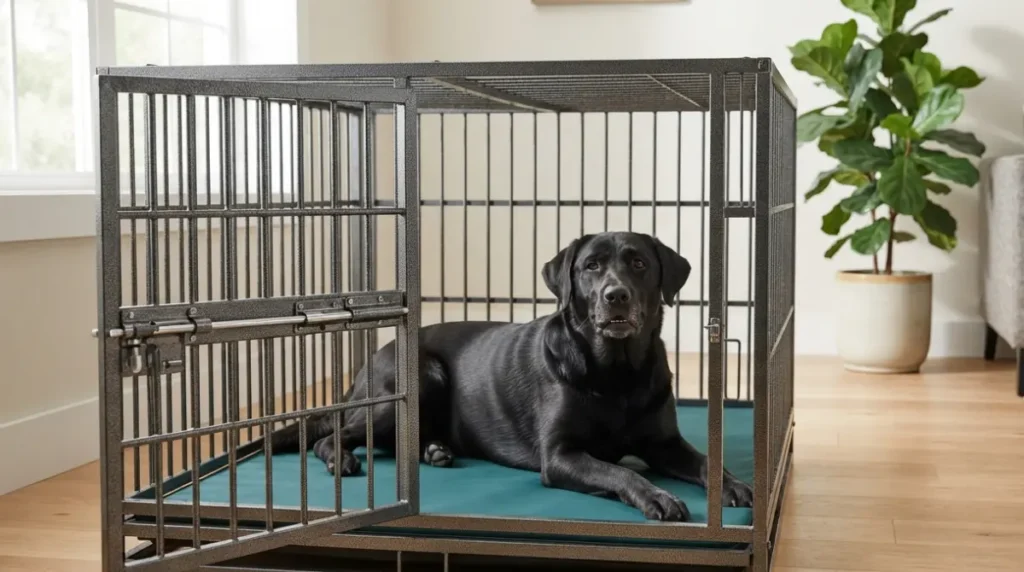
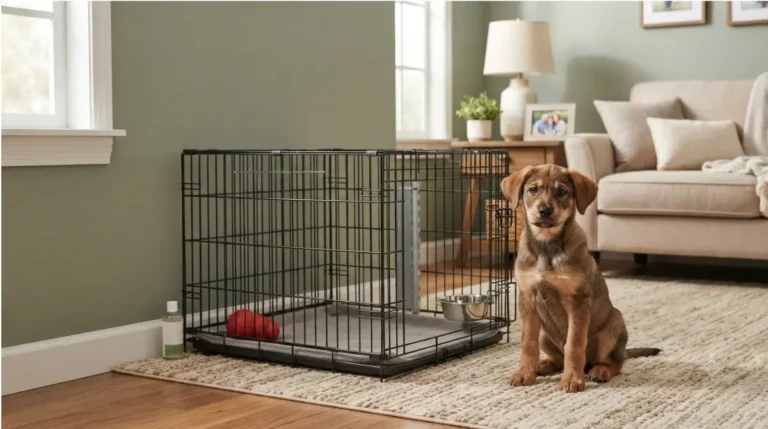
An escape-resistant crate has four things:
- Rigid construction. Look for reinforced or welded metal, or double-walled molded plastic, rather than thin wire.
- Latches outside the dog’s reach. Ideally there should be more than one.
- No trapping gaps. Nothing should be wide enough to catch a tooth, jaw, or paw.
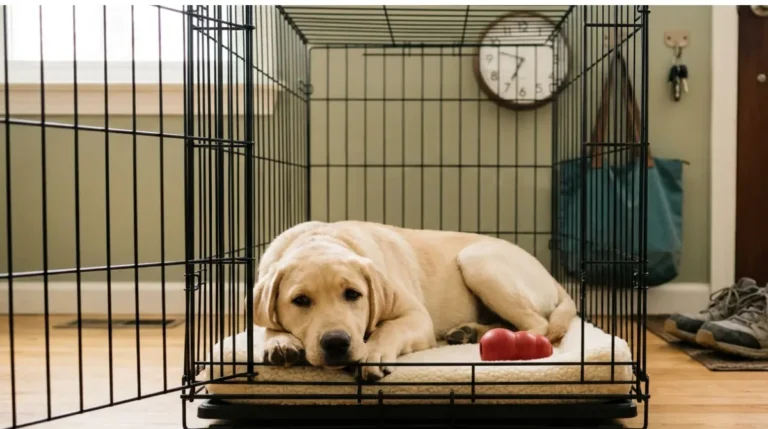
- The right size. The dog should be able to stand, turn, and lie stretched out. Use our crate size chart by measurement.
⚠️ Watch Out: “Heavy duty” on a product listing is a marketing phrase, not a standard. Owner reviews repeatedly describe budget “heavy duty” crates with bent bars or doors pushed off their tracks on the first day.
Crash-tested isn’t the same as escape-proof
The Center for Pet Safety’s certified crate list covers crash protection in a vehicle. It doesn’t measure whether a dog can pry open a door at home. A crate can be excellent at one and untested for the other.
How we tested: 4 escape tests, no stressed dogs
We tested every crate with tools first and a calm dog second.
1. Door pull test
We pulled each door outward with a luggage scale at [X lbs — operator to supply] and measured any gap that opened.
2. Latch reach test
We checked whether a paw or snout could reach and move the latch from inside the crate.
3. Gap and tooth-trap check
We measured the largest bar or vent gap with calipers and compared it with our test dog’s canine tooth and paw.
4. Real-dog comfort session
Our calm, crate-trained dog spent 30 supervised minutes in each crate with the owner present. We rated how quickly the dog settled, not how much damage it did.
🔍 Why It Works: We skipped chew tests on purpose. A tooth fracture that exposes the pulp is painful, so no dog was asked to bite or fight a crate for this article.
🏡 Family & Home: An adult opened each latch one-handed to test everyday use.
The crates that held up in our tests
These results come only from the four tests above.
| Crate | Best For | Door pull gap | Latch reachable? | Largest gap |
|---|---|---|---|---|
| [Crate 1] | [dog size / use] | [result] | [Y/N] | [measurement] |
| [Crate 2] | [dog size / use] | [result] | [Y/N] | [measurement] |
| [Crate 3] | [dog size / use] | [result] | [Y/N] | [measurement] |
| [Failed crate] | Not recommended | [result] | [Y/N] | [measurement] |
✅ Do This: Read the damage warranty fine print before you buy. For example, Impact limits the dog-damage guarantee on its High Anxiety crate to the original owner, with proof of purchase.
Kids, latches and where the crate should live
The right crate still needs the right house rules.
Keep little hands out
Children should never open the crate or let the dog out without an adult there. Keep small fingers away from bars and hinges, because heavy crate doors can pinch.
Make it the dog’s off-limits retreat
Children, and their friends, should leave a dog in its crate alone. That quiet space is part of what helps your dog rest.
Placement that lowers stress
Choose a calm corner that is near the family but out of the main traffic path. If long workdays are part of the problem, our plan for crate training while you’re at work can help.
🏡 Family & Home: Post one rule where everyone can see it: “The crate is the dog’s room. Only grown-ups open the door.” Active adult supervision applies every time the dog and young children are together, in or out of the crate.
Hurt during an escape? When to call your vet
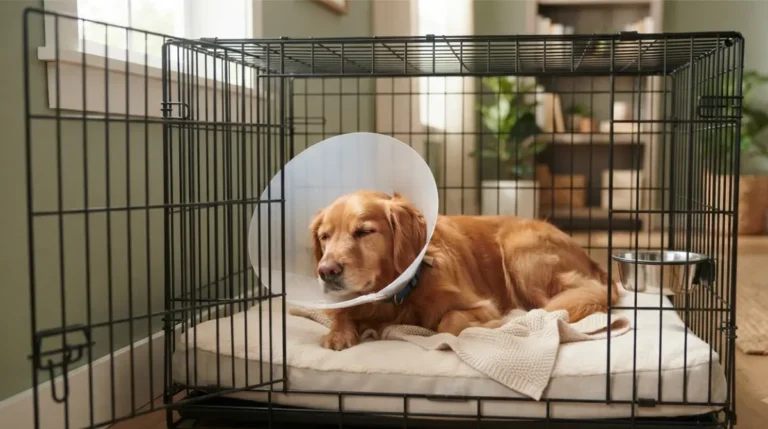
If your dog was injured getting out, have them checked today.
Signs that need a vet today
- A broken or chipped tooth, a loose tooth, or bleeding from the mouth
- Torn nails, cut paws, or limping
- Avoiding cold water, chew toys, or hard treats. According to Cornell’s veterinary college, these can signal a painful fractured tooth.
Heavy bleeding or trouble breathing means you should go to an emergency vet now.
What to tell your vet
Tell your vet which crate your dog was in, how long they were confined, and what you found. Also mention whether escapes happen only when your dog is alone.
✅ Do This: Call your vet today, and ask whether a behavior referral makes sense. Meanwhile, review how long your dog should stay crated.
FAQ
1. Is any dog crate truly escape proof?
No escape proof dog crate is absolute. Well-built crates are escape-resistant, but a panicking dog can still get hurt trying to escape.
2. Why does my dog try to escape the crate?
Dogs escape crates from boredom, incomplete crate training, or separation or confinement panic. A stronger crate won’t fix panic.
3. Should I crate a dog with separation anxiety?
Usually not until the distress is treated. The ASPCA suggests a gated, dog-proofed room instead. Talk to your vet about a behaviorist referral.
4. Is aluminum or steel better for an escape artist crate?
Rigid, reinforced construction and unreachable latches matter more than the metal type. Our test table shows which crates actually held.
5. Are plastic crates good for escape artists?
Thin plastic crates aren’t. Double-walled molded plastic crates can be rigid, but check our test results before choosing one.
6. How do I stop my dog breaking out of the crate?
First, crate your dog while you’re home and watch. If your dog stays calm, choose a rigid, well-latched crate with no trapping gaps.
7. Can a dog break a tooth on a crate?
Yes. Biting crate bars can fracture teeth, and fractures that expose the pulp are painful. Call your vet today if you see damage.
8. What size escape proof crate does my dog need?
Your dog should be able to stand, turn around, and lie stretched out inside. Measure your dog and use our crate size chart.
9. Are expensive heavy-duty crates worth it?
For a calm but strong dog, a proven crate is often worth it. A “heavy duty” label alone doesn’t prove strength.
10. Is a crash-tested crate the same as an escape proof crate?
No. Center for Pet Safety certification measures crash protection in vehicles, not whether a dog can pry the door open at home.
Where to go from here
You now know whether you’re facing a crate problem or a panic problem, and what a crate needs to hold. If your dog is calm but strong, choose from the tested picks and rebuild positive crate time with the 14-night crate training log linked above. If there’s any injury or panic, your vet comes first, today. Every result here comes from our own logged tests and cited veterinary sources.