Where to Put a Dog Crate for a Calm, Settled Dog

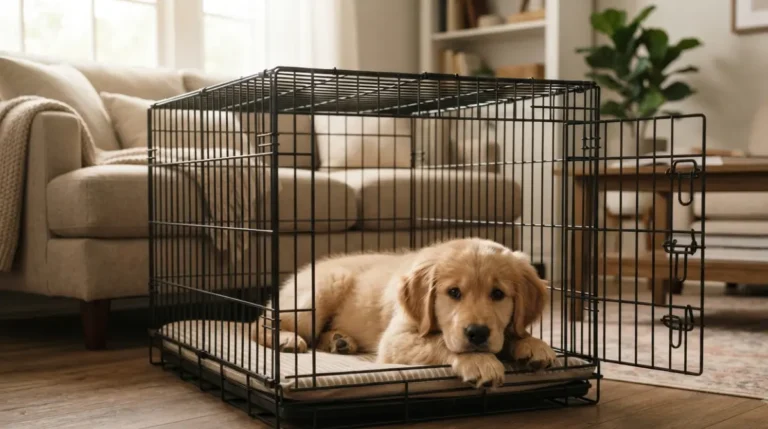
Where to put a dog crate depends on the hour: close to family by day, beside your bed at night, and never beside a radiator or a tangle of cords.
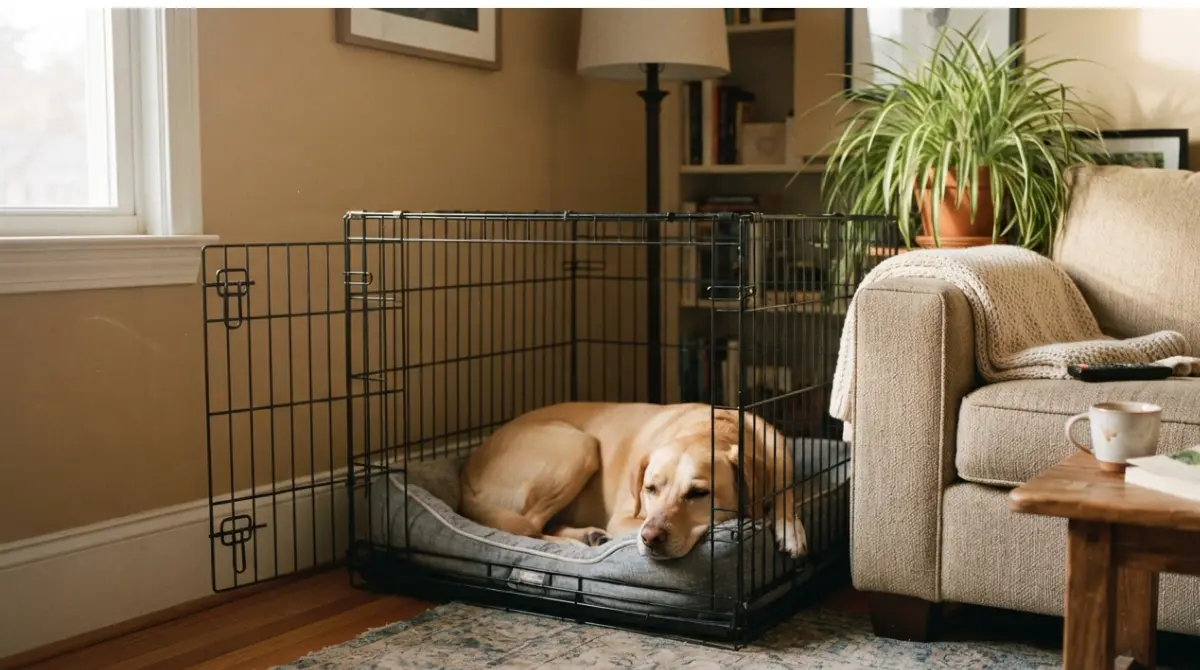
Table of Contents
Where to put a dog crate: the short answer
The best place to put a dog crate is near your family during the day and near your bed at night. Whichever room you choose, keep the crate away from heat sources, drafts, and power cords.
Dogs are social animals, so a crate that feels cut off from the household is harder to settle into. Start with the part that fits your home:
- New puppy: begin with the crate in your bedroom (see the age-stage section).
- Kids or a new baby at home: jump to the family section.
- Small apartment: see the room-by-room table.
- Dog won’t settle where the crate is now: skip to the last section.
Where the crate sits on night one shapes the routine that follows, as you’ll see in our 14-night crate training log.
🩺 Vet Note: Crate placement is mostly about comfort, but temperature and household safety matter. If your dog is a young puppy, a senior, or has a health condition, ask your veterinarian at the next checkup whether they’re more sensitive to heat or cold. A dog who panics, drools heavily, or injures themselves trying to escape the crate needs a vet visit and a qualified behavior professional, not just a new location.
The 5-point test for any crate spot
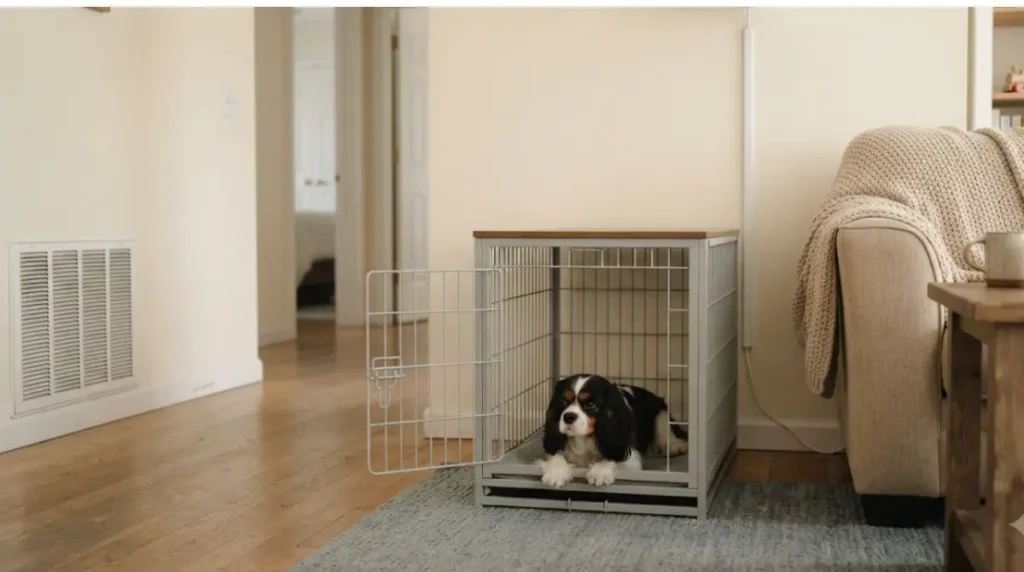
Any room can work if the spot passes these five checks:
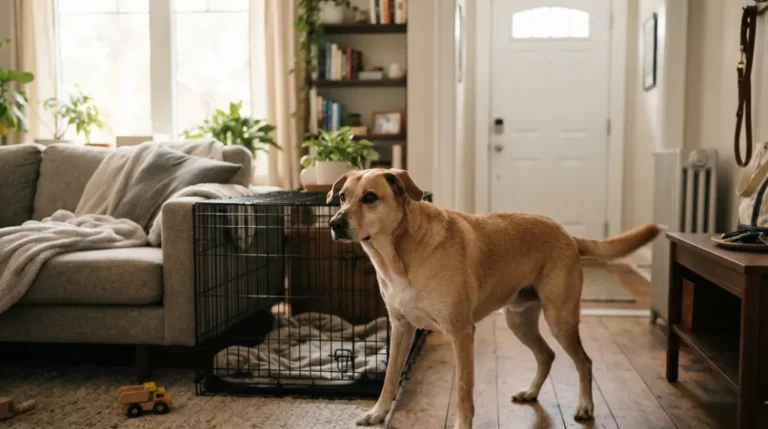
- Near people, but out of the main walkway.
- Out of direct sun, and away from heating or cooling vents, radiators, and fireplaces.
- Away from drafts from exterior doors or uninsulated windows.
- No cords, outlets, or toxic houseplants within paw reach of the bars.
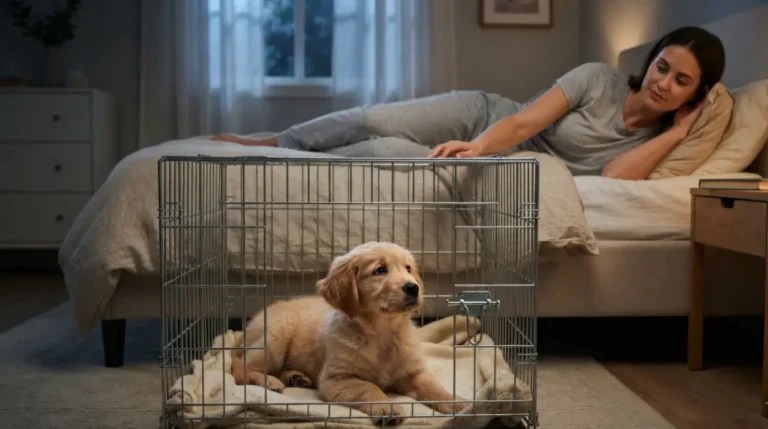
- Within earshot at night, so you hear a puppy who needs a potty break.
Near people, out of the walkway
🔍 Why It Works: Shelter guidance can sound contradictory. MSPCA-Angell recommends a busy room like the kitchen or family room so the dog feels included, while trainers warn against chaotic spots. Both are right: choose a busy room but a quiet corner of it.
Stable temperature and no hazards within reach
Cornell’s veterinary college explains why crate comfort matters for every dog: getting any dog used to a crate can be lifesaving in some situations. A spot that’s too hot, cold, or hazardous works against that comfort.
✅ Do This: Stand at the spot at the time of day your dog will use it. Check for sun through the window, air from a vent, and cords at floor level.
Bedroom, living room, kitchen or office: room by room
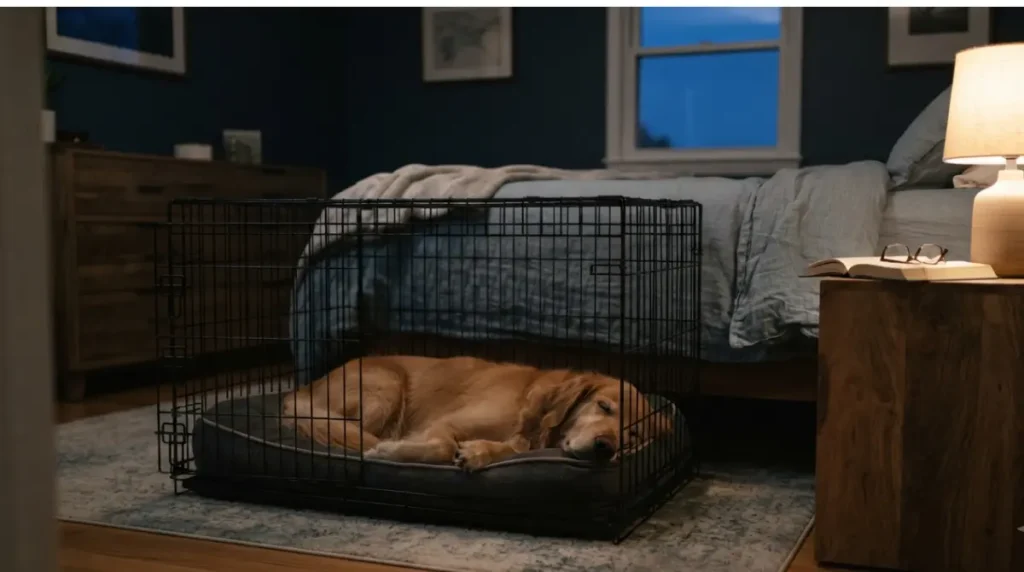
Here’s how common rooms score against the 5-point test.
| Room | Best For | Watch For | Key Detail |
|---|---|---|---|
| Bedroom | Nights, new puppies, newly adopted dogs | Your late-night lights and noise | Easiest room for hearing night potty needs |
| Living/family room | Daytime naps and quiet time | TV speakers, walkways | Pick the quietest corner |
| Kitchen | Daytime near the family | Oven heat, busy cooking path | Keep the crate clear of where people carry hot food |
| Home office | Work-from-home days | Cords under the desk | Route cables away from the bars |
| Laundry corner | Only if no better room | Appliances, vents, cords | Keep a clear gap from machines |
Editorial assessment against the sourced 5-point test above, not a test result.
One crate you move vs two crates
Moving a crate between rooms is fine. If your crate is heavy, a second crate for nights can save the daily haul.
Small apartments and shared bedrooms
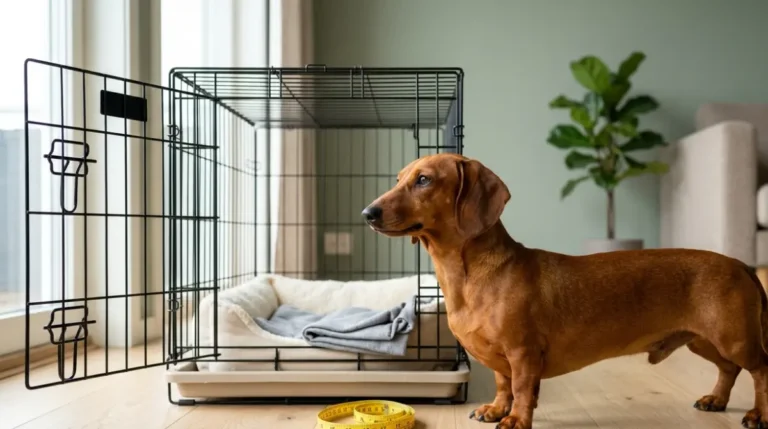
Before you pick a corner, size the crate first so you know the footprint you need.
🏡 Family & Home: In a studio or shared bedroom, one spot often has to do day and night duty. Our guide to crate training in an apartment covers neighbors, noise, and tight floor plans.
Where not to put a dog crate
Some spots fail the test in almost any home:
- A garage or unfinished basement, which often isn’t climate-controlled like the rest of the house and cuts the dog off from the family.
- Beside vents, radiators, or a fireplace.
- In direct sun under a window.
- Next to an exterior door that lets in drafts.
- Near cords and outlets.
- Beside houseplants that are toxic to dogs.
Garage, basement and back rooms
Isolation is the bigger problem with these rooms, even when the temperature seems fine. A dog kept far from the household is more likely to link the crate with being alone.
Beside vents, windows, cords and plants
⚠️ Watch Out: Cords within reach of the crate bars are a chewing hazard for puppies. Move them or run them behind furniture before the crate goes in.
Check nearby plants on the ASPCA’s toxic and non-toxic plants list. If you think your dog has chewed a toxic plant, call your vet or ASPCA Animal Poison Control at (888) 426-4435 right away.
✅ Do This: At your dog’s next checkup, ask your veterinarian whether their age, coat, or health makes drafts or heat a bigger concern.
Puppy, adult, rescue or senior: where the crate goes
The right spot changes with your dog’s life stage.
Moving a puppy’s crate out of the bedroom
The Animal Humane Society advises keeping the puppy crate in or near your bedroom overnight, so the crate doesn’t become linked with social isolation. It also makes night potty trips easier. Our guide to what to expect on the first night in the crate covers those early nights.
Once your puppy sleeps comfortably through the night, you can relocate the crate:
- Move it a short distance at a time.
- Give each new spot a few calm nights before the next move.
- If crying returns, step back to the last spot that worked.
Rescues and seniors
A newly adopted adult dog benefits from the same night-time closeness while they learn your home. For seniors, choose a ground-floor spot with no stairs to reach it and soft bedding off a cold floor.
Crate placement with kids, a new baby or other pets
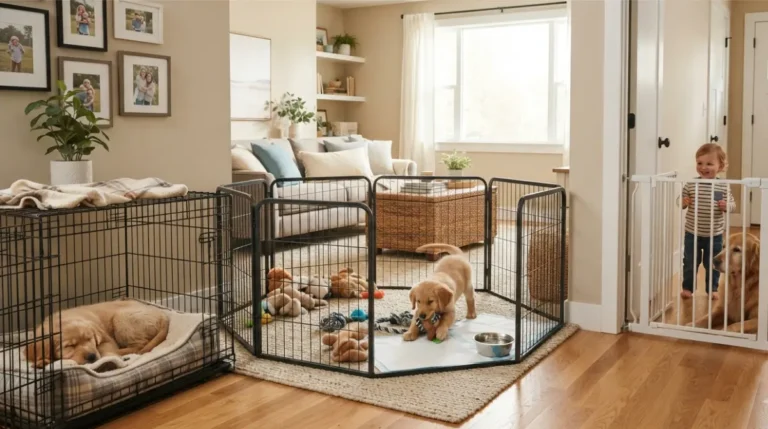
In a busy family home, the crate’s location protects both the dog and the children.
The crate as a no-kids zone
Humane World for Animals advises teaching everyone in the home, especially children, not to poke fingers through the bars, tap the crate, or disturb a dog who’s inside. Place the crate where kids’ play doesn’t run past it.
🏡 Family & Home: A simple house rule works well: when the dog is in the crate, we leave them be. That means no fingers in the bars, no tapping, and no climbing on top. An adult actively supervises every interaction between the dog and children.
Babies, cats and a second dog
Keep the crate out of the baby’s play and feeding areas, and never leave a dog and a baby or toddler together unsupervised. With a cat or second dog, place crates so no one has to squeeze past another pet’s food or bed.
✅ Do This: If your dog stiffens, growls, or avoids kids near the crate, stop open access to that area and book a vet visit and a certified behavior consultant soon.
Signs the crate is in the wrong spot
Your dog’s behavior will tell you if a spot isn’t working.
Restless, whining or overheating signs
Watch for these patterns:
- Whining that starts only when the house goes quiet.
- Startling at nearby noises.
- Panting in the crate when the room feels comfortable to you.
Change one thing at a time, and give each change a few days. If your dog seems too warm, move the crate out of the sun or away from heat right away. If heavy panting or weakness continues, call your vet now.
When it’s not the room at all
Brandywine Valley SPCA recommends not leaving a dog crated out of earshot until they’re fully comfortable. If distress continues in every spot, learn whether it’s the crate or being alone. Never use the crate as punishment.
Frequently asked questions
1. Where should I put my dog crate at night?
For most dogs, the best place to put a dog crate at night is in or near your bedroom, where you can hear them.
2. Should my puppy’s crate be in my bedroom?
Yes, starting a puppy crate in your bedroom helps with night potty trips and keeps the crate from feeling isolating.
3. Is it okay to move a dog crate between rooms?
Yes, moving a dog crate between rooms is fine, and a second crate can save hauling a heavy one daily.
4. Can I put my dog crate in the laundry room?
Only in a corner with a clear gap from appliances, vents, and cords, and only if no better room is available.
5. Can a dog crate go in the garage or basement?
Garages and unfinished basements are usually poor crate spots because they often aren’t climate-controlled and isolate your dog. Ask your vet about temperature concerns.
6. Should a dog crate be near a window?
Avoid putting a dog crate in direct sun or beside drafty, uninsulated windows, where temperature changes quickly.
7. Where should the crate go with a new baby?
Keep the dog crate out of the baby’s play and feeding areas. An adult must always supervise dog-and-baby contact.
8. Should kids be allowed near the dog crate?
Kids can be nearby with adult supervision, but they shouldn’t poke, tap, or disturb a dog resting in the crate.
9. How do I move a crate out of the bedroom?
Once your puppy sleeps through the night, move the crate a short distance at a time, giving each spot a few calm nights.
10. Why won’t my dog settle in the crate’s spot?
Noise, heat, drafts, or isolation can unsettle a dog; change one factor at a time. See your vet if distress continues.
Your next step
You now have a spot that passes the five checks, plus a plan for moving it as your dog grows. Set the crate up tonight, then follow the night-by-night routine in our 14-night crate training log linked above.
If your dog is a young puppy, a senior, or has a health condition, ask your vet at the next checkup about heat and draft sensitivity. Every safety claim here is sourced, and we note hands-on testing only where it actually happened.