Dog Escaping Crate? A Gentle Plan, Starting With Why

A dog escaping crate isn’t always a crate problem. Learn the panic signs, the easy fixes, and when a stronger crate won’t help.
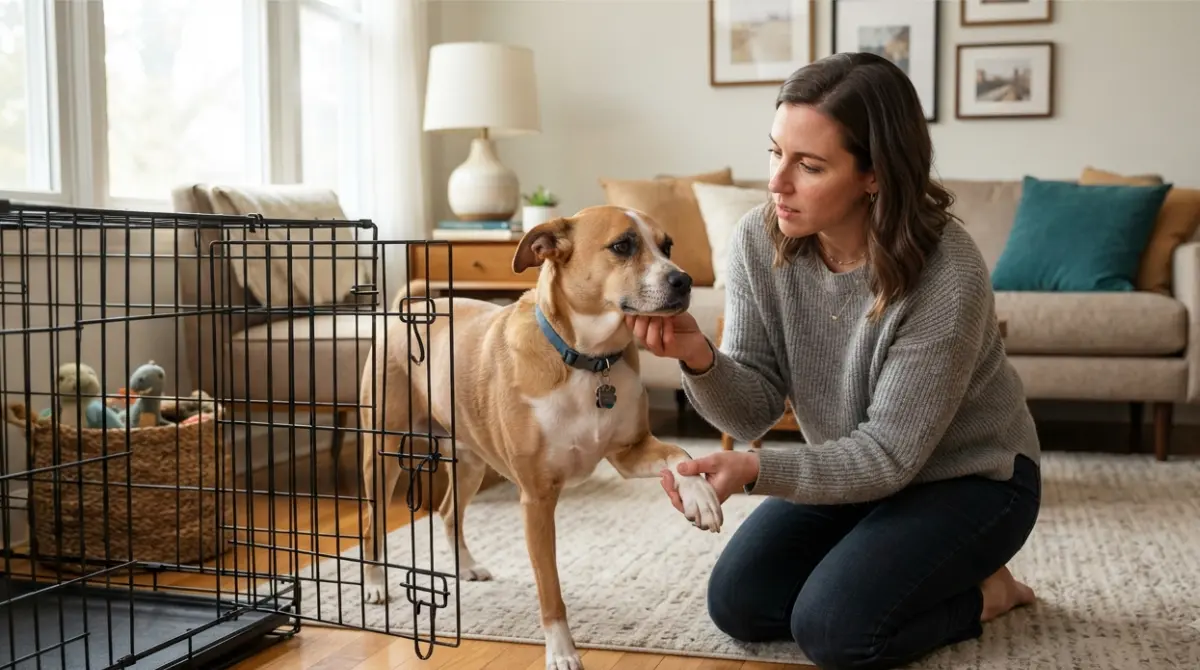
Table of Contents
Your dog got out of the crate. Now what?
You come home to a loose dog and a crate that was supposed to hold. Whether it’s a new puppy or a crate-trained adult who suddenly started, the first move is the same.
Check your dog first
Look over the mouth, nose, paws and nails. Anything beyond a scrape means a call to your vet today.
Why fix the training first
A stronger crate helps only when the dog is calm and the crate is the weak point. Otherwise you’re buying a tougher box around the same problem. If you’re still building the habit, start with our crate training a puppy at night guide. Below is how to tell which problem you have, with notes for homes with kids.
🩺 Vet Note: Injuries from escape attempts, and new house accidents, can need a veterinarian’s attention. This guide is general information and can’t diagnose your dog; your vet can.
Find out how and when your dog gets out
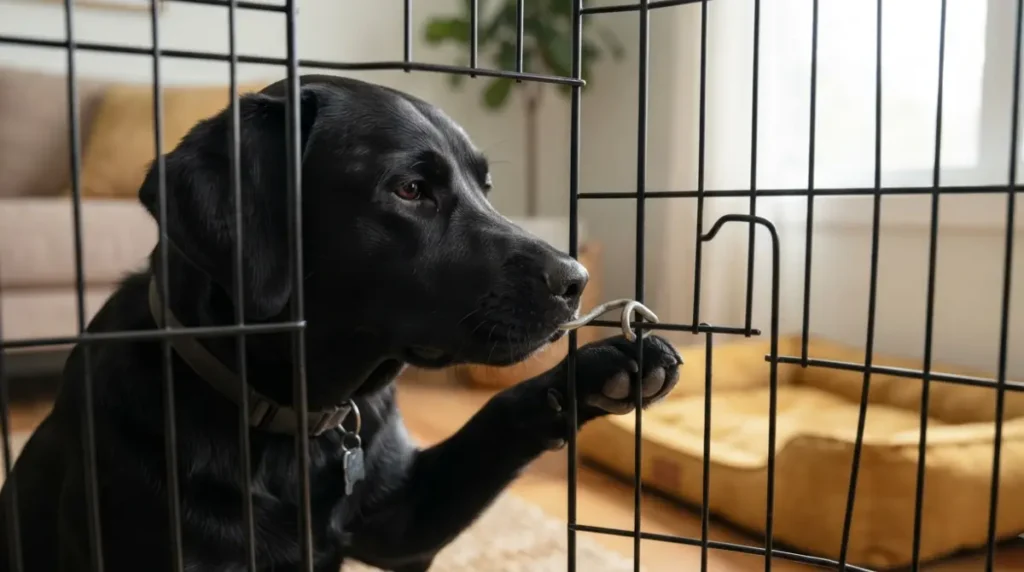
Dogs escape crates for three main reasons: the crate fails, the dog has unspent energy or a trigger, or the dog is distressed by being confined or left alone. This table is our own working framework, not a diagnosis.
| Cause | Clue | First move |
|---|---|---|
| Crate fails | Bent bar or open latch; dog seems calm | Fix the weak spot |
| Energy or trigger | Follows a noise, change or dull day | Exercise and routine |
| Distress | Only when alone; panting, drooling | Pause and call your vet |
Check the latch, door and gaps
With the dog out, press every latch, door seam and corner. Note anything that gives.
Does it only happen when you leave?
Escape that never happens while you’re home points toward separation anxiety, and such escapes can be extreme.
Run a 3-day camera test
Film the crate for three days. Log each escape’s time, how it happened, and what came just before.
🏡 Family & Home: Before blaming the dog, check who else is on camera. A child or second dog may be opening the latch. Only adults should handle the latch and release.
Easy fixes first: energy, routine and triggers

Rule out the simple causes before you touch the crate.
Exercise and enrichment before crating
Walk, sniff and play first, then offer a long-lasting chew sized for your dog. A tired dog settles more easily; how much exercise suits yours depends on age, breed and health.
Noise and schedule triggers
A crate-trained dog’s sudden escapes can follow a change like fireworks or a new work schedule. For noise, see our crate during fireworks guide.
Nobody lets the dog out mid-fuss
Releasing a whining dog teaches that fussing opens the door, so wait for a brief pause. If the dog is frantic or hurt, skip this rule and see the panic section below.
🏡 Family & Home: Only an adult opens the crate. Kids can toss in treats once the dog is calm, with an adult beside them.
When the crate itself is the problem
Will a stronger crate stop a dog escaping? Only if the escape is mechanical and the dog stays calm.
Wire, plastic or heavy-duty
Match the fix to what the camera showed. If a calm dog is beating a latch or door gap, our escape-proof crate options cover heavier designs.
Latches, gaps and the collar rule
Doors should sit flush, and latches should hold against pushing from inside. Take your dog’s collar off in the crate, since collars can snag and cause injury when a dog is confined.
When a stronger crate backfires
For a dog showing frantic escape attempts, the ASPCA says crate confinement isn’t the best option, and a tougher crate won’t calm a panicking dog.
When it’s panic, not mischief
Some dogs aren’t testing the crate; they’re trying to escape distress.
Signs of real distress
Heavy panting, excessive drooling, frantic escape attempts and persistent barking or howling mean the crate isn’t working for this dog, and such attempts can cause self-injury. Pause crate use and call your vet this week, or today if your dog is hurt. The ASPCA’s separation anxiety guide explains more.
Confinement anxiety vs separation anxiety
They look alike but need different fixes. Our guide to confinement anxiety vs separation anxiety explains the difference.
Who to call
Start with your vet to rule out medical causes. For anxiety, ask about a board-certified veterinary behaviorist, a licensed veterinarian with advanced behavior training, or a certified behavior consultant.
✅ Do This: Tell your vet when escapes started and how long your dog is alone, and bring your camera clips.
🏡 Family & Home: Keep children away from a frantic dog; adults handle all crate contact.
A gentle retraining plan that doesn’t punish
The AVSAB position statements recommend only reward-based methods for all dog training and behavior modification, so this plan uses food, calm and time, never scolding.
Reset: door open, food inside
Step 1: Leave the door open and feed meals inside.
Step 2: Close it for a few seconds, then reward and open.
Build time in seconds, then minutes
Step 3: Add time slowly, staying in sight, and reward quiet. For longer absences, see our guide to crate training while you’re at work.
Practice leaving in tiny steps
Step 4: Step out briefly, then return calmly.
Step 5: If distress appears, drop back a step and see the panic section above.
Keep using your escape log to track progress.
🏡 Family & Home: One release word, one adult, the same routine every time.
Injuries, and when to call the vet
🚨 If This Is Happening Now: Heavy bleeding, trouble breathing, collapse, or a possible swallowed object or poison while your dog was loose. Contact your vet or the nearest emergency vet immediately. For possible poisoning, also call ASPCA Animal Poison Control at 1-888-426-4435; a fee may apply. Don’t give medication or try to make your dog vomit unless a vet says so.
Escape attempts can hurt a dog even when the crate holds.
Signs this needs a vet now
Go to an emergency vet now for heavy bleeding, breathing trouble, collapse or a suspected swallowed object. Call your vet today for broken teeth, torn nails, bloody paws or a scraped nose. Book a visit this week for sudden-onset escapes or new house accidents.
What to tell the vet
Say when escapes began, how your dog got out, what it may have chewed or eaten, and how long it was loose. Bring camera clips.
Dog escaping the crate: quick answers
1. Why does my dog keep escaping the crate?
A dog escaping the crate usually has a weak spot in the crate, unspent energy or a trigger, or distress about confinement.
2. Will a stronger crate stop a dog escaping the crate?
Only when the escape is mechanical and the dog stays calm. A panicking dog can still hurt itself, so talk to your vet.
3. Is a dog escaping the crate a sign of separation anxiety?
It can be, especially if escapes happen only when you’re gone. Ask your vet about a veterinary behaviorist.
4. How can I see how my dog is escaping the crate?
Film the crate for three days and log the time, method and what happened just before each escape.
5. Should I take my dog’s collar off in the crate?
Yes. Collars can snag, so remove your dog’s collar whenever it is crated.
6. Can a dog hurt itself escaping the crate?
Yes. Frantic attempts can injure the mouth, nose, paws and nails; call your vet today if you see any.
7. Does exercise stop a dog escaping the crate?
It can help when unspent energy is the cause, but not when the dog is distressed. Your vet can suggest suitable amounts.
8. Should I punish a dog for escaping the crate?
No. AVSAB recommends only reward-based training, so reward calm behavior instead of scolding.
9. Why does my dog escape the crate only when I leave?
That pattern points toward separation anxiety. Film it, then ask your vet about next steps.
10. When should I call a vet about a dog escaping the crate?
Call today for any injury, and this week for sudden-onset escapes or new accidents. Go to an emergency vet for severe signs.
Where to go from here
You now know how your dog is getting out, and whether it’s a crate problem, a routine problem or something your vet should see. Run the three-day camera test first, then follow the plan. For the foundations, return to the night-by-night routine in our pillar guide. If there’s any injury, call your vet today; if escapes began suddenly, book a visit this week.