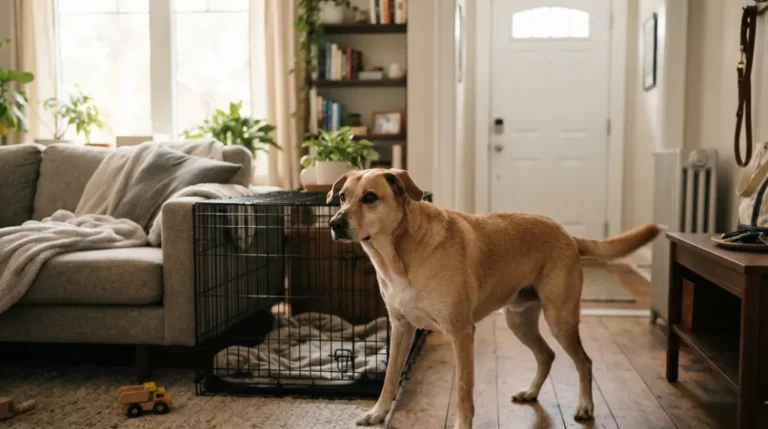
Is Crate Training Cruel? When It’s Kind and When It Isn’t

Crate training isn’t cruel by default, but it can become cruel. Here’s where the line sits, using a 1,305-owner survey and a puppy study.
Table of Contents
The short answer
Crate training isn’t cruel when the crate is introduced with rewards, used for sensible stretches, and never used as punishment. It becomes a welfare problem when a dog is forced in, crated too long, or crated to fix their anxiety. The research is mostly owner-reported and correlational, so it can’t prove more than that.
Who this guide is for
Whether you’re a guilty first-time puppy parent, a full-time worker, or a family with young kids, the sections below cover when crating goes wrong, the signs to watch for, and house rules for children. We’ll show what the studies found and where they stop.
🩺 Vet Note: Crate time depends on your dog’s age, bladder control, and health. If your dog panics, hurts themselves, or soils the crate, talk to your veterinarian first, because pain or a medical problem can look like a behavior issue. For anxiety, your vet may refer you to a veterinary behaviorist or certified behavior consultant.
What the research actually shows
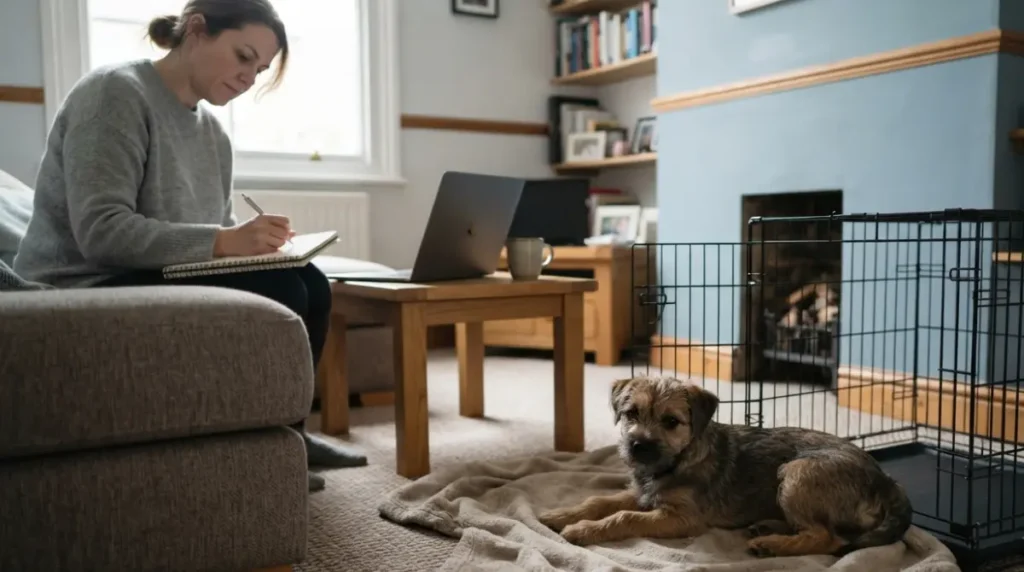
Current research doesn’t show that crate training is bad for dogs, or that it’s good. The evidence is limited and shows association, not cause.
What the 2024 puppy study found
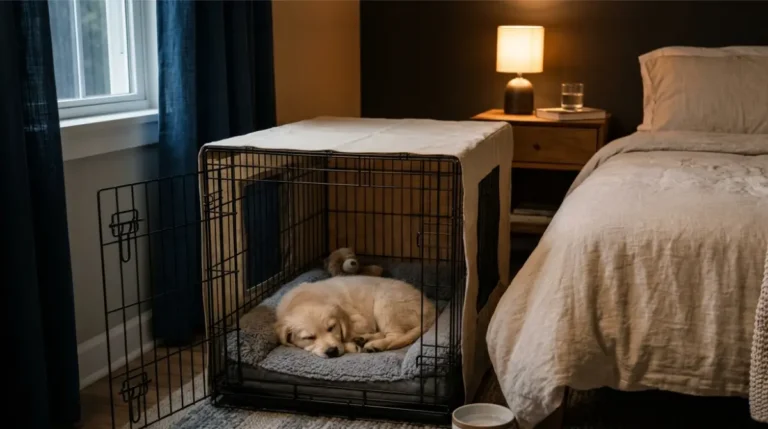
A longitudinal study of UK and Irish puppies found those kept in a crate or enclosed space overnight at 16 weeks or younger had lower odds of separation-related behaviors at six months (Dale et al., 2024). The final analysis included just 145 puppies.
What this evidence can’t tell us
The authors stress the result is correlational. Owners may simply have given up crating puppies who were more distressed. Another study, summarized in that paper, found crated dogs showed more yawning and lip-licking while alone, and some studies found no link between crating and owner-reported separation anxiety.
The den argument: how much does it prove?
You’ll often hear that crates are fine because dogs are den animals.
Where the den idea comes from
AKC’s older crate-training guide states it as fact, saying dogs like crates because they mimic a wolf’s den. The idea is popular, but it explains why a crate might work. It doesn’t prove your dog is comfortable in one.
What dogs show us in practice
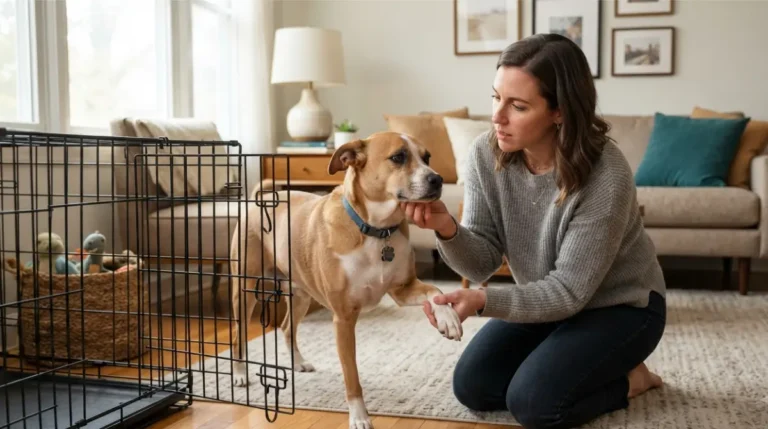
A better test is whether your dog chooses the crate. A 2024 survey of 1,305 owners in 23 countries (Bleuer-Elsner and Masson) concluded a crate can be a beneficial personal space when the dog keeps control over its use. So leave the door open and watch what your dog does.
When a crate becomes cruel
Humane and cruel crate use differ in a few ways.
| Factor | Humane use | Cruel use |
|---|---|---|
| Purpose | Rest, safety, house-training | Punishment, or fixing anxiety |
| Introduction | Gradual, with treats | Forced in, door shut |
| Length | As long as your dog stays comfortable | Long stretches without breaks |
Sources: see below.
Punishment, force and panic
AVSAB recommends only reward-based training; a crate used as a consequence is the opposite. The 2024 survey found dogs crated to manage behavior problems showed more distress than those crated for training.
Too long, too often
No study we found sets a safe number of crate hours, so the limit is your dog’s comfort and how long they can wait between toilet breaks. See crate training while at work for work days.
Signs your dog isn’t coping in the crate
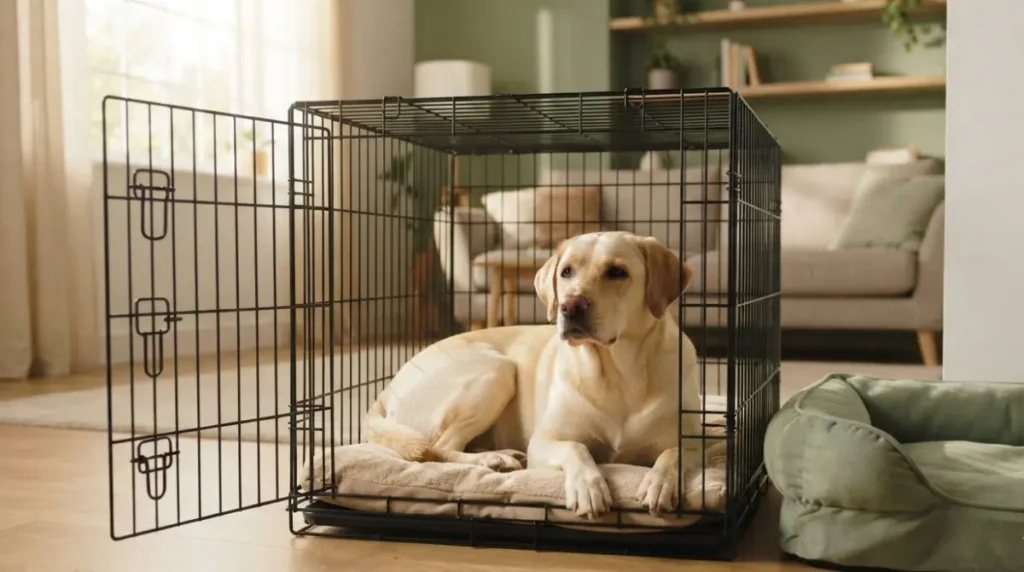
Dogs can’t say a crate is too much, so watch their behavior.
Signs of stress to watch for
Signs of distress in dogs left alone, per the 2024 puppy study:
- Barking or whining that doesn’t settle
- Pacing or spinning
- Scratching or chewing at the crate door
- Drooling or panting when not hot
- Lip-licking
- Repeated soiling
Brief fussing while a dog settles differs from panic that doesn’t ease.
When to stop and call your vet
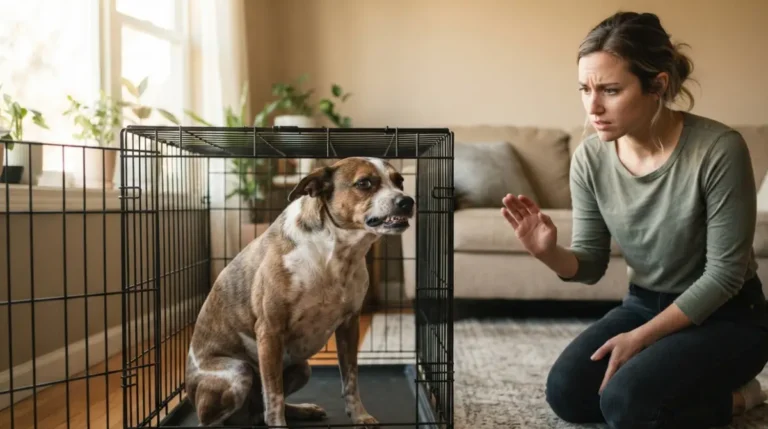
Stop crating if your dog panics or repeatedly soils the crate, since elimination can have medical causes. A dog hurt escaping needs a vet today.
✅ Do This: Call your vet today. Describe what you see and when, and ask about a veterinary behaviorist or certified behavior consultant. See confinement anxiety vs separation anxiety.
Crates, kids and babies: house rules
A crate can be a quiet retreat, but only with an adult watching.
The crate as a kid-free retreat
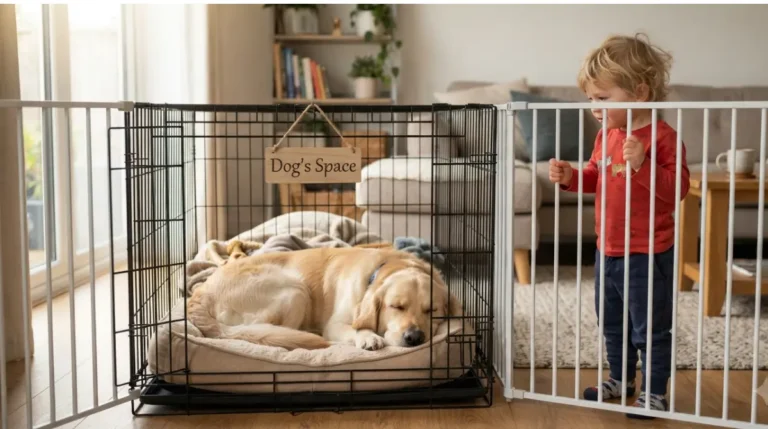
The ASPCA’s dog bite prevention guidance advises giving the dog their own space and time to rest. A crate can be that space: kids don’t reach in, climb on top, or pull the dog out.
Supervision comes first
As the ASPCA says, never leave a baby or young child alone with a dog. Never send a dog to the crate after a clash with a child; that’s punishment. See our dog crate and toddler rule.
🏡 Family & Home: Put the crate where the family passes but kids can’t crowd it, with an adult present whenever children are near.
If the crate isn’t working: alternatives
Skipping or limiting the crate is a legitimate choice.
Playpens, gated rooms and open-door beds
A playpen, a baby-gated room, or a crate with the door left open all give a dog a defined space. Whichever you pick, your dog still needs company, exercise, and regular toilet breaks.
When skipping the crate is the right call
For a dog with a diagnosed behavior disorder, crating as therapy was ineffective and potentially harmful, according to the 2024 owner survey. Work with your vet and a certified behavior consultant or veterinary behaviorist using reward-based methods, and raise it at your next visit, sooner if distress is severe.
Frequently asked questions
1. Is crate training cruel?
Crate training isn’t cruel when it’s gradual, rewarded, and never used as punishment; it becomes cruel when forced or overused.
2. Is it cruel to crate a dog at night?
Crating a dog at night isn’t cruel if your dog settles willingly; one puppy study linked overnight crating to fewer separation-related behaviors. Call your vet if your dog panics.
3. Is it cruel to crate a dog while at work?
No study sets a safe number of crate hours; crating a dog while you work is a problem when they can’t stay comfortable or wait.
4. Do dogs see crates as dens?
The den idea is popular, but it’s an explanation, not proof; what matters is whether your dog chooses the crate.
5. Can crate training cause separation anxiety?
Crate training hasn’t been shown to cause separation anxiety; one study linked overnight crating to fewer separation-related behaviors, and others found no link. Ask your vet if your dog panics alone.
6. Is using a crate as punishment cruel?
Using a crate as punishment runs against the reward-based methods AVSAB recommends, so don’t; keep it a place for rest.
7. How do I know my dog is stressed in the crate?
Watch for barking or whining that won’t settle, pacing, scratching at the crate door, drooling, panting, lip-licking, or repeated soiling. Call your vet today if it persists.
8. Is it cruel to let a puppy cry in the crate?
Brief fussing while a puppy settles differs from panic; if crying is frantic and doesn’t ease, stop crating and call your vet.
9. What can I use instead of crate training?
Instead of closed-door crating, a playpen, a baby-gated room, or an open-door crate each give your dog a defined space.
10. Is it okay to skip crate training?
Yes. If crate training isn’t working or your dog has a diagnosed behavior disorder, work with your vet and a behavior professional instead.
The bottom line
If this has been weighing on you, you can ease up: a crate used gently, briefly, and with rewards isn’t cruel, and your dog’s reaction is the best test. If you decide to crate, our 14-night crate-training log covers the nightly routine. If your dog panics, call your veterinarian today. Our sources are linked, and no dog was tested for this article.