Choosing the Best Dog Crate in the Right Size for Your Home

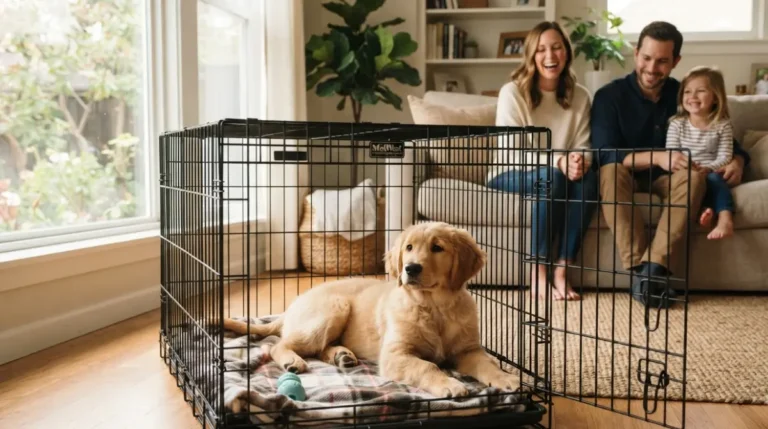
Best dog crate advice starts with a tape measure: nose to tail base, then height. Here’s how size, chewing, and car travel change the right pick.

 BySameer Patel
Last Updated:
Best dog crate advice starts with a tape measure: nose to tail base, then height. Here’s how size, chewing, and car travel change the right pick.
 BySameer Patel
Last Updated:
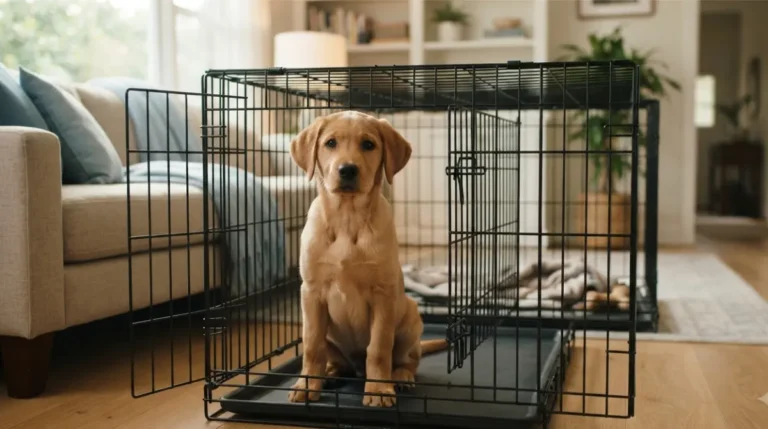
Crate divider for a puppy? Size it to the stand, turn, lie-down check, move it on signs not dates, and skip cardboard with a chewer.
 BySameer Patel
Last Updated:
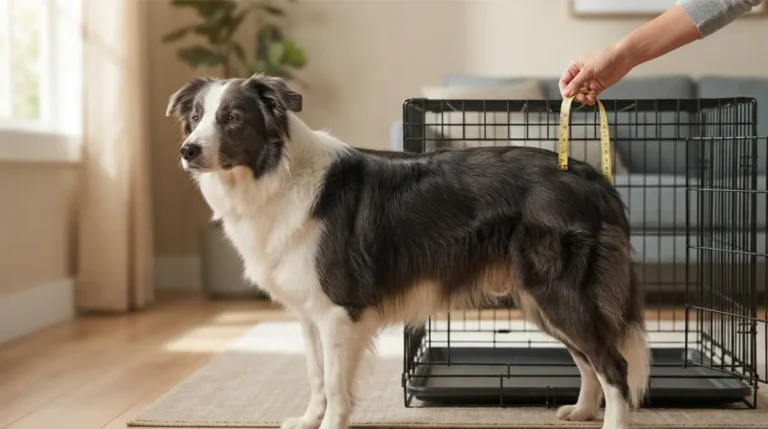
Dog crate size charts don’t agree: makers list different weight ranges for the same size. Your dog’s two measurements settle it.
 BySameer Patel
Last Updated:
Daytime crate crying with quiet nights isn’t a relapse — it’s a separate skill. Start with the crate-size check most owners skip.
 BySameer Patel
Last Updated:
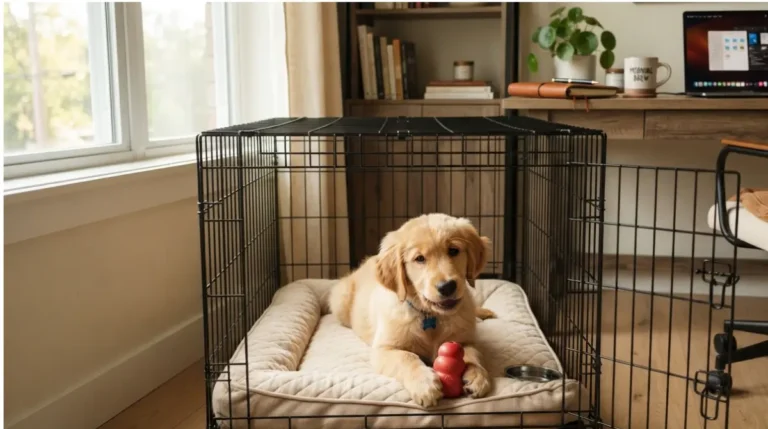
Puppy crying in the crate at night sounds the same at 2 a.m., but it isn’t. Three different sounds, three different answers. One you shouldn’t wait out.
 BySameer Patel
Last Updated:
Crate training while at work stops working past about four hours for a young puppy. Here’s the workday clock, coverage options, and what daycare costs.

 ByShivani Dubey
Last Updated:
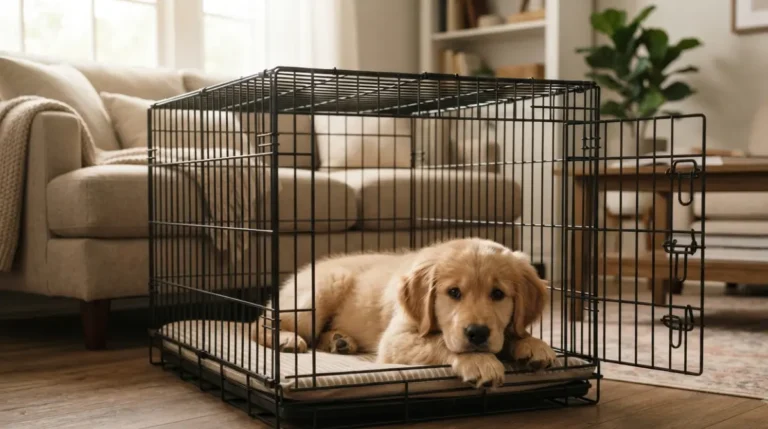
A puppy’s first night in the crate runs on its bladder: at 8 weeks, plan two to three trips out across an 8-hour night.
 BySameer Patel
Last Updated:
Puppy crate time rules disagree: months plus one, one hour per month, or a 3–4 hour cap. Here’s how they fit together, day and night.
 ByShivani Dubey
Last Updated:
Sample crate training days for puppies at 8, 12 and 16 weeks, split between two adults, with the meal-to-trip window of 10 to 15 minutes built in.
 ByShivani Dubey
Last Updated:
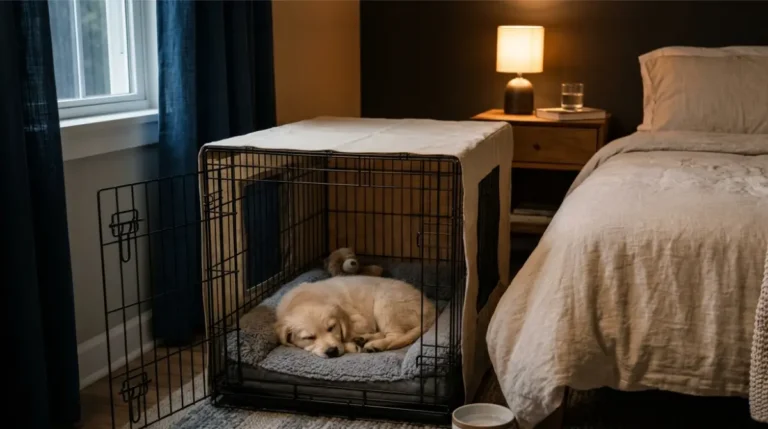
Night crate training for 2- to 6-month-old puppies: alarm times for an 8-hour night, a workday break plan, and when the crate can leave your bedroom.