Cane Corso Heat Limits, Summer Walks, and the Signs to Watch

Cane Corso heat trouble usually starts on a walk: about three in four UK heat-illness cases followed exercise. Here’s when to go, slow down, or skip.

Table of Contents
🚨 If This Is Happening Now: Collapsing, wobbling, confused, vomiting, or panting hard without settling? Cool your Corso with cool water and go to the nearest emergency vet now. Jump to heatstroke signs.
How well does a Cane Corso handle heat?
A healthy Cane Corso copes with mild warmth, but cane corso heat risk climbs fast once exercise, sun, and humidity stack up.
The short answer
Mild warmth is fine for most healthy adults. Hard exercise in hot or humid weather is where Corsos get into trouble.
Use this guide by situation
- Planning today’s walk: use the heat chart below.
- Worried right now: jump to the heatstroke signs.
- Puppy, senior, or heart-screened dog: read the extra-caution section.
- Family with kids: see the home section.
🩺 Vet Note: Heat tolerance depends on your Corso’s age, weight, fitness, and heart and airway health. Ask your veterinarian to set summer exercise limits, especially for puppies, seniors, and dogs that have overheated before.
Why a big Corso heats up faster than you’d think
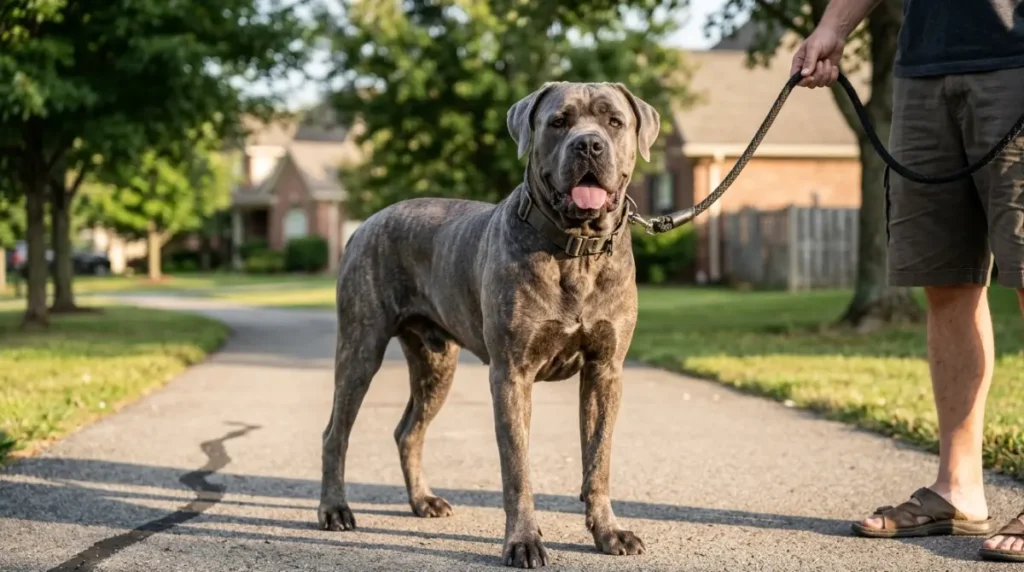
🔍 Why It Works: Dogs sweat only through their paws and shed heat mainly by panting. A big, muscular Corso makes a lot of heat to release that way.
Weight and muscle
A 2020 VetCompass study of over 900,000 UK dogs found higher heatstroke risk in dogs over 50 kg (about 110 lb), dogs heavier than their breed average, and dogs older than two. Males run roughly 93–110 lb under the Canadian Kennel Club standard, so a large or overweight adult male can fit all three.
Coat color and muzzle
Cornell lists dark-coated dogs as higher risk, and black and gray are common Corso colors. Some sites call the breed flat-faced; we couldn’t confirm that, so ask your vet how your dog’s breathing sounds during exercise.
It doesn’t take a heatwave
In UK veterinary records, about three in four heat-illness cases followed exercise, not hot cars.
Summer exercise rules for a Cane Corso
Summer means shifting exercise, not cancelling it.
Walk times that work

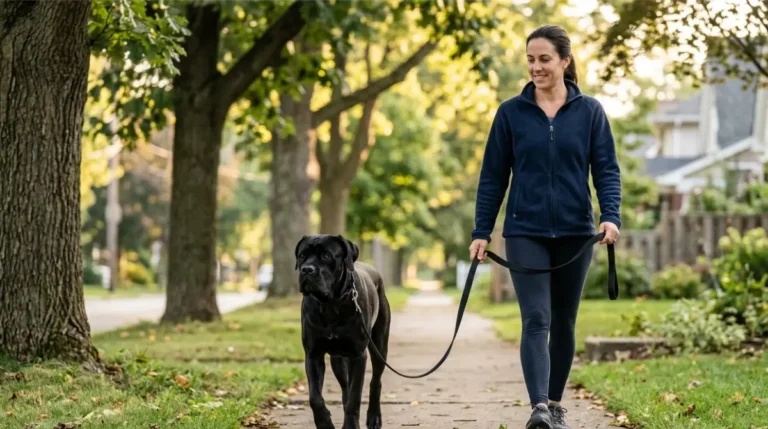
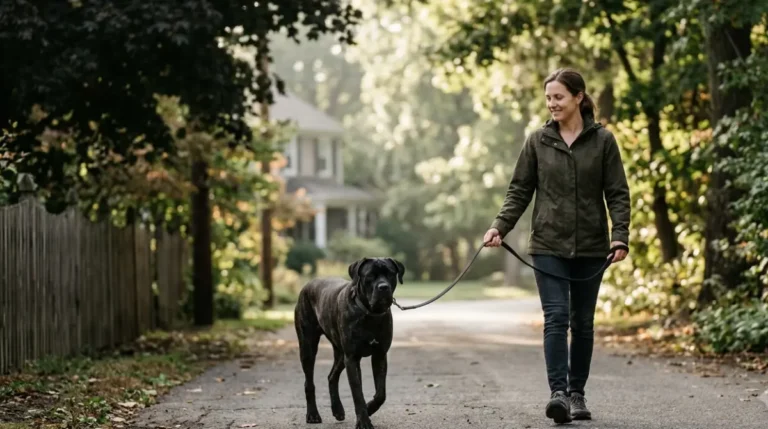
The AVMA’s warm-weather pet safety guidance advises skipping walks, runs, and hikes in the hottest part of the day. Go early morning or after dark, slow the pace, and carry water for both of you.
Swap runs for sniffing and brain games
Trade fetch and jogging for sniff walks, puzzle feeders, and short reward-based training indoors. That still covers how much exercise a Cane Corso needs, without the heat load.
Puppies under 18 months and senior dogs
Very young and older dogs face higher heat risk. Hill’s veterinary guidance also advises against repetitive high-impact exercise before about 18 months.
🏡 Family & Home: After-school walks often hit peak pavement heat. Move the main walk to before school or after dinner, with an adult holding the leash.
How hot is too hot to walk a Cane Corso?
No veterinary body sets a single safe temperature for Cane Corsos, so judge the air, the ground, and your dog together.
Check the ground, not just the forecast
At 77°F in direct sun, asphalt can reach about 125°F, hot enough to burn skin. Hold the back of your hand on the pavement for seven seconds; if you can’t, it’s too hot for paws.
Go, adjust, or skip: a Corso heat chart
| Call | When | What to do |
|---|---|---|
| Go | Cool morning or evening; pavement passes the hand test | Normal walk with water |
| Adjust | Warm or humid; or a heavy, dark-coated, young, or senior Corso | Shorter, slower walk on grass; no fetch |
| Skip | Midday heat, hot pavement, or past heat episode or heart condition without vet approval | Potty break only; indoor games |
Conservative household guidance built from AVMA, Cornell, and VetCompass findings, not a veterinary cutoff.
Humidity changes the math
Panting cools by evaporation, which works poorly in humid air. On muggy days, use the Adjust or Skip row.
Keeping a Corso cool at home and with kids
Most summer hours happen indoors, so set the house up to cool your Corso.
Set up cool zones indoors
The AVMA recommends temperature zones at home, such as a shaded room and a cool floor, with water in several spots. See our tips for keeping a Corso comfortable in an apartment and keeping a crate cool in summer. Don’t shave the coat; the AVMA suggests asking your vet whether a warm-weather haircut would help.
Yard play, kiddie pools and kids
🏡 Family & Home: Kids rarely notice when a dog needs a break, so an adult decides how long fetch lasts. If children and your Corso share a pool, an adult watches every minute.
Never in a parked car, even for errands
The AVMA warns cars can overheat to deadly temperatures quickly, even in mild weather. If school pickup means waiting in the car, your Corso stays home.
Signs of heatstroke in a Cane Corso: act now
🚨 If This Is Happening Now: Collapse, wobbling, confusion, vomiting, or seizures: start cooling and go to the nearest emergency vet. Give no medication unless a veterinarian says to.
Heatstroke means your dog can’t control their body temperature. Cornell’s veterinary college defines it as 105°F or higher; normal is 100.5–102.5°F.
Early signs: stop and cool down
Heavy panting, thick drool, or a Corso that slows down or won’t continue means stop now. Move to shade, wet your dog with cool water, offer a drink, and call your vet today.
Emergency signs: go to a vet now
Vomiting, bloody diarrhea, weakness, confusion, seizures, or collapse means go to an emergency vet now. Cornell advises cooling with cool water and keeping your dog in front of the car’s air conditioning on the drive, which the Royal Veterinary College calls “cool first, transport second”. Teach kids to fetch an adult the moment the dog stumbles.
What to tell the vet on the way
✅ Do This: Call the emergency vet ahead and tell them what your Corso was doing and for how long, which signs you saw, and any heart or breathing condition.
Which Corsos need extra heat caution
Some Corsos need a tighter plan than the chart.
Older, heavier, or heart-screened dogs
Cornell lists older dogs, overweight dogs, and dogs with heart or breathing disorders as higher risk. If Cane Corso heart screening found anything, ask your vet for a written summer exercise limit.
After a heat scare
Dogs that survive heatstroke are more likely to get it again, Cornell notes. After any episode, call your vet the same day, even if your Corso seems normal.
✅ Do This: At your next checkup, ask your veterinarian for a summer exercise plan based on your Corso’s age, weight, and heart status.
Cane Corso heat FAQ
1. Can a Cane Corso handle hot weather?
A healthy Cane Corso copes with mild warmth, but its size makes overheating likely during hard exercise in heat or humidity.
2. What temperature is too hot to walk a Cane Corso?
No vet cutoff exists for Cane Corsos. At 77°F in direct sun, asphalt can reach about 125°F, so test pavement first.
3. How do I know my Cane Corso is overheating?
Heavy panting, thick drool, and slowing down are early Cane Corso overheating signs; stop and find shade. Vomiting, wobbling, or collapse means an emergency vet now.
4. Do Cane Corsos overheat more than other dogs?
UK vet data link weight over 50 kg (110 lb) to more heatstroke, so big Cane Corsos carry extra risk.
5. Should I shave my Cane Corso in summer?
Don’t shave a Cane Corso; the AVMA suggests asking your vet whether a warm-weather haircut would actually help.
6. When should I walk my Cane Corso in summer?
Walk your Cane Corso early in the morning or after dark, skip the hottest hours, and carry water.
7. Can a Cane Corso puppy exercise in the heat?
Keep Cane Corso puppy exercise short, shaded, and low-impact; young dogs face higher heat risk, and joints grow until about 18 months.
8. What should I do if my Cane Corso has heatstroke?
Cool your Cane Corso with cool water right away and drive to an emergency vet with the air conditioning on. Call ahead.
9. Can I leave my Cane Corso in the car for a few minutes?
No. The AVMA warns parked cars overheat quickly, even in mild weather, so your Cane Corso should stay home.
10. Is a black Cane Corso more at risk in the sun?
Yes. Cornell lists dark-coated dogs as higher heatstroke risk, so a black or gray Cane Corso needs extra shade.
Your Corso’s summer plan
You now have a plan: check the ground, move the walk, and know the signs. Still weighing the breed? See whether a Cane Corso fits your family and home.
Before next summer, ask your vet to set your Corso’s exercise limits, sooner if they have a heart finding. Every health fact here is sourced; nothing was tested on a real dog.