Dog crate heat safety: summer placement and warning signs

Dog crate heat safety for summer days and AC setbacks: the 85°F rule licensed kennels must meet and the heat stress signs to watch.
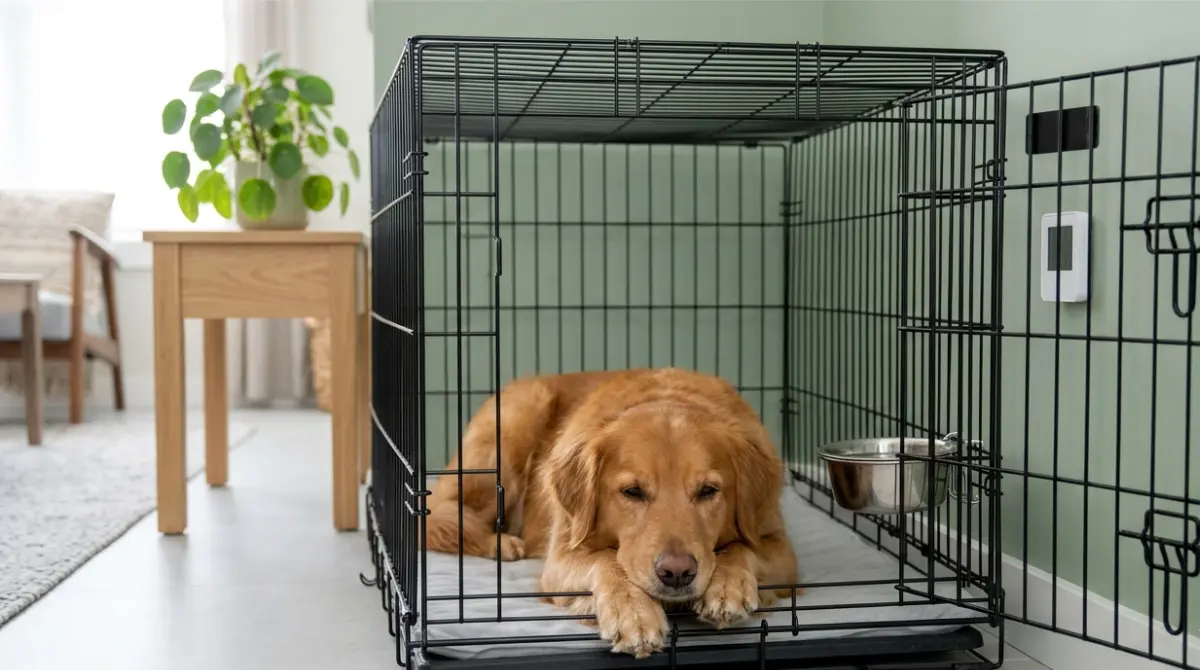
Table of Contents
Last checked against the linked sources on October 29, 2026.
A crated dog can’t get up and move to a cooler floor, so the spot you pick for the crate decides how hot your dog gets in summer. If your dog is panting hard, drooling, wobbly or collapsed in the crate, take them out now and call your vet or the nearest emergency vet.
Why a closed crate raises the heat risk
Loose in the house, a warm dog moves to tile, a shaded hallway or the air near a doorway. Shut in a crate, the same dog has only the air that reaches it. Dogs have sweat glands only on their paws and rely on panting to cool down (Cornell University College of Veterinary Medicine), and warm, still air inside a crate leaves them little to work with.
The largest primary-care study of what triggers heat illness in dogs shows how badly confinement can go. Of 879 UK cases with a known cause, 24 followed confinement in a hot building. In the 2016–2018 cases, a third of those dogs died (6 of 18), compared with 7.6% of dogs that overheated during exercise (Hall, Carter and O’Neill, 2020). Some had been shut in with central heating left on or faulty while their owners were unaware.
The study also found that dogs aged 12 or older had about three times the odds of heat illness from simply being out in hot weather, compared with dogs under 2. For that same type, flat-faced (brachycephalic) dogs had 2.36 times the odds of dogs with medium-length muzzles. Heat on walks is a different risk, set out in heat and exercise limits for a large dog like the Cane Corso.
Is your dog too hot in the crate?
These signs of heat stress call for emergency veterinary care (AVMA warm-weather pet safety):
- Anxiousness or restlessness
- Excessive panting or drooling
- Unsteadiness
- Abnormal gum and tongue color
- Collapse
A dog’s normal body temperature is 100.5 to 102.5°F (38.1 to 39.2°C). Heatstroke is a body temperature of 105°F (40.6°C) or higher (Cornell). As it worsens, vomiting, diarrhea, weakness and collapse can follow. Survival improves the earlier heatstroke is recognized and treated.
Take your dog out, then call
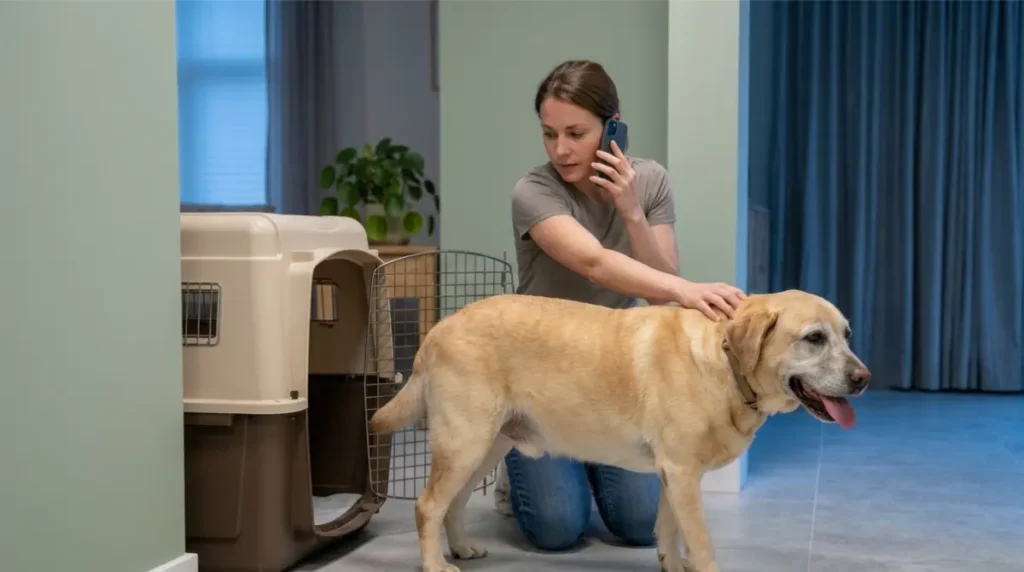
Lead or lift your dog out of the crate into the coolest room in the house, and phone your vet or an emergency clinic. Treatment means cooling the dog safely and right away, then intensive care at a veterinary hospital (Cornell). Ask the clinic how to start cooling for the drive and follow their instructions. Have these details ready for the call:
- Breed and rough weight
- How long the crate door was closed, and which room it was in
- The room temperature, if you know it
- When you first noticed the signs
A dog that survives heatstroke is at greater risk of having it again (Cornell), so book a check even if yours seems back to normal.
Call a vet now if: your dog shows any of the heat stress signs, especially unsteadiness, gums or tongue an unusual color, vomiting or collapse. Phone your own vet or an emergency clinic before you leave the house.
A summer spot that stays out of the sun
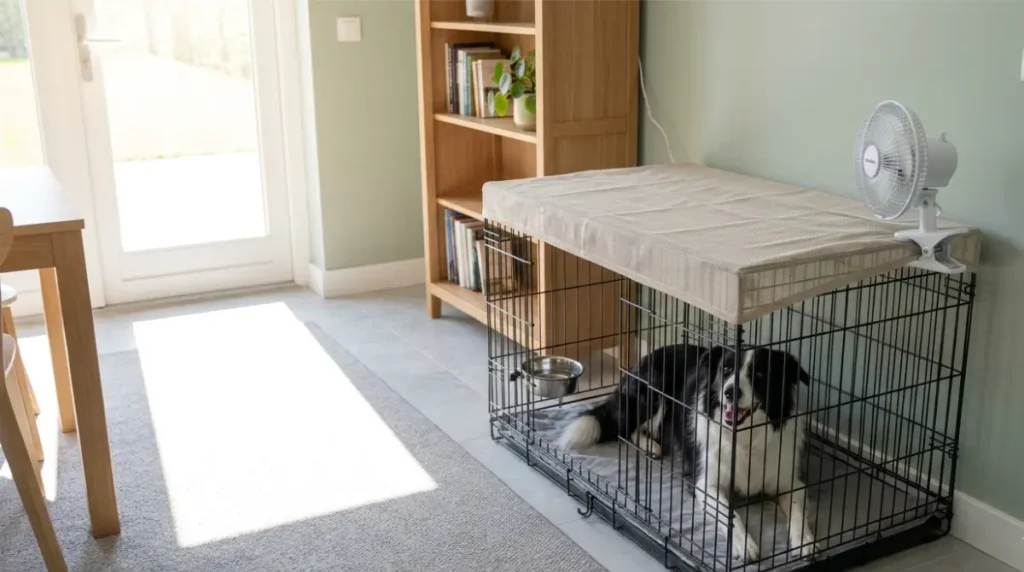
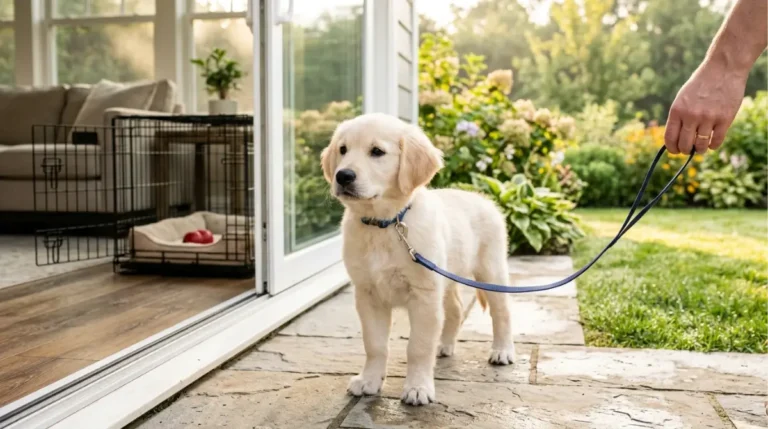
Stand at the crate during the hottest part of your afternoon and see where the sunlight falls. A corner in shade at breakfast can be in full sun by midafternoon, and a crate beside a patio door or under a sunny window warms with it. An interior wall in a room your air conditioning reaches holds up better. The room-by-room comparison, including why a garage is a poor spot, is in where to put a dog crate.
Dogs need unlimited access to fresh water in warm weather (AVMA). A bowl clipped to the crate wall stays upright when a restless dog shifts. A fan clipped outside the crate moves air without lowering the room’s temperature, and its cord belongs out of reach.
A heavy cover pulled down to the floor cuts off air at the dog’s level. In summer, take it off or use a light one with sides left open. How wire and plastic crates differ on covers shows the setup. Swap thick bedding for a thin layer: Hall and colleagues recorded four dogs whose heat illness began with being tangled in blankets.
What a licensed kennel must do at 85°F
Under the Animal Welfare Act regulations at 9 CFR 3.2, the air in a licensed indoor dog facility must not rise above 85°F (29.5°C) for more than 4 consecutive hours while dogs are present. Fans or air conditioning must be provided once it reaches 85°F.
Put a room thermometer at crate height on a hot afternoon. A reading of 85°F means the room has reached the point where a licensed facility would have to provide fans or air conditioning, and a crated pet should get at least that much.
That is a minimum for licensed facilities. It says nothing about what is safe for one older or flat-faced dog shut in a crate at home.
When the house heats up while you’re out
A thermostat set back for the workday can turn a comfortable crate into a hot one. The room that felt fine in the morning with the air conditioning on can be much warmer by late afternoon with it off, and the dog can’t leave. On hot days, keep the cooling on for the crate’s room, or leave the dog uncrated in a cool, gated space.
With children in the home: kids often drape blankets over a crate to build a den. In warm weather an adult keeps covers off and supervises whenever children and the dog are near the crate; the dog crate and toddler rule sets out the house rules for small children.
A crated dog stays home on summer errands. On a 70°F (21.1°C) day, a parked car can reach 89°F (31.7°C) inside within 10 minutes and 104°F (40.0°C) within 30. Cracking the windows makes no difference (AVMA on pets in vehicles).
Use a gated cool room on the hottest days
On a heat-wave afternoon, the crate door can stay open. Set the crate inside a gated room with a hard floor or air conditioning. Your dog can then rest in the crate when it wants and stretch out on cooler tile when it doesn’t. Which barrier suits that setup is covered in the crate vs playpen vs baby gate comparison. When the weather breaks, close the door again and pick up the night crate routine for puppies where you left it.