Honest Cane Corso Cold Weather Care for Coat, Paws and Limits

Cane Corso cold weather care starts with the coat: the AKC standard gives it only a light undercoat. Here’s how wind, wet fur and age change the limit.
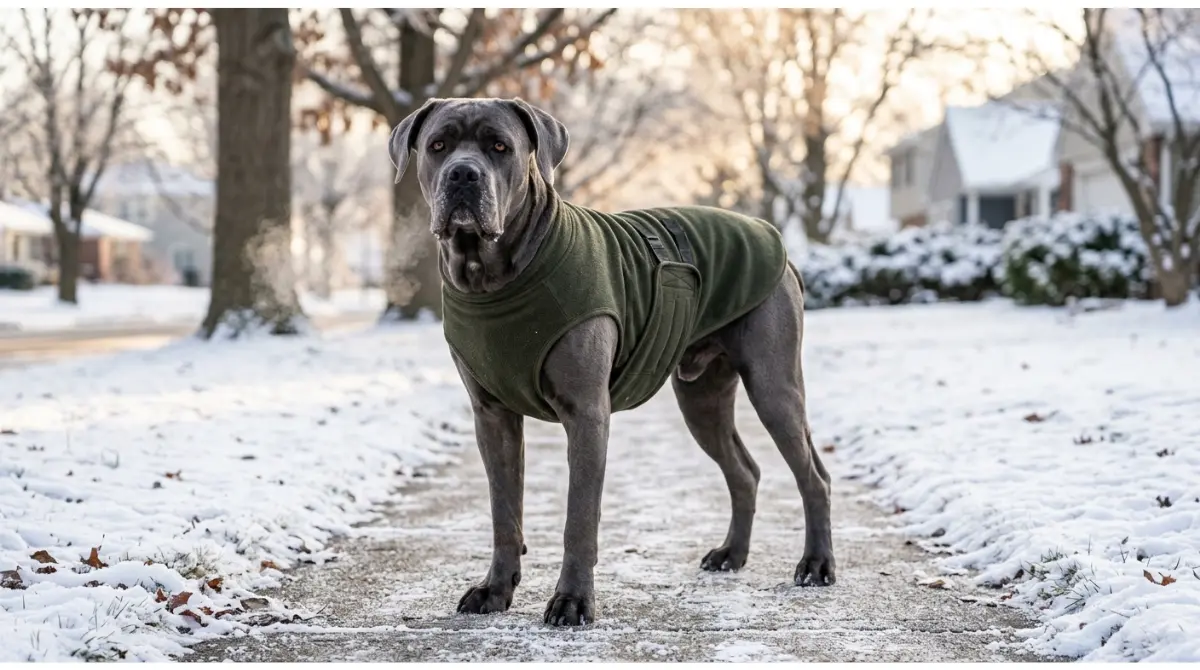
Table of Contents
Can a Cane Corso handle cold weather?
A Cane Corso handles cool weather, but its short coat gives limited protection in real cold. The AVMA notes that cold tolerance varies with coat, body fat, activity and health.
The short answer
Healthy adults manage brisk walks in cool, dry weather. Wind, wet fur, freezing temperatures, puppyhood, old age and illness all shrink that margin. If you’re still weighing whether a Cane Corso fits your family, add winter care to the list.
Find your situation: puppy, senior, family, or worried right now
- Puppy or senior: start with the limits section.
- Icy sidewalks: start with paws.
- Kids and snow days: see the family winter home section.
- Weak, stumbling or licked antifreeze: go to the emergency signs now.
🩺 Vet Note: Puppies, seniors and dogs with medical conditions may need tighter cold limits. Ask your veterinarian about your dog’s limits and winter diet; this is general information, not individual advice.
What the Cane Corso coat does in winter, and what it can’t
The Corso’s coat is built for weather, but it isn’t a husky’s coat.
Short, dense, with a light undercoat
The AKC breed standard describes a short, dense coat with a light undercoat that thickens in cold weather. It’s real insulation, but “light” is the key word.
Why climate changes how much coat your dog grows
The Cane Corso Association of America notes the breed isn’t single-coated, and dogs in colder climates carry more coat. A Corso new to winter may not have grown that coat yet, so judge your own dog.
🔍 Why It Works: An undercoat traps warm air near the skin. Soaked fur traps far less, so a wet day acts like a colder one.
How cold is too cold for a Cane Corso?
There’s no single safe temperature for a Cane Corso. Short-coated dogs feel cold faster, and wind, wet fur, age and health all lower the limit. AVMA’s cold-weather guidance says to shorten walks in very cold weather and never leave a pet outside for long below freezing.
The factors that lower your dog’s limit
Tufts’ weather safety scale, built to screen for neglect, rates risk higher for dogs out in rain or sleet, under six months or elderly. It rates risk lower for cold-acclimated dogs with good shelter.
The Corso Cold Check: conditions by dog
| Conditions | Healthy adult | Puppy or senior | Health condition |
|---|---|---|---|
| Cool, dry, calm | Normal walk | Shorter walk | Shorter walk; ask your vet |
| Windy or wet | Shorter walk, dry coat | Brief outings | Brief outings |
| Below freezing | Short walks | Potty breaks, brief walks | Potty breaks only |
| Freezing rain or bitter wind | Potty breaks only | Potty breaks only | Potty breaks only |
Editorial guide built from AVMA and Tufts risk factors, not a veterinary threshold.
Puppies, seniors and dogs with health conditions
AVMA says very young and very old dogs, and those with diabetes or heart, kidney or hormonal disease, regulate body temperature less well. On short-walk days, try indoor games from our guide to Cane Corso exercise needs by age.
✅ Do This: Before the first hard freeze, ask your veterinarian what winter walk length fits your dog’s age and health.
🏡 Family & Home: Set walk length by the dog, not by how long the kids want to play.
Protecting Cane Corso paws from ice, salt and snow
Winter is hardest on the feet, so build a short paw routine.
Ice balls, cracked pads and sudden limping
AVMA says a sudden limp may be ice packed between the toes, and trimming that hair can reduce buildup. It also flags cracked or bleeding pads as cold injury.
Salt and ice melt: wipe paws, legs and belly
Ice melt can harm a dog that licks it off its paws. The ASPCA’s winter safety tips advise washing and drying feet and belly after walks and using pet-friendly ice melt.
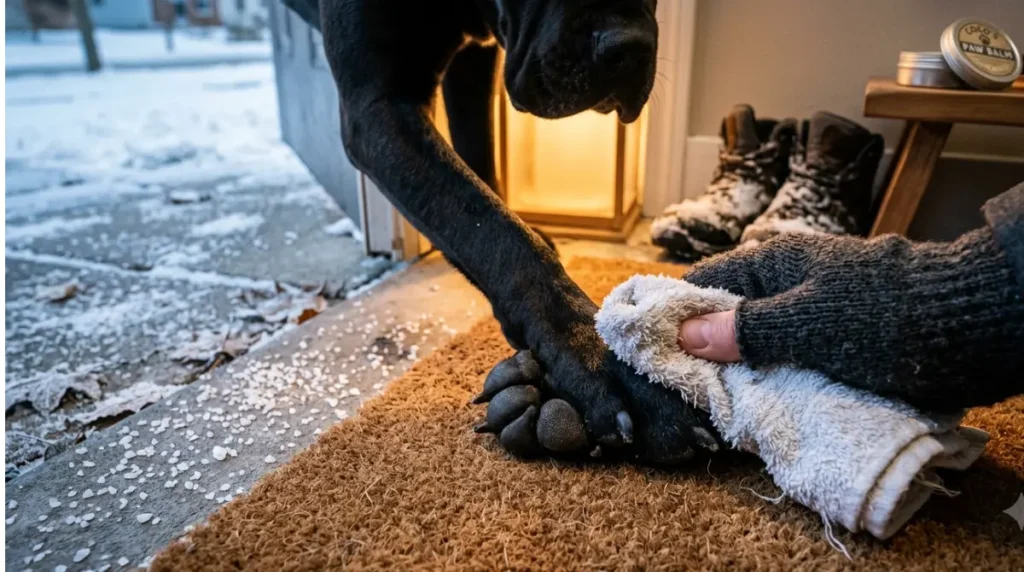
A 60-second paw check after every walk
- Towel feet, legs and belly.
- Clear packed snow from between the toes.
- Check for cracks, bleeding or redness.
- Dry fully, including between the pads.
✅ Do This: Call your vet today for a cracked or bleeding pad, or a limp that lasts after the ice is cleared.
🏡 Family & Home: Store ice melt and antifreeze out of reach of kids and dog. Kids can towel paws while an adult holds the leash.
Does your Cane Corso need a coat or booties?
A Cane Corso often benefits from a dog coat in wet, windy or freezing weather. AVMA suggests coats for short-coated dogs and keeping a spare, because a wet coat can make a dog colder.
When a coat makes sense (and why a wet one backfires)
A quick potty break on a dry day may not need one; longer walks in wind, rain or snow usually do. The ASPCA suggests a high collar and coverage from tail base to belly.
Booties: protection, not warmth
A Cornell veterinarian notes that booties protect against ice balls and sharp ice rather than adding warmth. AVMA says they must fit properly.
Fitting a deep-chested dog, and getting them used to it
Measure chest girth at the deepest point and back length from collar to tail base, then use the brand’s chart. Introduce gear indoors in short, rewarded sessions.
A warm, safe winter home for your Corso and your kids
A Cane Corso should sleep indoors in winter. AVMA advises keeping dogs inside during cold weather, though some breed profiles say outdoor living is fine.
Indoors at night, crate out of drafts
The ASPCA advises a warm bed off the floor and away from drafts. When deciding where to put a dog crate, avoid drafty doorways and heaters.
Space heaters, gates and a toddler
AVMA warns that space heaters can burn pets or get knocked over. Keep heaters out of rooms a dog and toddler share, and supervise whenever the two are together.
Snow days: who holds the leash, and for how long
An adult, not a child, holds the leash on ice, because a dog this size can pull hard. Practice with our Cane Corso leash training plan first. The ASPCA notes more dogs are lost in winter than any other season, so keep yours leashed with current ID.
🏡 Family & Home: Snow-day rules: an adult stays outside with kids and dog, and the dog comes in first.
Signs your Cane Corso is too cold: when to call the vet
🚨 If This Is Happening Now: If your dog is weak, stumbling or unresponsive, or may have licked antifreeze or ice melt, bring them inside and call your vet or nearest emergency vet now. For possible poisoning, also call ASPCA Animal Poison Control at (888) 426-4435. Don’t give medications or try to make your dog vomit unless a veterinarian tells you to.
Too cold: signs to get inside now
AVMA lists whining, shivering, anxiety, slowing down, weakness and burrowing for warmth as hypothermia signs. Bring your dog inside and call your vet now.
Frostbite can show up days later
AVMA notes frostbite may not show for days. VCA veterinarians say paws, ears and tail are most affected; if they look discolored or hurt to touch, call your vet now.
Antifreeze and ice melt: what to tell the vet
The ASPCA calls antifreeze lethal for dogs. Tell the vet what your dog may have licked and when, how long it was outside, and whether it was wet.
🏡 Family & Home: Make sure every adult and older child in the house knows these signs.
Cane Corso cold weather questions, answered
1. Can Cane Corsos handle cold weather?
A Cane Corso handles cool, dry weather fairly well, but its short coat gives limited protection in wind, wet weather or freezing temperatures.
2. How cold is too cold for a Cane Corso?
No single temperature fits every Cane Corso; wind, wet fur, puppyhood, old age and health problems all lower the limit. Ask your vet.
3. Do Cane Corsos need a coat in winter?
Many Cane Corsos benefit from a dry, well-fitted coat on wet, windy or freezing walks, because short-coated dogs feel cold faster.
4. Does a Cane Corso have an undercoat?
Yes. The AKC standard describes a Cane Corso coat with a light undercoat that thickens in cold weather.
5. Can a Cane Corso sleep outside in winter?
No. A Cane Corso should sleep indoors in winter, and AVMA advises keeping dogs inside during cold weather.
6. Do Cane Corsos need booties?
Booties can protect Cane Corso paws from ice balls and sharp ice, but they must fit and don’t add warmth.
7. How long can a Cane Corso walk in snow?
There’s no fixed time; shorten Cane Corso snow walks in very cold, wet or windy weather, especially for puppies and seniors. Ask your vet.
8. Are Cane Corso puppies more sensitive to cold?
Yes. Very young dogs regulate body temperature less well, so Cane Corso puppies need shorter, closely watched outings in cold weather.
9. Is ice melt dangerous for my Cane Corso?
Ice melt can harm a Cane Corso that licks it off its paws, so wipe paws and belly after walks. If your dog swallowed some, call your vet or ASPCA Poison Control now.
10. What are signs my Cane Corso is too cold?
Shivering, whining, anxiety, slowing down, weakness and seeking warmth are cold signs in a Cane Corso. Bring your dog inside and call your vet now.
Your Cane Corso winter plan for this week
You now know your Corso’s winter limits and danger signs. This week, stock towels and a spare coat, set your snow-day rules, and post the poison-control number by the door. For a puppy, a senior or a dog with a health condition, ask your vet about safe winter walks before the first hard freeze.
For the bigger picture, revisit our honest look at Cane Corso family fit. Every health fact here traces to the AVMA, ASPCA, AKC standard or Tufts, and real-dog testing is named, never assumed.