Dog crate heat safety: summer placement and warning signs

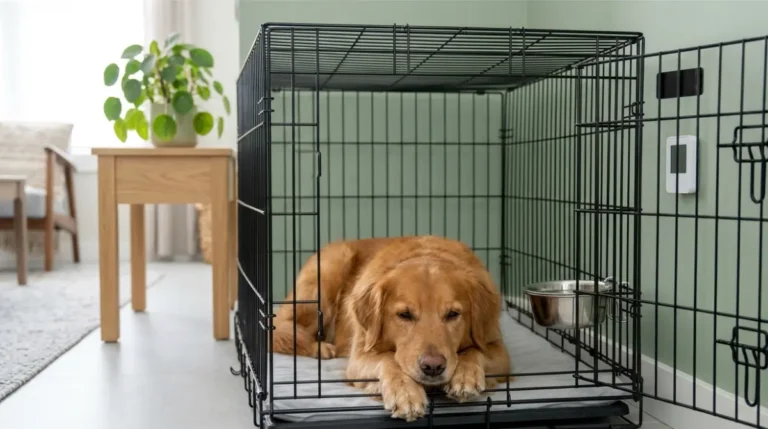
Dog crate heat safety for summer days and AC setbacks: the 85°F rule licensed kennels must meet and the heat stress signs to watch.

 ByShivani Dubey
Last Updated:
Dog crate heat safety for summer days and AC setbacks: the 85°F rule licensed kennels must meet and the heat stress signs to watch.
 BySameer Patel
Last Updated:
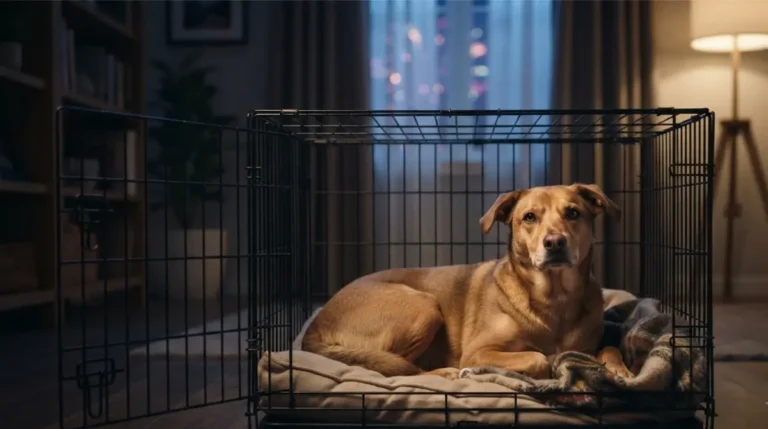
Crate during fireworks tonight? The AVMA suggests an escape-proof room or crate; most guides say never lock it. Here’s which fits your dog.
 BySameer Patel
Last Updated:
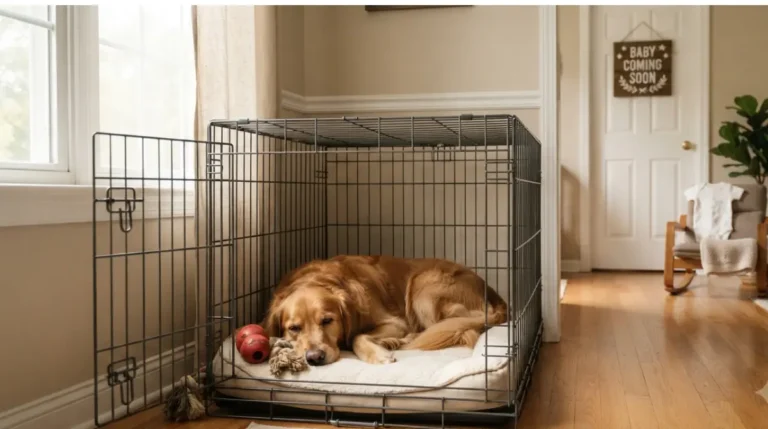
Crate training before baby has a limit to plan around: adult dogs shouldn’t be crated more than four hours at a time. Here’s the 12-week plan.
 BySameer Patel
Last Updated:
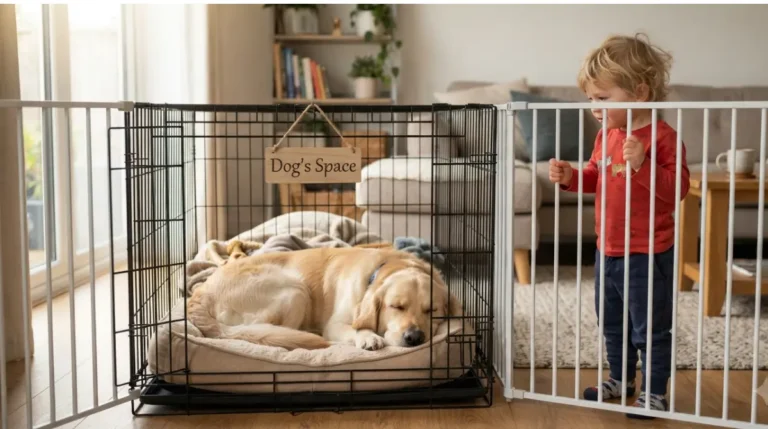
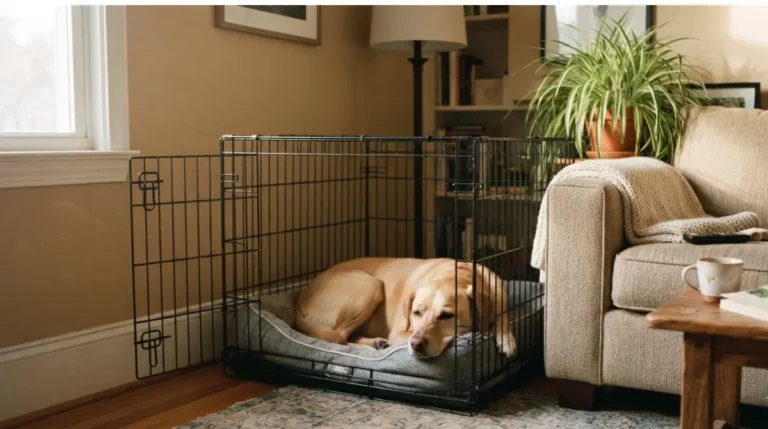
Toddler and dog crate safety means the crate is off-limits even when it’s empty. Here’s the gate setup trainers use and why adults handle the door.
 BySameer Patel
Last Updated:
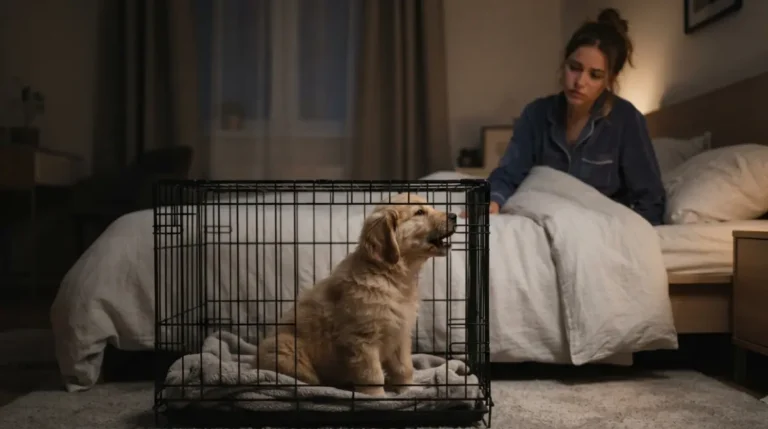
Where to put a dog crate depends on the hour: close to family by day, beside your bed at night, and never beside a radiator or a tangle of cords.
 BySameer Patel
Last Updated:
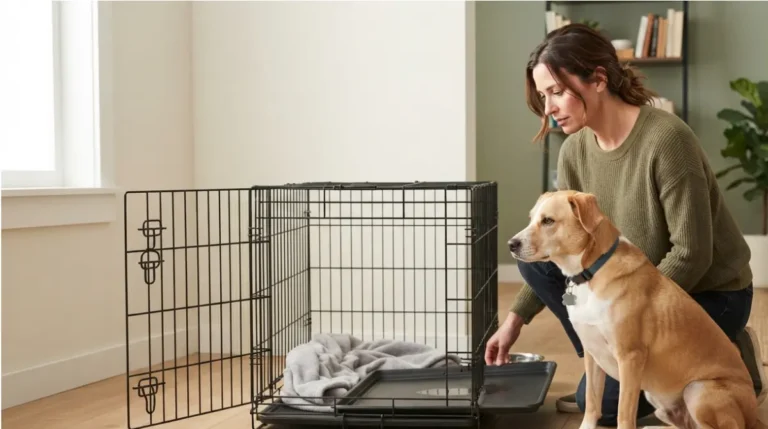
Crate training an apartment puppy? Barking that becomes a nuisance breaches most leases, so start with a bedroom crate, a slow pace, and a neighbor note.
 ByShivani Dubey
Last Updated:
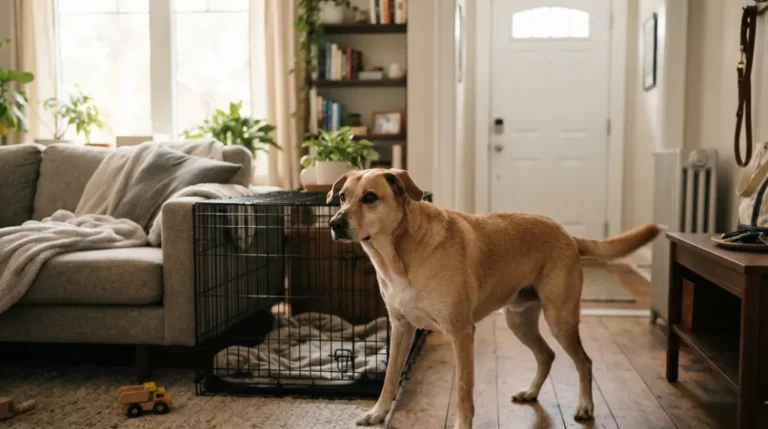
Housetrained dog suddenly peeing in the crate? Book a vet visit first. For puppies, compare crate time with Penn Vet and ASPCA hold limits.
 BySameer Patel
Last Updated:
Crate separation anxiety or plain crate fear? Separation anxiety signs are often worst in the first 15–30 minutes alone. Here’s how to tell them apart.
 BySameer Patel
Last Updated:
Senior dog crate training starts with comfort: non-slip footing and supportive bedding, then short reward-based steps paced to what sore joints allow.
 BySameer Patel
Last Updated:
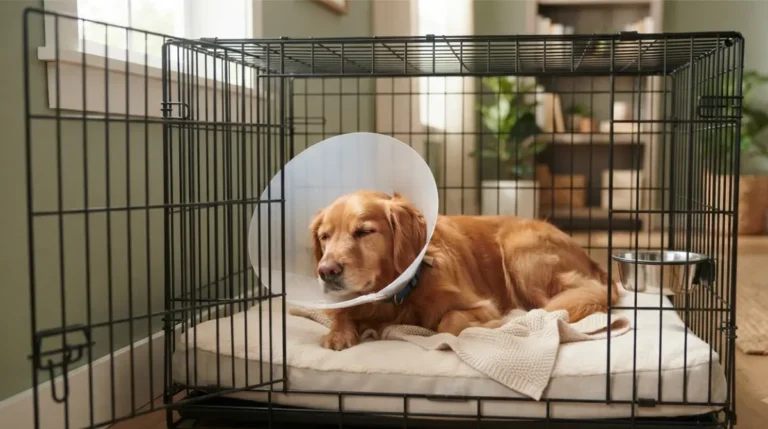
Crate rest after surgery feels harder once your dog seems fine. Here’s the setup, the potty-trip routine, and the signs that mean call your vet.