Choosing the Best Dog Crate in the Right Size for Your Home

Best dog crate advice starts with a tape measure: nose to tail base, then height. Here’s how size, chewing, and car travel change the right pick.
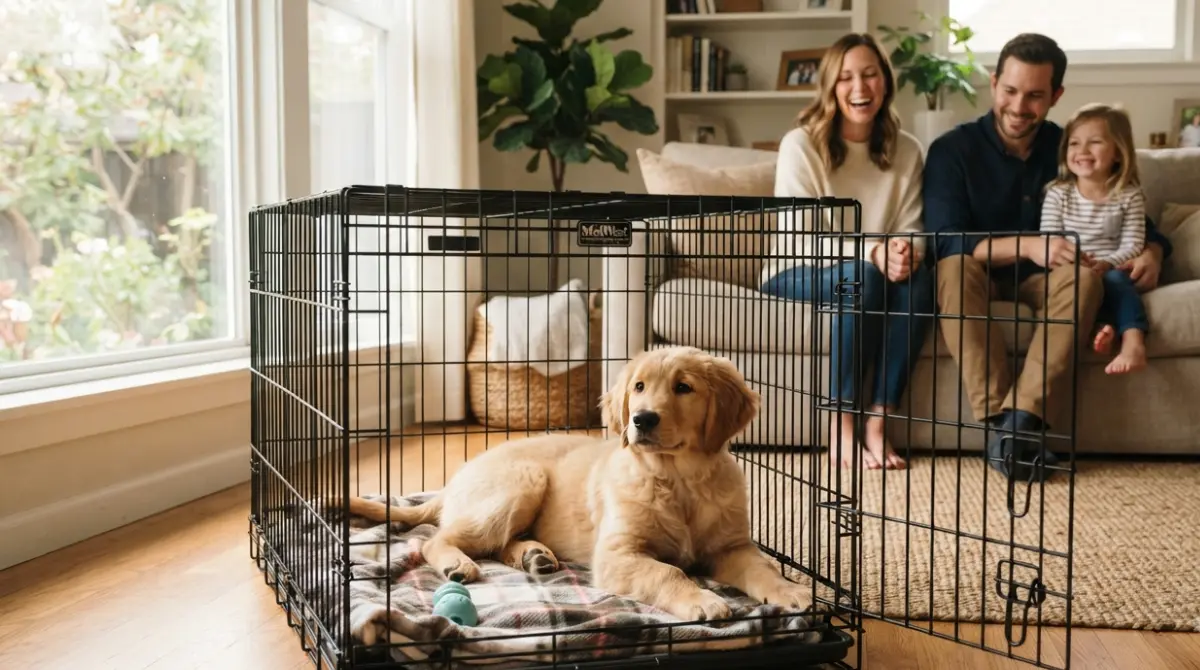
Table of Contents
Our crate picks, and which dog each one fits
The best dog crate is the one that fits three things: your dog’s measured size, whether they chew or try to escape, and where the crate will live.
- New puppy? Start with the wire crate with a divider.
- Strong chewer? Skip to the heavy-duty section.
- Driving with your dog? Go straight to crash-tested crates.
Quick picks by dog and household
| Pick | Best For | Tested By | Key Detail |
|---|---|---|---|
[Wire crate + divider — tested model] | Puppies, medium–large dogs | [Dog, age, lbs] | [Real result] |
[Small-dog crate — tested model] | Dogs under [X] lbs | [Dog, age, lbs] | [Real result] |
[Heavy-duty crate — tested model] | Strong chewers | [Dog, age, lbs] | [Real result] |
| Gunner Kennel G1 (with strength-rated anchor straps) | Car travel | [Tested by our dog / sourced pick only] | Certified by the Center for Pet Safety |
[Crate for a busy household — tested model] | Homes with kids or other pets | [Dog, age, lbs] | [Real result] |
🩺 Vet Note: A dog who panics in a crate, hurts themselves trying to escape, or destroys crate after crate may be showing separation-related distress, not bad behavior. Talk to your veterinarian. Any time dogs and children share a home, an adult should actively supervise their interactions.
How we tested crates with five real dogs
Every pick above was lived in by a real dog in a real home, not just unboxed and photographed.
Our puppy tester is the same puppy you can follow night by night in our 14-night crate training log.
What we scored
- Fit: could the dog stand, turn around and lie down comfortably at their measured size?
- Latch security: did the door hold through pawing and nosing?
- Assembly time: minutes from box to usable.
- Chew and wear damage: checked after
[X]days. - Cleaning: how easily the tray came out and cleaned up after an accident.
Measure your dog before you buy anything
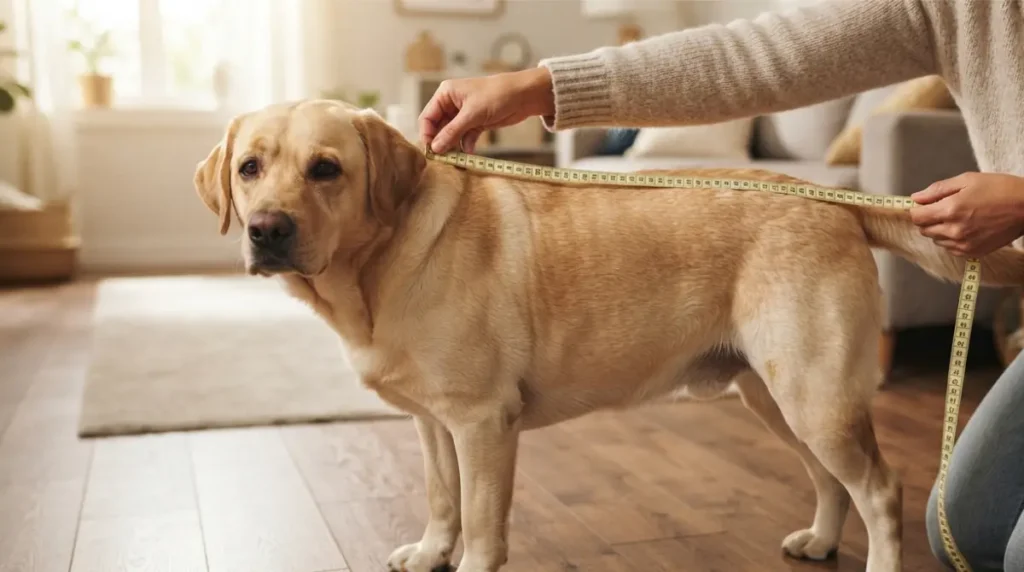
Sizing matters more than brand, because a crate that fits badly undermines everything else.
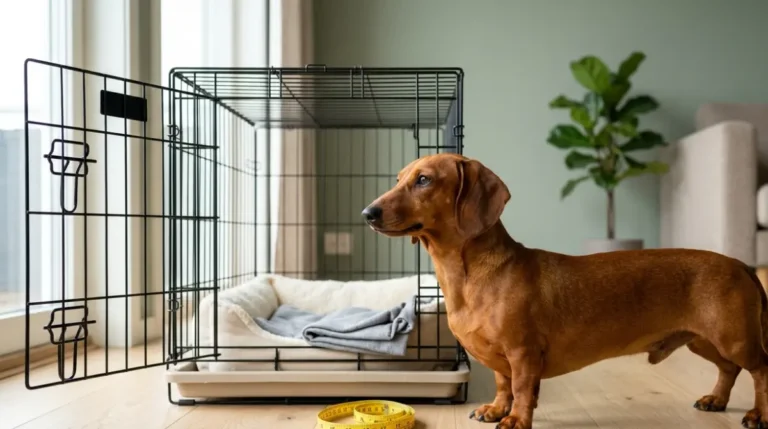
- Measure length. Have your dog stand, then measure from the tip of the nose to the base of the tail.
- Measure height. Measure from the floor to the top of the head or the tips of upright ears, whichever is higher.
- Compare interior dimensions. Check these against the manufacturer’s listed interior size, not the exterior.
- Check the fit. Your dog should be able to stand without ducking their head, turn around, and lie down comfortably.
Our dog crate size chart by measurement turns those numbers into a crate size.
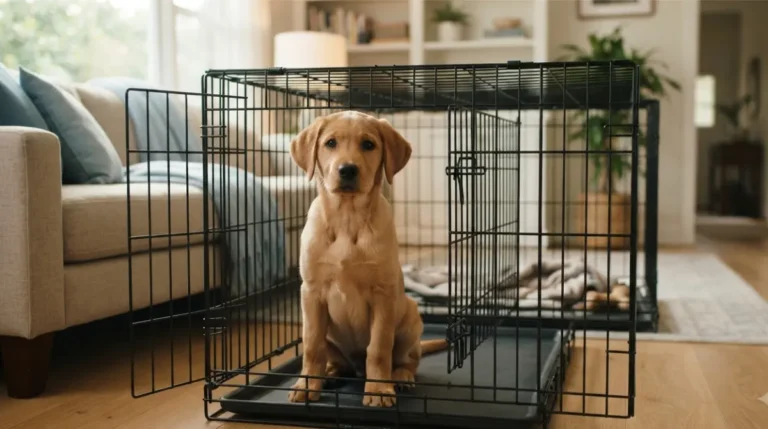
Puppy now, adult later: use a divider
If your puppy has a lot of growing left to do, UC Davis veterinary guidance suggests buying a crate sized for the adult dog and blocking off the back so there’s no room for a separate toilet area.
🔍 Why It Works: Dogs generally avoid soiling where they sleep. If a crate is too roomy, a puppy can sleep at one end and use the other end as a bathroom.
Best crates for puppies and everyday home use
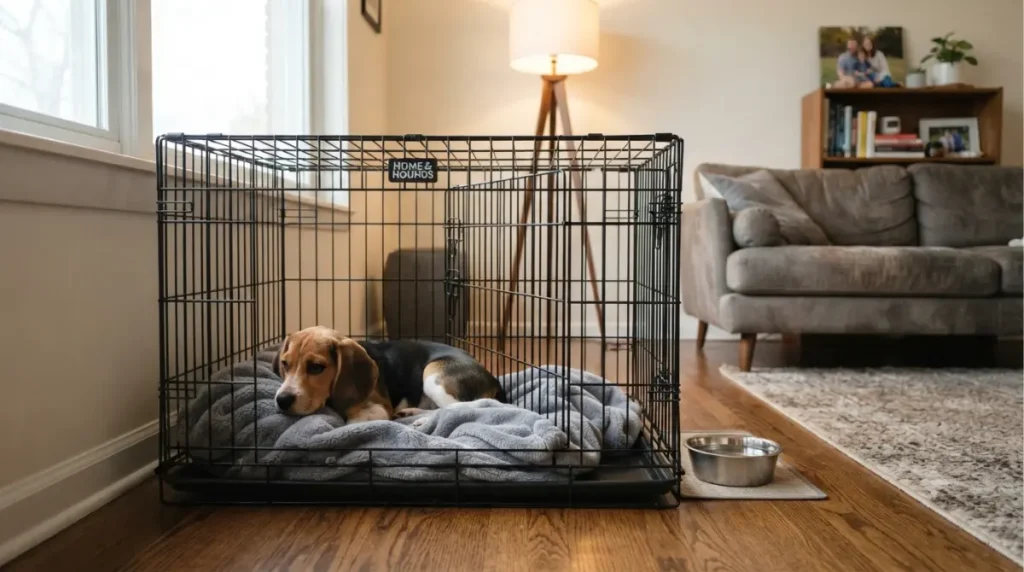
For most homes, a wire crate with a divider panel is the crate that grows with your dog.
Wire crate with divider (our puppy pick)
Our crate divider setup guide shows how to move the panel as your puppy grows.
Wood and veneer look good in a living room, but they don’t stand up to a chewer.
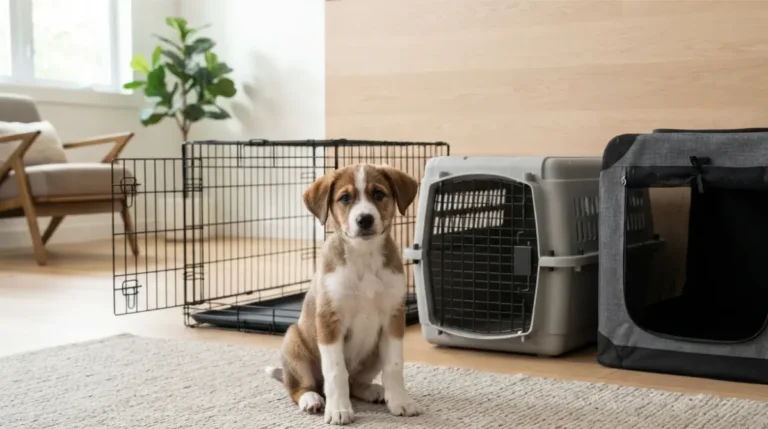
Wire vs plastic: which to choose
Both types work. Plastic crates can double for airline travel, while wire crates often fold flat for storage. Cornell’s veterinary guidance points out that a dog who’s already house-trained and crated only to prevent destructive behavior can use a larger crate with extra room to stretch out.
🏡 Family & Home: Put the crate where the family actually spends time, like a corner of the living room, rather than a far-off spare room. Your dog can rest while still being near everyone.
Best crates for chewers, escape attempts, and car travel
Tough jobs need tougher crates. Car travel also calls for independent crash testing, not just marketing claims.
Heavy-duty crates for strong chewers
⚠️ Watch Out: No crate is truly “escape-proof.” If your dog is bending bars or hurting their mouth, a stronger crate may not fix the underlying fear. Read the warning signs section below first.
Crash-tested crates for the car
According to Tufts’ Your Dog newsletter, the Center for Pet Safety has certified Gunner Kennel G1 travel crates in Small, Medium and Intermediate sizes, each paired with strength-rated anchor straps. The certification applies to the crate with those straps, so use them.
Airline travel: check the carrier’s rules
Crate rules differ between airlines. Confirm the requirements with your airline before you buy a crate for flying.
🏡 Family & Home: A dog loose in the back seat can be thrown forward in a sudden stop, including into children. A secured, crash-tested crate protects everyone in the car.
Crates in a home with kids, a baby, or other pets
A crate works best in a family home when everyone treats it as the dog’s private space.
The crate is the dog’s space: a kids-stay-out rule
The AVMA notes that any dog can bite, and that bites often follow everyday moments that seem harmless to children, like interrupting a dog who is sleeping. Children shouldn’t climb into, reach into, or latch the crate. An adult should actively supervise every child–dog interaction.
Placement and multi-pet homes
Keep the crate away from radiators, heat vents, and direct sun. Give each dog their own crate so they can rest without competing for space.
🏡 Family & Home: Before your puppy comes home, set up the crate using our first-night crate guide. That way, the family agrees on the rules before day one.
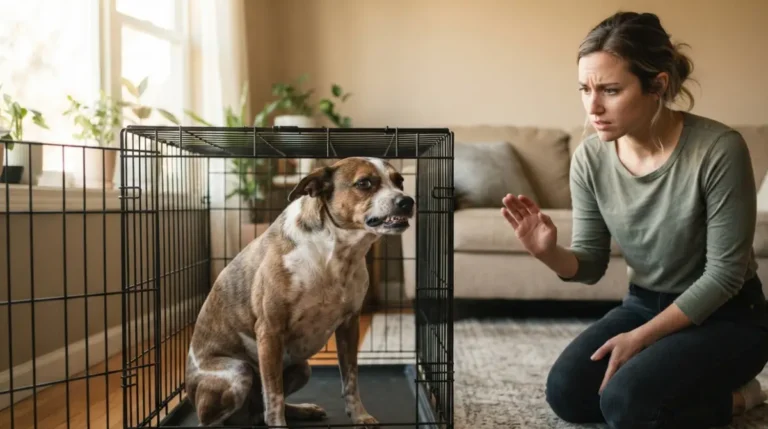
✅ Do This: If your dog growls when someone approaches the crate, call your veterinarian or a certified trainer this week. Describe exactly who approached and what the dog did. Qualified review recommended.
When a crate goes wrong: safety checks and warning signs
Most crate problems can be fixed. The key is knowing which ones need a professional.
Take the collar off before crating
Tags and buckles can catch on wire. Take your dog’s collar off before crating them.
Bent bars, broken teeth, frantic escape: see your vet
- Call your vet today if your dog has a broken tooth, a bleeding mouth, or any injury from the crate.
- Book a checkup, and consider a behavior professional, if the panic keeps happening. Board-certified veterinary behaviorists are veterinarians trained in how health and behavior connect.
- Never use the crate as punishment.
Also check how long a puppy can stay in a crate, because too many hours can drive distress.
Frequently asked questions
1. What size crate is best for my dog?
The best dog crate size lets your dog stand without ducking, turn around, and lie down comfortably. Measure length and height first.
2. Should I buy a puppy crate for adult size?
Yes. Buy a crate for your puppy’s adult size and use a divider to block the back so there’s no room for a toilet area.
3. Is a wire or plastic dog crate better?
Both work. A plastic dog crate can double for air travel, while a wire crate usually folds flat for storage.
4. What is the most escape-proof dog crate?
No dog crate is truly escape-proof. Repeated escape attempts can signal distress, so talk to your veterinarian.
5. Which dog crates are crash-test certified?
The Center for Pet Safety has certified Gunner Kennel G1 crates in three sizes, used with strength-rated anchor straps.
6. Should my dog wear a collar in the crate?
No. Remove the collar before crating, because tags and buckles can catch on crate wire. Ask your vet about safe ID options.
7. Where should a dog crate go in a house with kids?
Put the dog crate in a shared family room, away from heat. Kids stay out, and an adult supervises. Ask a trainer about guarding.
8. Can two dogs share a crate?
Give each dog their own crate so both can rest without competing for space.
9. Are furniture-style crates good for chewers?
Furniture-style crates suit calm adult dogs, not strong chewers. Chewers need a heavy-duty crate.
10. Why does my dog destroy their crate?
Crate destruction can signal distress, not just boredom. Call your vet today if your dog is injured, and book a behavior consultation.
Your next step
You now know your dog’s measurements and the type of crate that fits your household. Next, make the crate a place your dog wants to be: follow our 14-night crate log from the first evening. If your dog panics in any crate, check with your veterinarian this week. Every pick here is backed by real use or a named source.